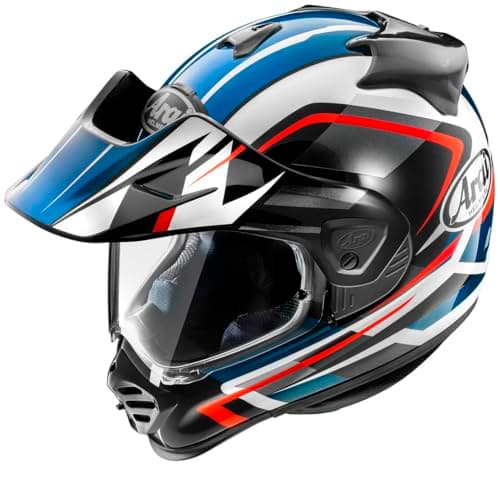
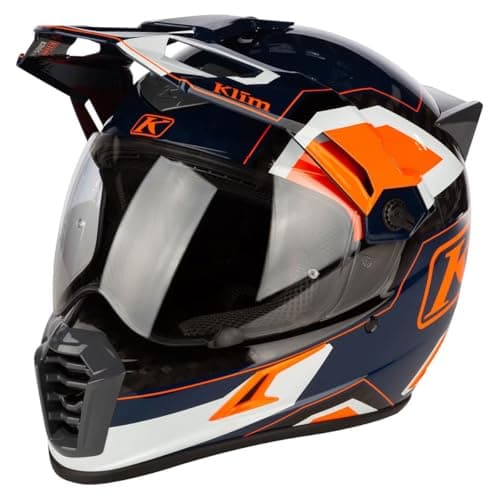
This is the cleanest way to see the two certification philosophies of adventure helmets side by side. The Klim Krios Pro carries genuine US DOT + ECE 22.06 in a full-carbon shell; the Arai XD-5 is a US DOT + Snell M2025Dbuild with Arai's round-oval fit. Neither is "more certified" in the abstract — they answer different questions — so the decision is about which question matters to you, then weight and head shape.
Certification: two different standards, not better vs worse
The Krios Pro holds ECE 22.06, the current standard with a rotational (oblique) impact test and more impact points. The XD-5 holds Snell M2025D, a voluntary independent standard tuned for a stiffer shell and high-energy repeat impacts. This is the crux: ECE 22.06 emphasizes rotational injury management; Snell emphasizes shell stiffness for severe repeat impacts. Both exceed the DOT floor, both are legitimate, and the "right" one depends on the failure mode you care about — not on which sticker sounds newer. Worth noting: the European Tour-X5 (the XD-5's twin) is ECE 22.06 and scored 4/5 SHARP, but the US XD-5 you buy is the Snell build.
Weight: a genuine tie
Both are light for adventure helmets. The Krios Pro is around 1,450 g in a full-carbon shell; the XD-5 is around 1,683 gin Arai's super-fiber composite. The Krios Pro is the lighter helmet by a couple hundred grams — meaningful on a long day — but the XD-5 is far from heavy, and its weight is well-distributed. If outright lightness is the priority, the carbon Klim wins; if it's close enough not to decide it for you, move to fit.
Fit and comfort: the XD-5's territory
Arai's rounder internal shape is the XD-5's signature, and for a round-oval head it's a genuine comfort advantage — the kind of fit that disappears on your head over a long day. The Krios Pro fits a broader intermediate range comfortably. If your head is round and other brands pinch your temples, the XD-5 may simply be the more comfortable helmet regardless of the certification argument, and comfort is what keeps a helmet on your head.
The peak and the ride
Both have well-engineered peaks that shed wind rather than lift at speed, and both convert for street and dirt use. The Krios Pro leans a touch more toward quiet, lightweight touring when you drop the peak and fit the visor; the XD-5's peak is a standout for high-speed manners. Neither buffets the way older peaked helmets did. On the road they're both excellent; the difference is weight and fit, not a flawed peak on either.
Price and value
Both are premium flagships and priced accordingly — you're not choosing one to save money. The Krios Pro's carbon-and-ECE-22.06 combination and the XD-5's hand-built Arai quality both justify their prices for the right rider. Spend the decision on certification philosophy and fit, not on chasing a discount, because at this level both are helmets you keep for years.
The verdict
Want the current ECE 22.06 rotational standard and the lowest weight, in a convertible carbon shell? The Klim Krios Pro. Want Arai's round-oval fit and a Snell-build shell, and 22.06 isn't your deciding factor? The Arai XD-5. Both are top-tier adventure helmets — read the Krios Pro review and XD-5 review, or see where they rank in the ADV touring roundup.