HUB 01 · Adventure & Dual-Sport Helmets
AGV AX9 Review
The sporty end of adventure: a light carbon-blend ADV lid with genuine US DOT + ECE 22.06 and a huge field of view — if AGV's shape fits your head.
We earn a commission when you buy through our Amazon links, at no extra cost to you. It never changes a ranking, and we tell you when the cheaper helmet is the better buy. How this works.
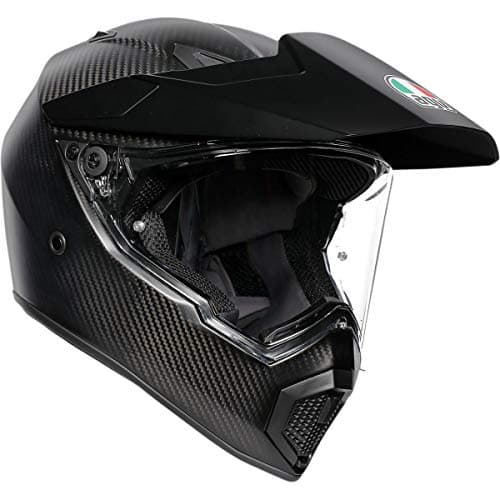
Sporty, light, wide-view ADV
The light carbon ADV lid with a huge field of view and genuine US DOT + ECE 22.06 — the sporty end of adventure.
Price as of Sep 18, 2026. Prices change — Amazon's at checkout is the one that counts.
#ad · we may earn a commission from this link to AGV AX9
The AGV AX9 is what happens when a company that builds MotoGP helmets makes an adventure lid. It's the sporty, light, wide-view end of the ADV category: a carbon-blend shell around 1,510 g, genuine US DOT + ECE 22.06, and one of the biggest fields of view of any helmet with a peak. If your riding leans fast and far and AGV's shape suits your head, it's one of the most complete ADV helmets you can buy.
We haven't crash-tested this helmet. The certification comes from the standards body, the weight and specs from AGV, and the ride impressions are aggregated from owners.
Genuine US DOT + ECE 22.06 — confirmed on the US SKU
This is the part the AX9 gets right that several rivals fudge: the US SKU is homologated DOT + ECE 22.06, the current rotational-test standard, not a DOT-only or Snell build wearing a European reputation. On this site that matters — an adventure helmet's US version is frequently a different homologation than its European namesake, and the AX9 is one of the ones where you actually get the 22.06 on the box you buy. Confirm the label on your unit, as always, but the US AX9 is a genuine 22.06 helmet.
Light, and the view is enormous
Two things stand out on the road. The weight — a carbon/aramid/glass shell around 1,510 g is light for a peaked helmet, and the neck-fatigue saving over a heavier ADV lid is real on a long day. And the field of view, which is derived from AGV's racing helmets and is genuinely among the widest in the class — you see more of the road and the trail out of the corners of your eyes. It runs three configurations too: full ADV with peak and visor, a street setup with the visor and no peak, or goggles with the peak.
The honest cons: fit and peak
AGV's shell suits an intermediate-ovalhead and runs a touch sporty and snug — round-oval riders often find it pinches at the temples, and that's the single biggest reason to try before you buy. And like every peaked helmet, it buffets at very high speed; the AX9's peak is well-behaved for the class but no ADV lid is immune. Neither is a flaw so much as a characteristic — but if your head is round or your miles are all Interstate-speed slab, they're worth weighing.
Configurations, ventilation and living with it
The AX9's three-configuration design is the practical heart of the helmet, and it's worth understanding before you buy. In full adventure mode you run the peak and the visor together for shade and wind management; drop the peak and you have a clean, quieter street helmet; remove the visor and fit goggles and you have a dirt setup. That flexibility is genuine — one helmet that changes character with the terrain — but each swap takes a minute or two, so it's a between-rides change, not something you do at a stop. Ventilation is strong, as you'd expect from an adventure shell built to shed heat off-road at low speed, and the large eyeport that gives the AX9 its wide view also flows a lot of air with the visor cracked.
On value, the AX9 sits in the upper-mid bracket for adventure helmets — well below the price of the most exotic carbon flagships, but clearly a premium lid, not a budget one. What you're paying for is the carbon-blend weight saving, the racing-derived field of view and the genuine US ECE 22.06, and for a rider who does real mileage and wants those things, it's money well spent. If your riding is occasional or mostly slow exploration, a heavier value ADV lid like the Scorpion EXO-AT960 gives you the same 22.06 certification for far less, at the cost of the weight and the view. The AX9 earns its price for the rider who will feel the difference every ride.
Who should skip it
Round-oval heads, who'll be more comfortable in an Arai XD-5's rounder shape over a full day. And riders who want the deepest touring quiet and a sun visor — a road-first modular does that better than any peaked ADV helmet. But for a light, fast, wide-view adventure helmet with the current certification, the AX9 is a genuine flagship, and it sits near the top of our adventure roundup.
Where the AX9 sits in the range
Think of the AX9 as the sporty carbon flagship in a field with two other standouts. Against the Klim Krios Pro — its closest rival on weight and certification — the AX9 trades a little touring calm for a wider view and a sharper feel; we lay that out in full in Krios Pro vs AGV AX9. Against the Snell-build Arai XD-5 and Shoei Hornet X2, the AX9's advantage is the genuine US ECE 22.06 on the box and the lower weight; their advantage is a rounder or quieter ride. And against the value Scorpion EXO-AT960, you're paying a lot more for carbon weight-saving and the wide view rather than for a better certification — both carry 22.06.
The bottom line: buy the AX9 if you want the lightest, widest-view, most sporting genuine-22.06 adventure helmet and AGV's intermediate-oval shape fits your head. It rewards a rider who does real mileage and rides with intent, and it's a helmet you grow into rather than out of. If your head is round or your budget is tighter, the range has better answers for you — but for its target rider, the AX9 is as complete as adventure helmets get.
The scorecard
How it scores, and who should skip it
- Certification
- 9.5
- Weight
- 9
- Field of view
- 9
- Quiet
- 7
- Value
- 7.5
Pros
- Genuine US DOT + ECE 22.06 in a light carbon-blend shell
- One of the widest fields of view of any ADV helmet
- Three configurations: full ADV, street visor, or goggles
Cons
- AGV's shape suits intermediate-oval heads; round-oval riders should try before buying
- Peak buffeting at very high speed like most ADV lids
Don't buy this if…
…you have a round head — Arai's shape will be more comfortable for you over a full day.
Price as of Sep 18, 2026. Prices change — Amazon's at checkout is the one that counts.
#ad · we may earn a commission from this link to AGV AX9
How we picked
We do not crash-test helmets
We compiled published specifications, cited each helmet's certification (DOT, ECE 22.06, Snell, SHARP) from the standards body or manufacturer homologation, and aggregated owner reports, then scored against a published method. The scores are judgments from documented research — not measurements we took. We do not run a crash lab. Certifications reflect the US-market build; where it differs from the European version, we say so and cite it.
Questions
Frequently asked
Does the US AGV AX9 have ECE 22.06?
Is the AGV AX9 good for round heads?
How much does the AGV AX9 weigh?
Keep reading
Related
Receipts
Sources
We do not run a crash lab, and we do not pretend to. Certifications are cited to the standards body or the manufacturer's stated homologation; where a US model's certification differs from its European namesake, we say so. Where we could not verify something, we say so on the page rather than quietly leaving it out. Read our full method.