HUB 03 · Full-Face Helmets
Shoei GT-Air 3 Review
The full-face for riders who wish it had a sun visor: a genuinely great quiet touring lid, DOT in the US, with the drop-down sun visor and clean comms the RF-1400 goes without.
We earn a commission when you buy through our Amazon links, at no extra cost to you. It never changes a ranking, and we tell you when the cheaper helmet is the better buy. How this works.
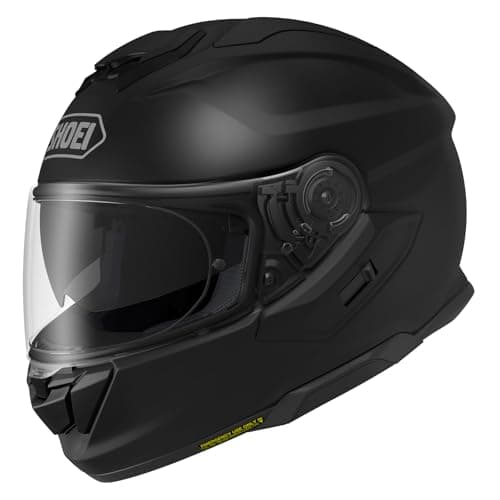
Touring full-face with a sun visor
The full-face for people who wish it had a sun visor: a genuinely great touring lid, DOT in the US, with slick comms integration.
Price as of Sep 20, 2026. Prices change — Amazon's at checkout is the one that counts.
#ad · we may earn a commission from this link to Shoei GT-Air 3
The Shoei GT-Air 3 exists to answer one common complaint about great full-face helmets: they don't have a sun visor. This one does — an excellent drop-down internal sunshade — plus purpose-built Sena comms integration and Shoei's touring quiet, in a helmet built for daily miles rather than track days. It's the practical touring full-face, with one certification caveat we'll state plainly.
We haven't crash-tested this helmet. The certification comes from the standards body, the specs from Shoei, and the ride impressions are aggregated from owners.
The certification caveat: a US DOT build
The US GT-Air 3 is a DOT build — no ECE 22.06 on the box you buy in the States. The European GT-Air 3 is the ECE 22.06unit that scored a full 5/5 in SHARP, but that's not the helmet Amazon ships you here. It's the same US-versus-Europe gap that catches so many buyers, and we flag it because if the current rotational standard is your deciding factor, the US GT-Air 3 doesn't carry it — the AGV K6 S(genuine US DOT + ECE 22.06, 5/5 SHARP) does. If DOT plus Shoei's quality satisfies you, the GT-Air 3 is a wonderful helmet.
The sun visor and comms are the reasons to buy it
The drop-down internal sun visor is genuinely excellent — the feature the RF-1400omits, solved, and the single best reason to choose this helmet for commuting into low sun. And it's purpose-built for the Sena SRL comms with no external bolt-on, so your intercom sits flush and clean. Add Shoei's touring quiet and refinement and you have a helmet that's a pleasure to live with day to day.
The honest cons: DOT-only and weight
Beyond the certification, the GT-Air 3 is heavier than the RF-1400 at roughly 1,774 g— the sun visor mechanism and touring build add grams — and it's not the helmet for track days or the lightest, most sporting ride. Those are the costs of its touring focus and its extra feature, not defects.
Ventilation, shield and everyday use
The GT-Air 3 is built to be lived with, and the details reflect it. The main shield is Pinlock-ready and swaps easily, the drop-down sun visor deploys with a glove-friendly slider, and ventilation is tuned for real-world touring rather than track-day extraction — enough to keep you comfortable in traffic and on the highway without the roar that aggressive vents create. The interior is plush and fully removable, and because the shell was designed around the Sena SRL comms from the start, the speakers sit in proper recesses and the unit doesn't spoil the helmet's lines or its quiet. It's a helmet that feels engineered for daily use, not adapted to it.
On value, the GT-Air 3 is a premium touring helmet priced accordingly — near the top of the full-face field, though below the most exotic carbon lids. What you're buying is the combination almost nothing else offers at this quality: Shoei touring quiet, an excellent sun visor, and factory-clean comms in one helmet. For a commuter or tourer who wants all three and for whom DOT certification is sufficient, that combination justifies the price. If you don't need the sun visor, the lighter RF-1400 delivers the quiet and adds Snell certification for less, which is exactly the trade the GT-Air 3 vs RF-1400 comparison walks through.
Who should skip it
Riders who want the lightest, most track-ready lid — the RF-1400 or K6 S is lighter and Snell/ECE certified. And anyone for whom ECE 22.06 is the priority on the US box. But if you want a quiet touring full-face with a superb sun visor and clean factory comms, the GT-Air 3 is the class answer — see it compared directly in GT-Air 3 vs RF-1400.
Where the GT-Air 3 sits in the range
The GT-Air 3 owns the touring corner of the full-face field. Its most instructive comparison is the lighter, Snell-certified Shoei RF-1400 from the same brand — the sun-visor-and-comms tourer against the sportier all-rounder, a split we detail in GT-Air 3 vs RF-1400. It also cross-shops with the touring modular Shoei Neotec 3: same brand, same DOT-in-the-US certification, same excellent comms, with the GT-Air 3 offering a lighter one-piece shell and the Neotec offering a flip-up chin bar. If you want a sun visor but don't need the flip, the GT-Air 3 is the lighter, cheaper way to Shoei touring refinement.
The bottom line: the GT-Air 3 is the daily tourer's full-face — the one to buy if you commute into low sun, want factory-clean comms, and value quiet refinement over the lightest possible weight or the ECE 22.06 badge. It's among the most practical premium helmets made, and for the rider who fits its brief, the DOT-in-the-US caveat is a fair price for everything else it gets right.
The scorecard
How it scores, and who should skip it
- Certification
- 7
- Sun visor
- 9.5
- Quiet
- 8.5
- Comms integration
- 9
- Value
- 7.5
Pros
- Excellent drop-down internal sun visor — the RF-1400's biggest omission, solved
- Purpose-built for the Sena SRL comms with no external bolt-on
- Quiet and refined for daily touring
Cons
- US version is DOT only — no ECE 22.06 on the box you buy here
- Heavier than the RF-1400
Don't buy this if…
…you want the lightest, most track-ready lid — the RF-1400 or K6 S is lighter and Snell/ECE certified.
Price as of Sep 20, 2026. Prices change — Amazon's at checkout is the one that counts.
#ad · we may earn a commission from this link to Shoei GT-Air 3
How we picked
We do not crash-test helmets
We compiled published specifications, cited each helmet's certification (DOT, ECE 22.06, Snell, SHARP) from the standards body or manufacturer homologation, and aggregated owner reports, then scored against a published method. The scores are judgments from documented research — not measurements we took. We do not run a crash lab. Certifications reflect the US-market build; where it differs from the European version, we say so and cite it.
Questions
Frequently asked
Is the Shoei GT-Air 3 ECE 22.06?
Does the GT-Air 3 have a sun visor?
GT-Air 3 or RF-1400 — which should I buy?
Keep reading
Related
- All full-face helmetsThe full ranked roundup, by certification.
- GT-Air 3 vs RF-1400Sun visor and touring vs light and sporting, head to head.
- The quietest motorcycle helmetsWhere the GT-Air 3 sits among the quiet touring lids.
- GT-Air 3 vs Contour-XTouring sun visor against Arai's round-oval fit.
- Neotec 3 vs GT-Air 3Shoei's flip-front tourer against this fixed-chin one.
- HJC RPHA 91 vs GT-Air 3Modular convenience against a lighter fixed-chin shell.
Receipts
Sources
We do not run a crash lab, and we do not pretend to. Certifications are cited to the standards body or the manufacturer's stated homologation; where a US model's certification differs from its European namesake, we say so. Where we could not verify something, we say so on the page rather than quietly leaving it out. Read our full method.