Search for a women's motorcycle helmet and most of what comes back is a paint scheme. That is not a category - it is a graphic. There is no women's safety standard, no women's shell and no women's certification, and Motorcycle Newsputs it as plainly as we would: "In reality there isn't really such a thing as a helmet designed specifically for women." What does exist is a real fit problem. Women's heads sit, on average, toward the small end of the size range, and the small end is exactly where helmet makers economize. This page ranks five genuinely certified helmets that are built down to XS rather than padded down to it - and it names what each one gives up to get there. The same shell-count argument runs in reverse at the other end of the chart, which is what our roundup for big heads covers.
There is no women's certification, and that is good news
DOT (FMVSS 218) and ECE 22.06 both test helmets on headforms sized by circumference. The test rig does not know or care who is inside the helmet: a certified XS is held to the same standard as a certified XL, on a headform scaled to match. Snell works the same way, and SHARP's star ratings are awarded to a model, not to a gender. So "which helmets are safe for women?" has a boring answer - the same ones that are safe for anybody, and our DOT vs ECE vs Snell explainer covers what each mark actually tests. The useful question is a different one, and nobody markets an answer to it: which certified helmets are actually offered in a small size, on a shell built for a small head?
The number that decides this: how many shells
A size label is not a shell size. Manufacturers mold a small number of outer shells and cover the rest of the size range with thicker or thinner internal padding. A helmet sold from XS to 2XL on two shells is making its XS out of the same shell it uses for a medium head, with more foam packed inside. That has consequences a small rider feels on every ride: the helmet looks and sits bigger than it needs to, it carries weight it did not need to carry, that extra mass works on your neck all day, and thicker padding usually runs warmer. A helmet built on four or five shells gives a small head a shell much closer to its own size. MCN's helmet editor gives riders buying at the small end the same instruction we do: look for the model with the greatest number of shell sizes.
All five helmets below are offered in XS. They do not all arrive at XS the same way, and that difference - not the graphics, not the brand - is what this ranking is built on. If you want the underlying mechanics of why grams matter more on a smaller frame, our guide to motorcycle helmet weight takes the shell materials apart.
What we ranked on
- Genuinely offered in XSby the manufacturer, not rounded down by a retailer's size chart.
- Shell count at the small end - how many outer shells the model uses, and whether the smallest sizes get one close to their own size.
- Weight, because every gram sits on your neck, and a smaller rider carries the same helmet mass as everyone else with less frame to carry it.
- Certification, stated for the US-market build and cited - never assumed from the European version of the same model.
- Fit adjustability - whether the maker sells cheek pads and center pads in more than one thickness, so a close fit can be made right.
What is deliberately nota criterion: color, graphics, or whether a helmet is marketed to women. Shopping the "women's" shelf narrows a rider down to a handful of paint schemes and can quietly steer her toward a less-certified helmet. Shop the whole catalog and let size, shell count and certification decide.
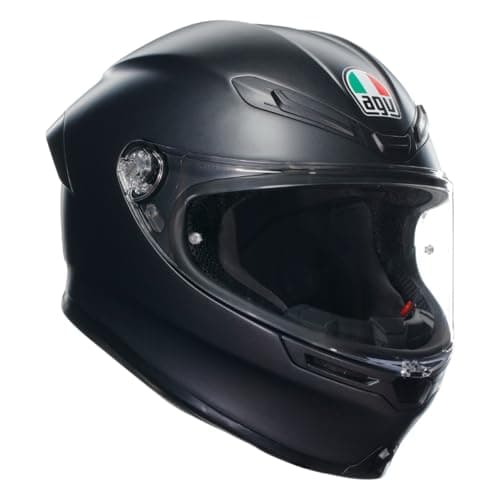
AGV K6 S - the best small-size helmet on published data
The K6 S is our overall pick, and it is not close on the numbers. AGV runs it from XS to 2XL across four shell sizes, with a five-density EPS liner produced in four sizes of its own, so a small head gets both a smaller shell and a liner engineered for it rather than a slab of extra foam. The carbon-aramid shell is the reason it weighs what it does - AGV claims around 1,255 g, which puts it among the lightest full-face helmets sold anywhere. And the safety data is the strongest here: genuine US DOT plus ECE 22.06, and a perfect 5/5 from SHARP, the UK government's independent testing program. Light, small-shelled and independently five-starred is a rare combination at any size; at the bottom of the size range it is close to unique. Our full AGV K6 S review goes deeper on the shell and the field of view.
The honest cons: there is no drop-down internal sun visor, so you commit to a shield tint or carry a spare. The fit is AGV's intermediate-oval sport shape, which is snug and will pinch a rounder head at the temples. And it is priced as a flagship. Do not buy it if you commute in and out of bright sun and want a sun visor, or if every helmet you have ever tried has pressed on your forehead - that is a shape mismatch no size change fixes.
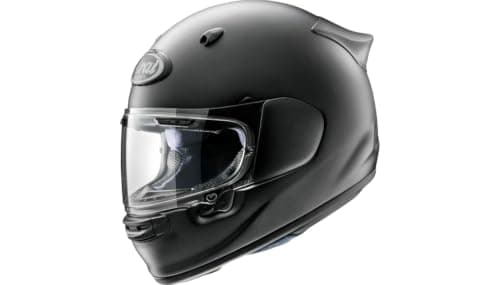
Arai Contour-X - the only one here where XS gets a shell to itself
If your head is at the very bottom of the range and every helmet you have owned has looked oversized, this is the one to try. Arai builds the Contour-X on four shell sizes split XS / SM / MD-LG / XL-2XL - which means XS is not sharing with anything. No other helmet on this page gives the smallest size its own dedicated shell, and it shows in how the helmet sits rather than perches. It is a DOT plus Snell M2025 build in the US, with replaceable, washable cheek pads and interior, and Arai's smooth-shell design philosophy behind it.
The cons are real and we will not soften them. It is comfortably the most expensive helmet on this page - top of the market rather than merely premium. At around 1,530 g it is noticeably heavier than the K6 S, so the proportion you gain in shell you partly pay back in mass. And the US Contour-X is a Snell build, not ECE 22.06: the European Quantic is the 22.06 version, and the two are not interchangeable. Do not buy it if the current 22.06 rotational test is your requirement, or if the budget has any tension in it at all.
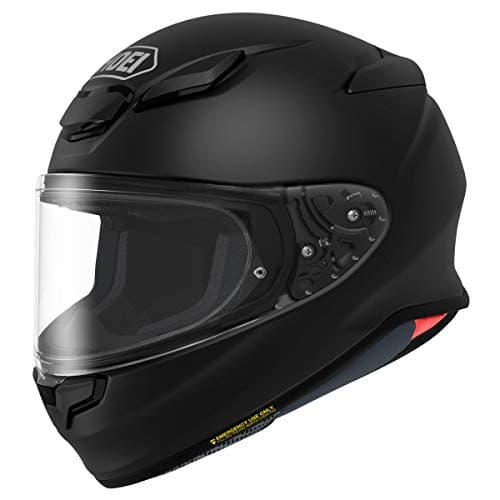
Shoei RF-1400 - the most adjustable fit on the page
Shoei molds the RF-1400 on five shell sizes - XS-SM, MD, LG, XL-2XL and 3XL - the finest shell granularity here across the whole range, with the small end on a shell shared only between XS and SM. What lifts it above a shell-count argument is the adjustability behind it: cheek pads are interchangeable between all helmet sizes, and Shoei sells center pads in thinner, standard and thicker versions. That turns "nearly right" into "right" without a return - the single most useful thing a manufacturer can offer a rider whose head does not match a chart, and something we walk through in our guide to cheek pads and liners. The US build is DOT plus Snell M2025, and its European twin, the Shoei NXR2, scored a perfect 5/5 with SHARP.
The cons: no internal sun visor here either. The US RF-1400 is a Snell helmet, not ECE 22.06, so if 22.06 is your line in the sand the AGV is the pick. And its XS shares a shell with SM, so on pure shell granularity at the very bottom of the range the Arai still wins. Do not buy it if you want a drop-down sun visor for commuting - the Shoei GT-Air 3 is the model in the same family that has one.
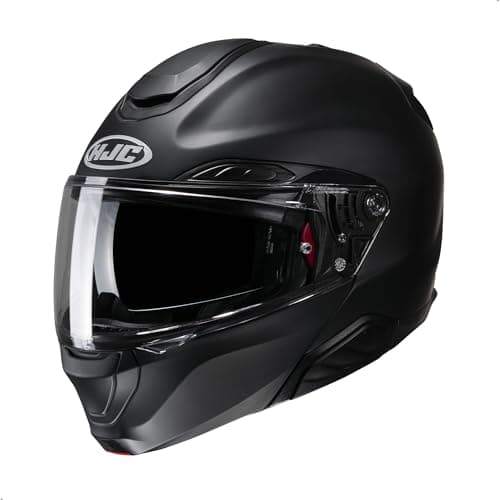
HJC RPHA 91 - the modular that still comes in XS
Flip-front helmets are where small sizes usually disappear: the chin-bar mechanism pushes makers toward fewer, larger shells. The RPHA 91 is the exception worth knowing about, offered from XS through 2XL, and it brings the best certification story of any modular near its price - ECE 22.06 with P/J dual homologation, meaning it is genuinely approved to ride with the chin bar raised, plus an independent SHARP 4/5. It has the drop-down sun visor the two Japanese full-faces above lack, and a Pinlock-ready shield in the box. For a rider who wants to flip the front up at a gas station without pulling the whole helmet off, this is the small-size option. The full HJC RPHA 91 review has the detail.
The cons matter more here than anywhere else on this page. At roughly 1,740 g in a medium it is the heaviest helmet we have ranked, because a flip-front carries hinge and latch hardware a fixed chin bar does not - and weight is the criterion a smaller rider can least afford to give up. It is not as quiet as a Shoei Neotec 3, and the interior is a notch below the premium Japanese brands for plushness. Do not buy it if neck fatigue on long days is already your limiting factor; a lighter full-face is the honest answer, and you give up the flip.
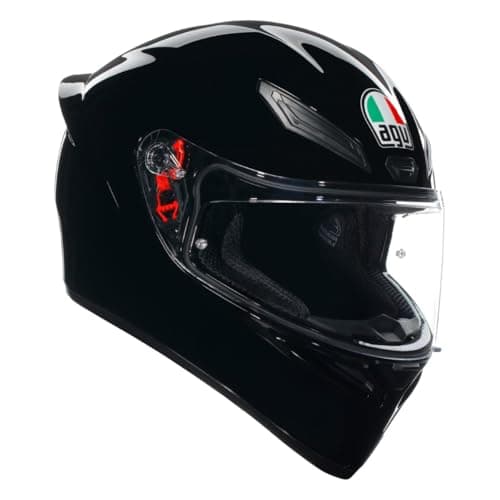
AGV K1 S - the budget pick, and the trade-off it makes
The K1 S is the cheapest genuine route to the current standard on this page: it is offered in XS (53-54 cm) and it carries real US DOT plus ECE 22.06 for a price well under the others. For a new rider, a second helmet, or anyone who refuses to spend flagship money in a first season, certification at this price is the whole argument - and it is a strong one. It shares AGV's wide, race-derived field of view with the K6 S. If you are buying a first lid, read it alongside our best helmets for beginners picks.
Here is the trade-off, stated plainly, because it is exactly the thing this page exists to expose: the K1 S is built on two shell sizes and four EPS sizes. Its XS is the smaller of only two shells, not one of four or five, so it will look and sit bigger on a small head than the K6 S does - and the high-resistance thermoplastic shell puts it around 1,600 g, heavier than every helmet above it except the modular. There is no sun visor, and the fit is the same snug sport shape. Do not buy it if a bulky-looking helmet or all-day neck fatigue is what sent you looking in the first place; that is precisely what the extra shells on the K6 S and the Arai are buying you.
So which one?
If you want the best answer on published data, the AGV K6 S - four shells, one of the lightest full-face helmets made, ECE 22.06 and a 5/5 SHARP score. If your head is at the very bottom of the range and helmets always look oversized on you, the Arai Contour-X, because XS gets a shell of its own and nothing else here does. If you expect to fine-tune the fit yourself, the Shoei RF-1400 and its five shells plus interchangeable pads. If you want a flip-front and a sun visor in a small size, the HJC RPHA 91, accepting that it is the heaviest helmet here. And if the budget is the constraint, the AGV K1 S gets you genuine ECE 22.06 for the least money, as long as you have read the two-shell note and made peace with it.
Long hair, glasses, and the parts no spec sheet covers
Manufacturer data stops at circumference, shell count and weight. Two of the most common complaints we see from riders shopping the small end of the range are not on any spec sheet at all, so here is our honest read on both.
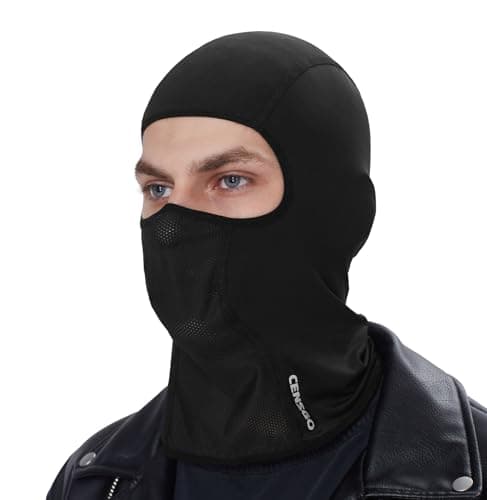
Hair.A high ponytail or a bun will not sit under a full-face helmet, and forcing one lifts the helmet off the crown - which puts the shell somewhere other than where the certification test assumed it would be. The workable answers are a low ponytail that exits below the neck roll, or a thin balaclava-style liner that keeps hair flat and stops it dragging on the interior as the helmet goes on. No major manufacturer publishes a hair-specific fitment spec, so treat "ponytail-friendly" claims in retailer copy as marketing rather than a measured feature.
Glasses.Getting temple arms past the cheek pads is a padding problem, not a shell problem, and it is fixable on any helmet whose maker sells pad thicknesses - which is the RF-1400's quiet advantage here. Slide the arms in after the helmet is on, and if they still bind, a thinner cheek pad usually solves it without going up a whole size and compromising the fit that makes the certification real.
And try it on if you possibly can. Every size chart behind this page is a starting point, not a verdict. Take your measurement properly first - our guide to measuring your head covers the tape position and the head-shape check most buyers skip - then wear the helmet for 20 to 30 minutes before you decide. A helmet that fits firmly on day one usually settles to just right; one that feels roomy in the store will be loose in a month.