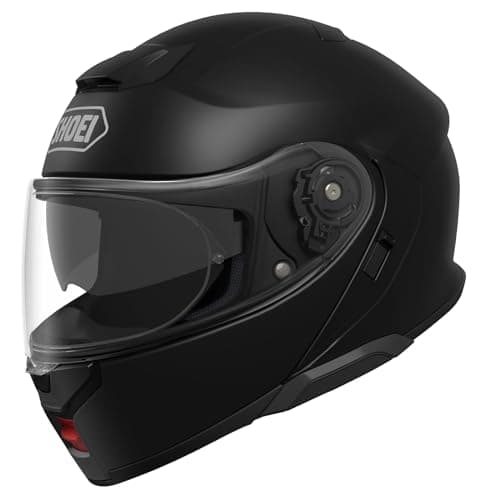
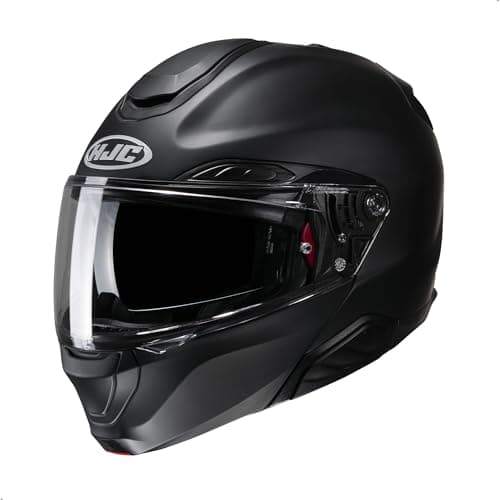
This is the modular decision most touring riders actually face: pay flagship money for the quietest, best-finished helmet in the class, or pay half as much for the one with the better certification and independent safety data. The Shoei Neotec 3 and the HJC RPHA 91 are both excellent — they just optimize for different things, and once you see the trade clearly the choice is usually obvious.
Certification: RPHA 91 wins, clearly
The US Neotec 3 is a DOT build. The RPHA 91 is ECE 22.06 with P/J homologation and a 4/5 SHARPscore. If you rank a helmet by the mark on the shell and the independent data behind it, this isn't close — the value helmet out-certifies the flagship in the US market. (The European Neotec 3 is ECE 22.06 P/J and 5/5 SHARP, but that's not the helmet Amazon sells you in the States.)
Quiet and finish: Neotec 3 wins, clearly
The Neotec is meaningfully quieter at highway speed, its interior is plusher, its shield mechanism is smoother, and its Sena SRL3 comms channel is a cleaner integration than any bolt-on. For a rider doing 400-mile days, that refinement is real quality of life. The RPHA 91 is good; the Neotec is a class above on these axes.
Weight and price
The RPHA 91 (~1,740 g) is a touch lighter than the Neotec 3 (~1,880 g), and roughly half the price. That price gap can buy you a top-tier comms unit like the Cardo Packtalk Edge and still leave change.
The verdict
Rank certification and value first? Buy the RPHA 91 — it's our top modular pick. Rank touring silence, finish and factory comms first, and the certification difference doesn't override that for you? The Neotec 3 is worth every dollar, as long as you buy it knowing the US build is DOT. There's no wrong answer here — only the wrong answer for your priorities.
How we picked
We compiled published specifications, cited each helmet's certification (DOT, ECE 22.06, Snell, SHARP) from the standards body or manufacturer homologation, and aggregated owner reports, then scored against a published method. The scores are judgments from documented research — not measurements we took. We do not run a crash lab. Certifications reflect the US-market build; where it differs from the European version, we say so and cite it.