Skip to content
VISOR & VENT

HUB 06 · Buying Guides & How-To

Best Motorcycle Helmets for Big Heads

The problem at the large end of the size range is not fit, it is supply. Most premium helmets stop at 2XL, and the few that go further often stretch one shell across XL to 3XL. These five actually reach 3XL or past it, ranked on how far they go and what the top size is really made of.

By Stephen V.Updated How we rate
#ad

We earn a commission when you buy through our Amazon links, at no extra cost to you. It never changes a ranking, and we tell you when the cheaper helmet is the better buy. How this works.

If your head measures past about 63 cm, you have already discovered that the helmet problem is not really a fit problem. It is a supply problem. Walk the flagship shelf and the size charts end in the same place over and over: the AGV K6 S stops at 2XL, the Arai Contour-X stops at 2XL, the HJC RPHA 91 stops at 2XL. Those helmets are not a bad fit for a 65 cm head. They are not availableto a 65 cm head, at any price, in any color. That is a very different conversation from the one every "best helmet" roundup is having.

So this page ranks on the two questions that actually decide it. First: how far up the range does the manufacturer genuinely go? Second, and almost as important: does the biggest size get a shell built for it, or is it the XL shell with the padding shaved out?Then, as everywhere on this site, we look at the certification the US box carries. We have not crash-tested anything and we have no lab - certifications come from the standards bodies, and every size range and shell count below is taken from the maker's own published size chart or its US retail spec sheet, linked in the sources.

First, make sure it is actually a size problem

Before you go shopping for a 3XL, rule out the thing that sends a lot of riders up a size for no reason. If a helmet presses hard on your forehead and the back of your skull but you can slide a finger in beside your ears, that is not too small - that is the wrong shape. An intermediate-oval shell on a rounder head pinches front-to-back while leaving side clearance, and it feels exactly like a size problem. Sizing up "fixes" the pressure by putting you in a helmet that is loose everywhere, which is the one outcome no certification test accounts for. Measure properly first with our head-measuring guide, which covers shape as well as circumference. If the tape genuinely reads 64 cm or more, read on.

HJC i91 — the only one here that goes past 3XL, and it builds a shell for it

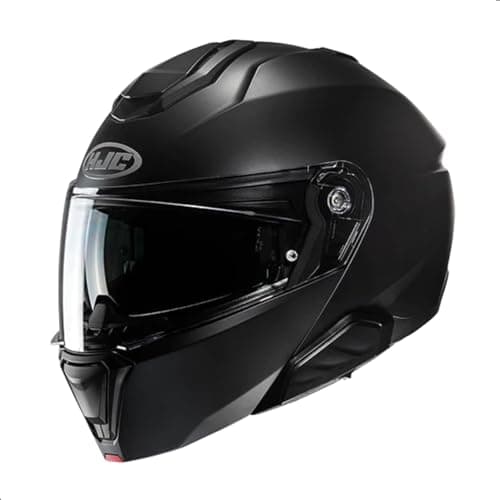
If your head is 66 cm or larger, this is not the best pick on the page - it is very close to the only pick. HJC offers the i91 from XS all the way to 5XL, and its chart runs to 68-69 cm at 5XL, which is genuinely rare. Better than that, HJC does not stretch its existing shell to get there: the i91 uses four shell sizes and the fourth, Shell 4, is built specifically for 3XL-5XL. That is the difference between a helmet made for a big head and a helmet that merely tolerates one. It is a flip-up, it ships with an oversized drop-down sun visor and a Pinlock-ready HJ-33 shield, and it is cheap.

The honest cons are real. HJC lists Shell 4 in solid colorways only, so if you need 3XL or above, the graphics are not on the menu. It is marketed DOT-approvedin the US and we do not assert ECE 22.06 on the US unit - HJC's European i91 has existed in both 22.05 and 22.06 builds depending on production date, so confirm the label on the helmet you actually receive. And it is a polycarbonate shell, so it is heavy - which matters more at 3XL than anywhere else, because a bigger shell is more mass on the same neck. Full detail in the i91 review.

Shoei RF-1400 — the premium answer, with a 3XL shell of its own

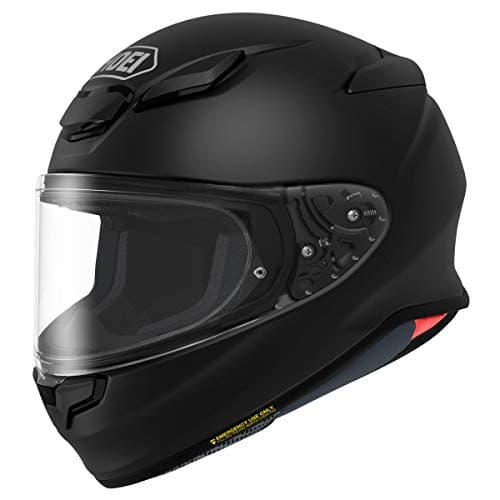
This is the pick that surprises people, and it is the best helmet on this page in absolute terms. Shoei runs the RF-1400 on five shell sizes - XS-SM, MD, LG, XL-2XL and then a dedicated shell for 3XL. Almost nobody at this level does that. Where most makers either quit at 2XL or spread one shell from XL to 3XL, Shoei molds the big size its own shell, so a 65-66 cm rider gets a helmet proportioned for their head rather than a hollowed-out XL. Combine that with a light multi-ply composite shell, a superb shield seal and DOT + Snell M2025, and this is the one to buy if the budget reaches.

The honest cons: the US RF-1400 is a DOT + Snell build, not ECE 22.06 - Snell is a stricter add-on to DOT rather than a lesser standard, but if the current rotational-impact homologation is your deciding factor, the LS2 below is the one that carries it. There is also no internal sun visor, so you commit to a tinted shield or carry a spare, and it is the most expensive helmet here. Full detail in the RF-1400 review and its safety rating.

LS2 Advant X — the light one, and the only 22.06 that reaches 3XL

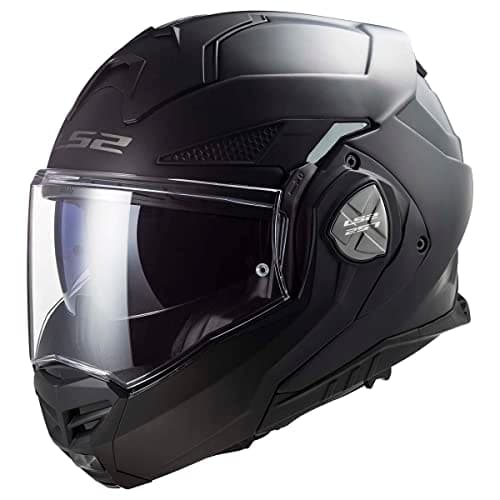
Weight is the quiet penalty of a big head. Every centimeter of circumference is more shell, more liner and more mass hanging off your neck at the end of a long day, so the lightest helmet that reaches your size is worth paying attention to. LS2 lists the Advant X XS-3XL, and it is the lightest thing on this page by a clear margin while carrying genuine DOT + ECE 22.06 with P/J dual-homologation - approved to ride with the chin bar up. Drop-down sun visor, Cardo-ready comms channel, and a Pinlock insert in the box.

The honest con is exactly the criterion this page is built on: LS2 covers the whole range on two shells, XS-L and XL-3XL. A 3XL is therefore the same outer shell as an XL with the padding taken out, which is the cheap way to reach a big size. It is also louder at highway speed than a one-piece full-face, and it uses a micrometric ratchet rather than Double-D rings. If certification leads and you fit inside 3XL, it is still the strongest combination here - see the Advant X review.

Scorpion EXO-AT960 — the adventure pick that reaches 3XL

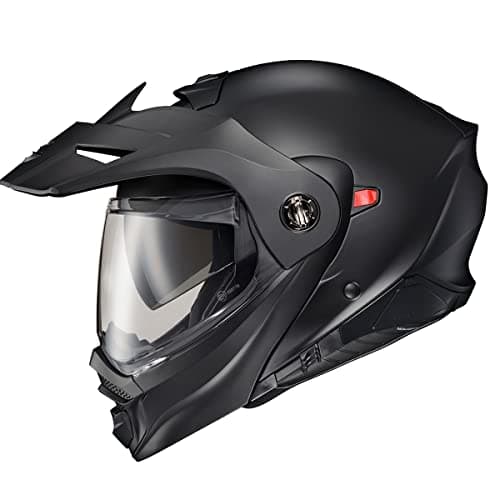
Adventure helmets are usually worse than street helmets at the large end, so it is worth knowing that this one runs to 3XL while carrying genuine DOT + ECE 22.06at roughly a third of a carbon flagship's price. It is a three-configuration lid - peak and visor, street, or peak and goggles - it flips open, and it has a drop-down internal sun visor most ADV helmets leave off. If your riding has dirt in it and your head is 64-65 cm, this is the obvious answer.

The honest cons: it is the heaviest helmet on this page, which is the last thing a big-head rider needs, and the peak adds real drag and wind roar at highway speed. If most of your miles are interstate, take the RF-1400 or the Advant X instead. Detail in the EXO-AT960 review.

Bell Qualifier DLX MIPS — 3XL on the smallest budget

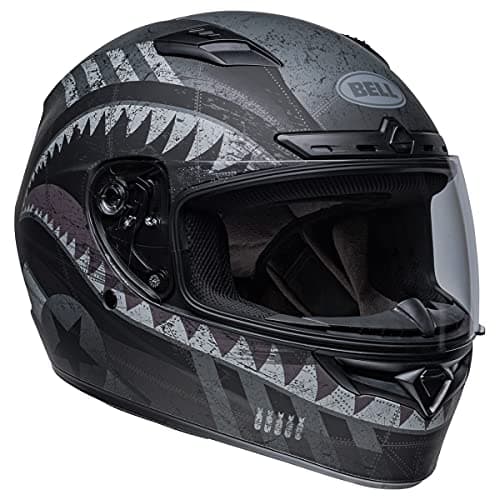
If the budget is tight, this is the cheapest route to a 3XL from a major brand, and it arrives with two features that usually cost a lot more: a MIPS rotational-management layer and a photochromic self-tinting shield in the box - which quietly solves the no-sun-visor problem the RF-1400 has. Bell runs it XS-3XL across three shells, with the chart topping out at 65-66 cm.

The honest cons: Bell's largest shell covers XL through 3XL, so like the LS2 the top size is a padded-down shell rather than a purpose-built one. It is polycarbonate and heavy. And on certification we buy it as a DOT + MIPS helmet - Bell lists ECE for the model but does not publish the 22.05/22.06 revision for the US unit, so we will not assert 22.06. See the Qualifier DLX review.

So which one?

Measuring 66 cm or more? The HJC i91, and effectively nothing else - just accept a solid color. Measuring 64-66 cm with a real budget? The Shoei RF-1400, because a dedicated 3XL shell is worth more than any feature list. Want the current ECE 22.06 standard and the lightest helmet that reaches your size? The LS2 Advant X. Riding dirt? The Scorpion EXO-AT960. Spending as little as possible? The Bell Qualifier DLX. And if you are shopping the opposite end of the chart for someone else, the same shell-count argument runs in reverse in our small-size roundup.

The short answer

Quick picks, by the mark on the shell

#HelmetCertificationScorePrice
01
HJC HJC i91
HJC i91

The honest budget modular: a comfortable, sun-visor-equipped flip-up that clears DOT at a genuinely low price — as long as you don't need it to prove ECE 22.06.

DOT certifiedECE 22.06 unverified
7.6
$253.95Amazon
02
Shoei Shoei RF-1400
Shoei RF-1400

The sport-touring default for a reason: light, quiet, Snell-certified, and its European twin scored a perfect 5/5 SHARP.

DOT certifiedECE 22.06not heldSnell M2025 certified
8.7
$541.00Amazon
03
LS2 LS2 Advant X
LS2 Advant X

The featherweight certification bargain: a genuine ECE 22.06 P/J flip-up in a ~1,550 g forged-carbon shell, for a fraction of a premium modular's price.

DOT certifiedECE 22.06 certified
8.3
$499.98Amazon
04
Scorpion Scorpion EXO-AT960
Scorpion EXO-AT960

The value ADV pick that still clears the bar that matters: genuine DOT + ECE 22.06, in a modular you can flip open.

DOT certifiedECE 22.06 certified
8.1
$314.95Amazon
05
Bell Bell Qualifier DLX MIPS
Bell Qualifier DLX MIPS

The budget full-face with two features you rarely see at the price: a MIPS rotational-management layer and a photochromic (self-tinting) shield in the box.

DOT certifiedECE 22.06 unverified
7.5
$228.99Amazon

#ad · Live prices from the Amazon Product API, as of Sep 5, 2026. Certifications reflect the US-market build and are cited in Sources. Where a live price has rotted, we show none.

In detail

The picks, in full

01
HJC HJC i91

Cheapest comfortable commuter modular

HJC i91

DOT certifiedECE 22.06 unverified
Polycarbonate composite~1,720 g (M)DOT (US listing)Sun visor + Pinlock-ready
7.6/10

The honest budget modular: a comfortable, sun-visor-equipped flip-up that clears DOT at a genuinely low price — as long as you don't need it to prove ECE 22.06.

Certification
6.5
Value
9
Features
8
Comms
8
Weight
6.5

Pros

  • One of the cheapest flip-ups from a major brand that still ships DOT-approved with a Pinlock-ready shield
  • Drop-down HJ-V12 internal sun visor most budget modulars leave off
  • Ready for HJC's Smart HJC / Sena comms with no external bolt-on

Cons

  • The US Amazon listing is marketed DOT only — no confirmed ECE 22.06, unlike the pricier RPHA 91
  • Polycarbonate shell is heavy (~1,720 g) and not as refined as a composite flagship

Don't buy this if…

the current ECE 22.06 rotational standard with P/J approval is your requirement — step up to the HJC RPHA 91, which carries genuine 22.06 P/J and a 4/5 SHARP score.

$253.95View on Amazon

Price as of Sep 5, 2026. Prices change — Amazon's at checkout is the one that counts.

#ad · we may earn a commission from this link to HJC i91

02
Shoei Shoei RF-1400

All-round sport-touring

Shoei RF-1400

DOT certifiedECE 22.06not heldSnell M2025 certified
Multi-ply AIM+~1,385 g (M)DOT + Snell M20255/5 SHARP (EU NXR2)
8.7/10

The sport-touring default for a reason: light, quiet, Snell-certified, and its European twin scored a perfect 5/5 SHARP.

Certification
9
Weight
9
Quiet
8.5
Finish
9
Value
8

Pros

  • Light for a fiberglass-composite full-face at ~1,385 g
  • DOT + Snell M2025, and the EU NXR2 twin is a 5/5 SHARP helmet
  • Quiet, with a superb shield seal and easy shield swaps

Cons

  • No internal sun visor — you commit to a tint or carry a spare shield
  • US build is Snell, not ECE 22.06, if 22.06 is your priority

Don't buy this if…

you want a drop-down sun visor for commuting — look at the GT-Air 3 instead.

$541.00View on Amazon

Price as of Sep 5, 2026. Prices change — Amazon's at checkout is the one that counts.

#ad · we may earn a commission from this link to Shoei RF-1400

03
LS2 LS2 Advant X

Lightest ECE 22.06 P/J modular for the money

LS2 Advant X

DOT certifiedECE 22.06 certified
Forged carbon fiber~1,550 gDOT + ECE 22.06 P/JSun visor + Cardo-ready
8.3/10

The featherweight certification bargain: a genuine ECE 22.06 P/J flip-up in a ~1,550 g forged-carbon shell, for a fraction of a premium modular's price.

Certification
9
Weight
9
Value
8.5
Features
8
Quiet
7

Pros

  • Genuine ECE 22.06 with P/J homologation in a full forged-carbon shell
  • About 1,550 g makes it one of the lightest modulars you can buy — real neck-fatigue relief on long days
  • Drop-down sun visor and a channel for LS2's Cardo-based 4X comms

Cons

  • The 180-degree flip mechanism and modular seams make it louder at highway speed than a one-piece carbon full-face
  • Uses a micrometric ratchet strap rather than a Double-D ring, and only two shell sizes cover the whole range

Don't buy this if…

outright touring silence is your first priority — a sealed premium modular like the Shoei Neotec 3 is quieter, if heavier and far pricier.

$499.98View on Amazon

Price as of Sep 5, 2026. Prices change — Amazon's at checkout is the one that counts.

#ad · we may earn a commission from this link to LS2 Advant X

04
Scorpion Scorpion EXO-AT960

Best budget ADV with ECE 22.06

Scorpion EXO-AT960

DOT certifiedECE 22.06 certified
LG polycarbonate~1,860 g (M)DOT + ECE 22.06Modular + peak + visor
8.1/10

The value ADV pick that still clears the bar that matters: genuine DOT + ECE 22.06, in a modular you can flip open.

Certification
9
Value
9.5
Versatility
8.5
Weight
6.5
Quiet
7

Pros

  • Genuine DOT + ECE 22.06 at roughly a third of a carbon flagship's price
  • Three-configuration modular: peak-and-visor, street, or goggles
  • Drop-down internal sun visor most ADV helmets omit

Cons

  • Polycarbonate shell makes it the heaviest here
  • Not the quietest, and the peak adds drag at highway speed

Don't buy this if…

you ride long highway days and weight or wind noise wear you down — spend up for carbon.

$314.95View on Amazon

Price as of Sep 5, 2026. Prices change — Amazon's at checkout is the one that counts.

#ad · we may earn a commission from this link to Scorpion EXO-AT960

05
Bell Bell Qualifier DLX MIPS

Budget full-face with MIPS and a photochromic shield

Bell Qualifier DLX MIPS

DOT certifiedECE 22.06 unverified
Polycarbonate~1,626 gDOT + MIPSPhotochromic shield included
7.5/10

The budget full-face with two features you rarely see at the price: a MIPS rotational-management layer and a photochromic (self-tinting) shield in the box.

Value
9
Features
9
Certification
6.5
Weight
6.5
Finish
6.5

Pros

  • MIPS rotational-management layer at a genuine budget price
  • Ships with a ProTint photochromic (self-tinting) shield — a feature usually reserved for pricier helmets
  • Comfortable, well-vented (Velocity Flow), with a removable, washable liner

Cons

  • Polycarbonate and heavy (~1,626 g), and not a premium finish
  • The US unit's ECE revision isn't published, so we can't confirm 22.06 — buy it as a DOT + MIPS helmet

Don't buy this if…

you specifically want confirmed ECE 22.06 or a light composite shell — the AGV K1 S carries genuine 22.06 at a similar price.

$228.99View on Amazon

$329.9531% off

Price as of Sep 5, 2026. Prices change — Amazon's at checkout is the one that counts.

#ad · we may earn a commission from this link to Bell Qualifier DLX MIPS

Why most helmets stop at 2XL

It is a tooling decision, not a safety one. Every extra shell size is a separate mold, a separate set of EPS liners and a separate certification submission for that shell, and the number of riders above 63 cm is small enough that many makers decide the tooling will never pay for itself. So the chart ends at 2XL. Nothing about a 65 cm head is harder to protect - the standards test by headform size and a certified 3XL is held to exactly the same bar as a certified medium. The helmet just does not exist.

That leaves two ways a maker can reach 3XL, and they are not equivalent. The cheap way is to keep the largest shell already tooled and remove padding until the next size up fits inside it - which is how you end up with XL, 2XL and 3XL all sharing one shell, as the LS2 Advant X and the Bell Qualifier DLX do. It works, and it is honest engineering, but the outer shell is not proportioned for your head and there is nothing left to give above it. The expensive way is to mold a shell specifically for the top of the range, which is what Shoei does with its dedicated 3XL shell and HJC does with the i91's Shell 4 for 3XL-5XL. When two helmets both claim 3XL, that is the difference worth paying for.

Shape versus size, and why sizing up is the wrong fix

A large circumference and an unusual shape are different problems with different solutions, and confusing them is the most common mistake at this end of the chart. Nearly every helmet we cover is molded to an intermediate oval- slightly longer front-to-back than side to side. If your skull is rounder than that, an otherwise correct size presses on your forehead and the back of your head while leaving daylight at the temples. It reads as "too small," so people buy a size up, and now the helmet is loose in every direction it was previously correct in.

That matters more than it sounds. Every number on a certification label describes a helmet that is on your head the way the lab assumed it is: correctly sized, held by the retention system, and unable to rotate off. A helmet a size too big sits high, slides on your scalp and can shift out of position before it ever manages an impact. Fasten the strap, grab the helmet and try to roll it forward off your head - if it comes off, the size is wrong no matter how comfortable it feels. The real fixes for a shape mismatch are a differently-shaped shell or a cheek-pad swap, never a bigger shell.

Two things worth more at 3XL than anywhere else

Weight. A bigger shell holds more material, and the load sits on the same neck. The spread between the lightest and heaviest helmet on this page is substantial and you will feel it in the last hour of a long day, which is why the light composite options are ranked where they are. Our helmet weight guide covers what actually drives the number.

Buying in the right variation. Helmets are sold as size-and-color variations on one listing, so open the listing and select your size before you judge price or stock - a 3XL routinely shows a different price and availability than the size displayed by default, and on the HJC i91 the 3XL-5XL sizes exist only in solid colorways. If your size is genuinely out of stock, wait for it rather than dropping to the size below. At this end of the chart there is no size below to drop to safely.

How we chose these five

We do not run a crash lab and we do not claim to. These are judgments built from each maker's published size chart and shell-count data, US retail spec sheets, the DOT, ECE and Snell standards themselves, and aggregated owner reports - exactly as our methodology sets out. For this page we weighted the decision in one order: how far up the range the model is genuinely offered, then whether the largest size gets a shell built for it, then the certification the US box carries, then weight. We excluded every model we could not confirm the manufacturer offers at 3XL or above, which is why several helmets we rate highly elsewhere - the AGV K6 S, the Arai Contour-X and the HJC RPHA 91 among them - do not appear here. They stop at 2XL, and no amount of padding adjustment fixes a size that is not made.
Low-cost add-ons

Small stuff that actually helps

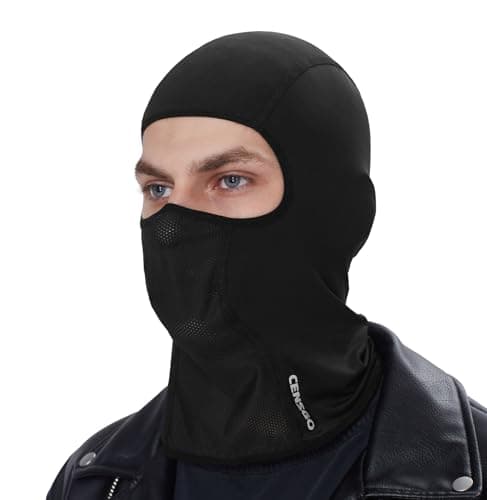
  • CENSGO Motorcycle Balaclava / Helmet Liner

    Keeping the liner clean and fine-tuning a slightly loose fit

    CENSGO Motorcycle Balaclava / Helmet Liner

    A thin under-helmet layer that keeps sweat and hair oil out of a liner you cannot easily wash — and takes up just enough room to settle a helmet that sits a shade loose.

    Skip it if your helmet is already at the tight end of correct — a balaclava does not help in that direction, and cheek pads are the proper adjustment.

#ad · Prices as of Sep 5, 2026, pulled live from Amazon; where we have no verified price we show none. We may earn a commission.

How we picked

We do not crash-test helmets

We compiled published specifications, cited each helmet's certification (DOT, ECE 22.06, Snell, SHARP) from the standards body or manufacturer homologation, and aggregated owner reports, then scored against a published method. The scores are judgments from documented research — not measurements we took. We do not run a crash lab. Certifications reflect the US-market build; where it differs from the European version, we say so and cite it.

Questions

Frequently asked

What is the biggest motorcycle helmet size you can buy?
Of the helmets we cover, the HJC i91 goes furthest: HJC offers it from XS to 5XL, with its size chart running to 68-69 cm. It is also the only one that gives the largest sizes their own shell rather than padding down a smaller one - HJC's Shell 4 is built specifically for 3XL-5XL, though it is offered in solid colorways only.
Why do most motorcycle helmets stop at 2XL?
Tooling cost, not safety. Every additional shell size means a separate mold, separate EPS liners and a separate certification submission, and the number of riders above about 63 cm is small enough that many manufacturers decide it will never pay back. Nothing about a large head is harder to certify - the standards test by headform size, and a certified 3XL clears exactly the same bar as a certified medium.
Is a 3XL helmet less safe than a smaller one?
No. The certification is granted to the model across its size range, and a 3XL has to pass the same impact and retention tests as any other size. What does vary is construction: some makers reach 3XL by molding a shell for it (Shoei's dedicated 3XL shell, HJC's 3XL-5XL shell) and others by removing padding from the XL shell (LS2 and Bell both run one shell from XL to 3XL). Both are legitimate; the purpose-built shell is proportioned better and usually more comfortable over a long day.
My helmet presses on my forehead but is loose at the sides - do I need a bigger size?
Almost certainly not. That pattern is a head-shape mismatch, not a size one: an intermediate-oval shell on a rounder skull pinches front-to-back while leaving clearance at the temples. Going up a size relieves the pressure by making the helmet loose everywhere, which defeats the retention the safety test depends on. Measure your circumference first, then look for a shell shaped closer to your head or adjust with cheek pads.
How do I measure my head for a 3XL helmet?
Exactly the same way as any other size: wrap a cloth tape around the largest part of your head, roughly an inch above the eyebrows and around the ears, pull it comfortably snug and take the largest of two or three readings. Then match that number to the specific model's chart rather than to a generic one - charts differ between brands, and at the top of the range a 3XL can mean 64-65 cm on one maker's chart and 65-66 cm on another's.
Should I size up if I am between sizes at the top of the range?
At the large end you often have no choice, because there is nothing above. If you fall between two sizes and the larger one is the last one made, take it and tighten the fit from the inside with thicker cheek pads or a thin helmet liner, then repeat the roll-off test. What you must not do is buy the smaller size and hope it stretches - comfort padding compresses with use, but the EPS liner and shell do not.

Keep reading

Receipts

Sources

We do not run a crash lab, and we do not pretend to. Certifications are cited to the standards body or the manufacturer's stated homologation; where a US model's certification differs from its European namesake, we say so. Where we could not verify something, we say so on the page rather than quietly leaving it out. Read our full method.