If you wear glasses, you already know the move: hold the helmet open with both thumbs, aim the temple arms at a gap that isn't there, and either fold an arm behind your ear or arrive with a red stripe pressed across your temple. That is not a fitting error and it is not your head. It is a design gap. A helmet's cheek pad is at its densest right where a temple arm has to cross, because that density is what grips your jaw and stops the helmet rolling off. Some manufacturers mold a relief channel through that zone. Most do not, and most of the ones that do not still print "glasses friendly" on the listing.
So this page is ranked on a single hard question first: does the manufacturer actually document eyewear accommodation?Not a retailer's adjective, not a forum impression - a published claim we can point at. Then, because this is what the rest of the site exists for, we rank on the certification the USbox carries, which is frequently not the certification the European version's reviews describe. We have not crash-tested anything and we do not have a lab. Certifications come from the standards bodies and independent SHARP results; eyewear claims come from the manufacturers' own product pages and their US retail spec sheets, all linked in the sources below.
The short answer: buy a modular
Before the picks, the honest structural point. The single most effective fix for glasses in a helmet is a chin bar that lifts. With a modular you flip the front up, put the helmet on, then put your glasses on with your hands in free air and close the bar over them. The temple arms never have to be threaded past a compressed cheek pad at all, so the question of whether the pad has a groove becomes far less urgent. That is why four of the five picks below are flip-ups, and why our commuter modular roundup overlaps this one. A molded eyewear channel is the second-best fix, and it is the one that matters if you are set on a full-face.
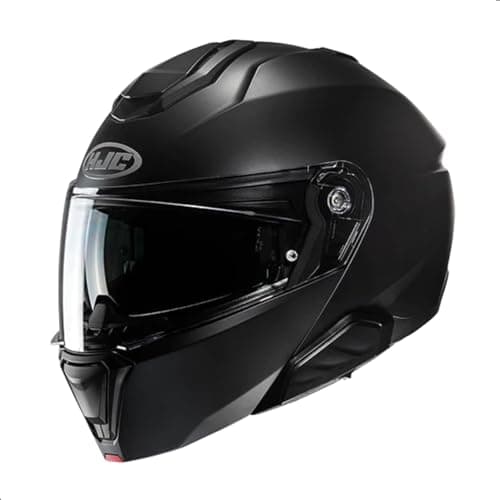
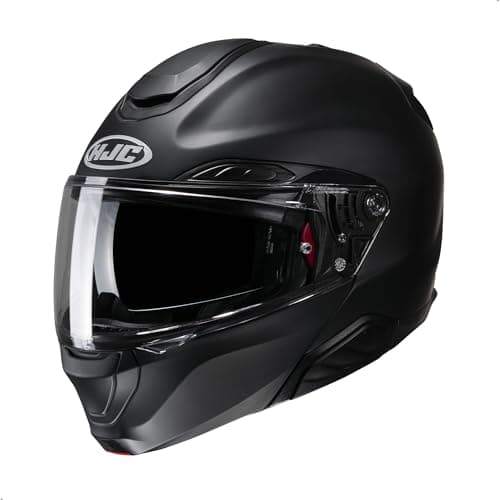
HJC RPHA 91 — the one that documents it and out-certifies the flagships
The RPHA 91 is our top pick here for the same reason it wins our modular category generally, plus one specific to this page: HJC states an "eyewear-friendly EPS design" on its own US product page. That is a manufacturer claim about the foam liner, not a retailer adjective about the padding, and it is rarer than it should be. Pair it with the flip-up chin bar and you have both mechanisms working at once. On certification it is the strongest thing here by a distance: genuine ECE 22.06 with P/J dual-homologation (legally approved to ride with the bar up) and an independent 4/5 SHARPscore, at roughly half what a Shoei Neotec 3 costs. It also carries a three-step HJ-V12 drop-down sun visor, which matters more to a glasses wearer than to anyone else - see the buyer's guide below for why.
The honest cons: it is not as quiet as a Neotec 3, the interior is a notch less plush than the premium Japanese brands, and it is offered XS-2XL, so it runs out of size sooner than the i91 does. Riders also commonly report needing to pull the speaker pocket covers to get the most comfortable arm clearance - a two-minute job, but worth knowing before you decide the helmet doesn't work. Full detail in the RPHA 91 review, and the independent test data in its safety rating.
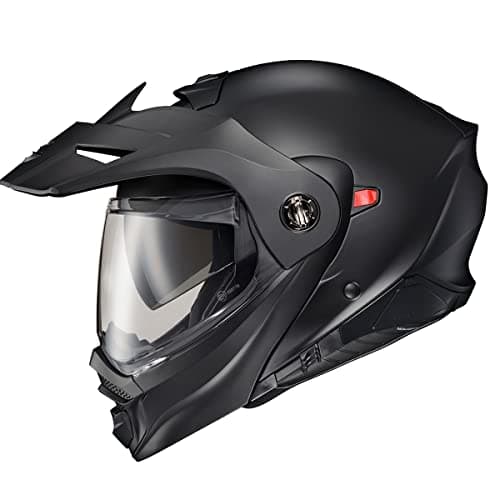
Scorpion EXO-AT960 — documented eyeglass pads, ECE 22.06, adventure-shaped
If your riding has any dirt in it, this is the pick. Scorpion's US spec sheet states that the KwikFit 3D sculpted cheek pads accommodate most eyeglasses - again a published claim about a specific part, not a vibe - and the helmet carries genuine DOT + ECE 22.06at roughly a third of a carbon flagship's price. It is a three-configuration ADV lid: peak and visor, street, or peak and goggles. It flips open like a modular, it has a drop-down internal sun visor most adventure helmets omit, and it is offered up to 3XL.
The honest cons are weight and noise. The polycarbonate shell puts it around 1,860 g, which is heavy, and the peak adds real drag and wind roar at highway speed - and wind noise is a problem glasses do nothing to help. If most of your miles are interstate, spend up. Detail in the EXO-AT960 review.
HJC i91 — the most explicit glasses claim on the site, and the cheapest
The i91 has the clearest eyewear language of any helmet we cover: HJC describes "integrated glasses grooves that comfortably accommodate both eyeglasses and sunglasses" on its own US page. Grooves, plural, named. It is also a flip-up, it ships with an oversized HJ-V12 drop-down sun visor and a Pinlock-ready HJ-33 shield, and it is offered from XS all the way to 5XL across four shell sizes - by a distance the widest size range here, which matters because sizing up to make room for glasses is exactly the wrong fix.
The honest con is certification, and it is the reason this sits third rather than first. The US i91 sold on Amazon is marketed DOT-approved; HJC's European i91 has existed in both ECE 22.05 and 22.06 builds depending on production date, so we do not assert 22.06 on the US unit - confirm the label on the exact helmet you receive. It is also a polycarbonate shell at around 1,720 g and nowhere near as refined as the RPHA 91. If the current rotational standard is your requirement, pay the difference and take the RPHA 91. See the i91 review for the full picture.
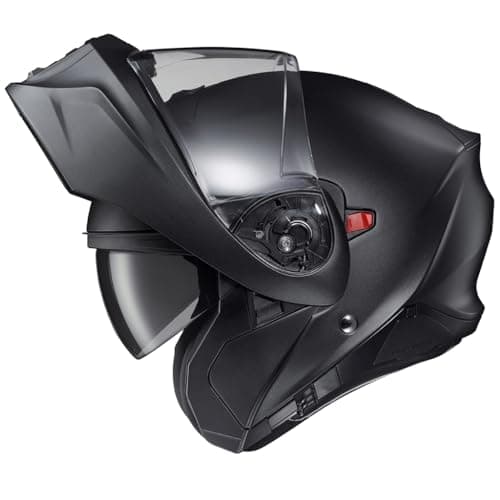
Scorpion EXO-GT930 Transformer — glasses-compatible, and it removes the chin bar entirely
The GT930 is the most accommodating shape here in the literal sense: it converts from full-face to a true open-face by removing the chin bar, so on a hot commute the temple-arm question stops existing. Scorpion's US spec sheet lists it as compatible with most eyeglasses and fits the same 3D-contoured KwikFit cheek pads as the AT960. It carries P/J homologation, so riding it open is approved rather than tolerated, it has a drop-down sun visor, and it is offered XS-4XL.
The honest con is the one we will not paper over: it is ECE 22.05, not 22.06. It has not been through the rotational-impact test the newer revision added, and a few marketplace listings claim 22.06 for it - treat those as unverified. It is also heavy at around 1,890 g. Buy it for the convertibility and the eyewear fit, not as your best-certified option; the AT960 above is the same brand's answer if the current standard matters more. Detail in the EXO-GT930 review.
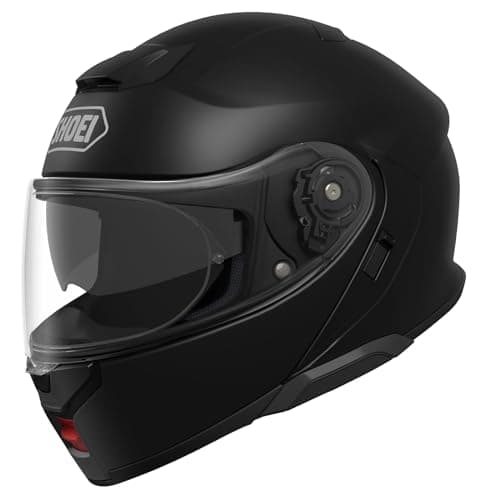
Shoei Neotec 3 — the quiet one, and the one with nothing on the record
The Neotec 3 is here because it is the quietest flip-up most riders will ever wear, and because the flip-up mechanism alone solves most of the glasses problem regardless of what is molded into the liner. Deep neck roll, rebuilt chin-bar seal, the plushest interior in this group, a QSV-2 sun visor and a purpose-built Sena SRL3 comms channel. For long touring days it is genuinely in a different class.
Two honest cons, and the first is specific to this page. Shoei publishes no eyewear claim for it.We checked Shoei's own model page and there is no mention of glasses grooves, eyewear channels or temple relief - so unlike the four above, nothing here is documented, and the retailer copy that says otherwise is not coming from Shoei. Second, the US Neotec 3 is a DOT build; the ECE 22.06 P/J, 5/5 SHARP Neotec is the European unit, not the box you buy here. It is also the heaviest and by far the most expensive pick. If touring silence leads and DOT satisfies you, it is superb - see the Neotec 3 review. If certification leads, the RPHA 91 costs far less and carries more.
So which one?
Want documented eyewear accommodation and the best certification, and you are not buying twice? The HJC RPHA 91. Riding dirt or gravel? The Scorpion EXO-AT960. On a tight budget, or need a size past 2XL? The HJC i91, with the cert caveat read and understood. Want to be able to take the front of the helmet off entirely in traffic? The Scorpion EXO-GT930. Want the quietest tourer and DOT is enough for you? The Shoei Neotec 3. Whichever you pick, size it with your glasses on and read our head-measuring guide first - a helmet sized up to make room for a temple arm is a helmet that no longer fits the way its certification assumed.
Why glasses hurt in a helmet, and what actually fixes it
The mechanism is simple once you see it. A cheek pad has to be dense enough to grip your jaw, because that grip is what stops the helmet rotating off your head in the roll-off test every certification depends on. The densest part of that pad sits roughly where your temple arm runs. Push a rigid arm into it and one of two things happens: the arm digs into your temple, or it lifts the pad away from your cheek and quietly loosens the fit. Neither is acceptable, and the second is the dangerous one, because it feels like the problem went away.
Three fixes work, in this order. A chin bar that opens is the best of them - you put the glasses on after the helmet is on, so nothing is ever dragged past a compressed pad. A molded eyewear channel in the EPS liner or the cheek pad is the fix for a fixed full-face, and it is the thing to look for in writing: HJC names it on the RPHA 91 and the i91, Scorpion names it on the KwikFit pads. Thinner cheek pads are the third option and the one to treat carefully - dropping a pad thickness does relieve temple pressure, but it also loosens exactly the grip the safety test relies on, so re-run the roll-off check afterward. Our cheek pads and liners guide walks through how to do that properly.
One fix that is not a fix: buying a size up. It creates room, and it also puts you in a helmet that sits high, slides on your scalp and can shift out of position before it ever manages an impact. Every number on the certification label describes a helmet that is on your head the way the lab assumed it is.
Two things glasses wearers should weight more heavily than other riders
A drop-down sun visor. Riders who do not wear glasses can swap to a tinted shield or put sunglasses on. You cannot do either cheaply - prescription sunglasses are a second expensive pair, and a tinted shield over clear prescription lenses is two layers of tint you did not ask for. An internal sun visor solves it in one switch, which is why every pick on this page has one. If you want the deeper comparison, we cover the trade-offs in photochromic vs tinted vs clear.
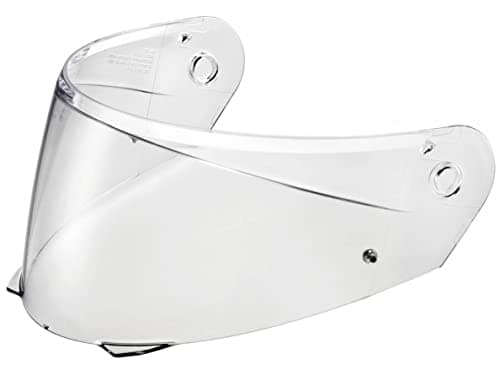
Fog. You now have two lenses to fog instead of one, and warm breath rising off a chin bar hits your glasses before it reaches the shield. A Pinlock insert deals with the shield properly and a closed chin curtain redirects the breath that would otherwise go straight up your lenses; a treatment spray is the fallback on a shield with no Pinlock pins. Check the shield code before you buy an insert - the RPHA 91 takes the HJ-37 shield and the i91 takes the HJ-33, and they are not interchangeable. Our fogging guide ranks those in order.
How we chose these five
We do not run a crash lab and we do not claim to. These are judgments built from published homologation data, the manufacturers' own product pages, US retail spec sheets, independent SHARP results where they exist and aggregated owner reports - exactly as our methodology sets out. For this page we weighted the decision in one order: whether eyewear accommodation is documented by the maker, then the certification the US box carries, then whether the chin bar opens, then size range and sun visor. We deliberately excluded several helmets we like - the Shoei GT-Air 3, the HJC RPHA 12 and the LS2 Advant X among them - not because they fit glasses badly, but because we could find no manufacturer statement either way and we are not going to invent one. Absence of a documented channel is not proof a helmet is bad for glasses; it just is not evidence that it is good for them.