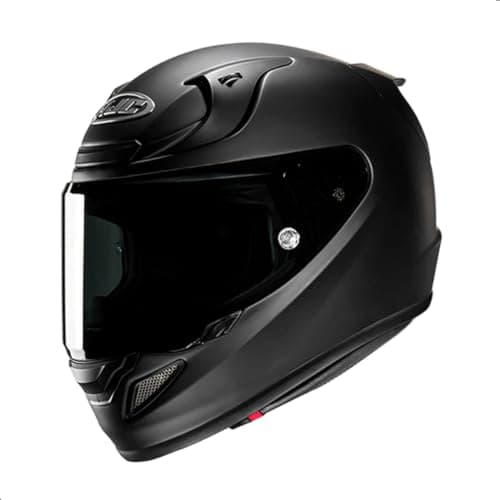
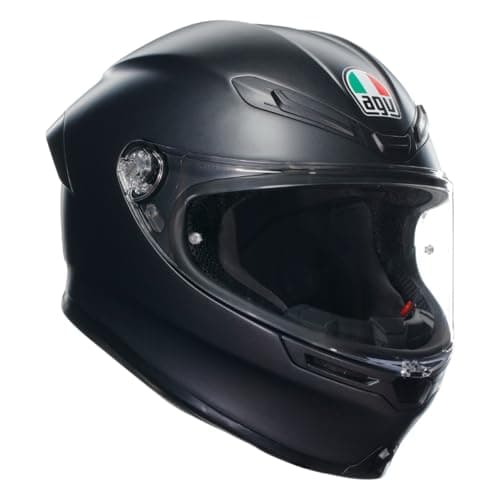
These two make a genuinely close sport full-face decision. Both the HJC RPHA 12 and the AGV K6 S carry genuine ECE 22.06and both are light — so the usual certification gap doesn't decide it. The tiebreakers are independent data, the last few grams, and price.
Certification: both 22.06; the K6 S adds SHARP
Both hold genuine ECE 22.06 — current rotational standard. The difference is independent testing: the K6 S has a 5/5 SHARPscore (top third-party impact data), while the newer RPHA 12 isn't SHARP-tested yet. If independent data matters to you, that's the K6 S's edge; if the current homologation is enough, the two are level on the mark that's actually on the shell.
Weight: a near tie
Both are light. The K6 S is around 1,255 g of carbon-aramid; the RPHA 12 around 1,474 g of PIM EVO composite. The K6 S is the lighter by a couple hundred grams — noticeable but not dramatic — and both are well under a typical touring helmet. Neither will tire your neck the way a heavy lid does.
Character, features and price
Both are sport-focused with no sun visor and Pinlock-ready shields. The K6 S has AGV's huge racing eyeport and a slightly plusher finish; the RPHA 12 is a touch more sport-touring in character with wind-tunnel aero for covering miles. The big practical difference is price: the RPHA 12 typically undercuts the K6 S by a meaningful margin. So the K6 S is the lighter, SHARP-backed premium pick; the RPHA 12 is the value one that gives up little.
The verdict
Want the lightest helmet with independent SHARP data and don't mind paying for it? The AGV K6 S. Want genuine ECE 22.06 in a light shell for less money, and a SHARP score isn't essential to you? The HJC RPHA 12 is the value winner. Both are excellent — read the RPHA 12 review and K6 S review.
How we picked
We compiled published specifications, cited each helmet's certification (DOT, ECE 22.06, Snell, SHARP) from the standards body or manufacturer homologation, and aggregated owner reports, then scored against a published method. The scores are judgments from documented research — not measurements we took. We do not run a crash lab. Certifications reflect the US-market build; where it differs from the European version, we say so and cite it.