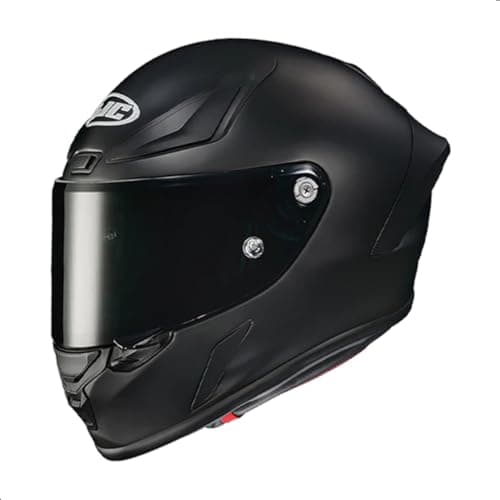
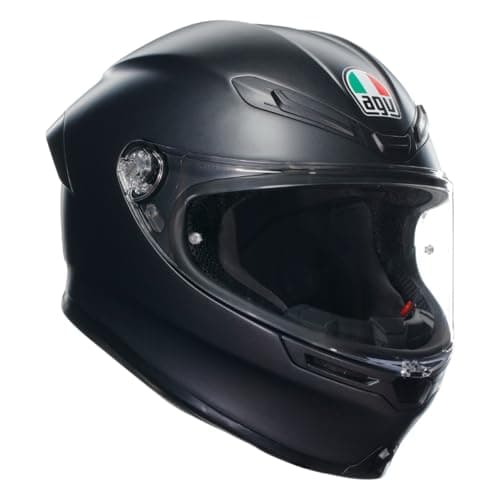
If you want the strongest certification a sport full-face can carry, these are two of the best, and they prove it differently. The HJC RPHA 1N carries FIM racing homologation on top of ECE 22.06; the AGV K6 S carries a perfect 5/5 SHARP score on top of ECE 22.06. Both are genuinely excellent — the question is which kind of proof, and which helmet, fits you.
Certification: two different top-tier proofs
Both hold genuine DOT + ECE 22.06. On top of that, the RPHA 1N adds FIM homologation — a race standard testing the shell to professional-competition demands — while the K6 S adds a 5/5 SHARPscore, the UK government's independent off-the-shelf impact rating. These are different things: FIM is a racing homologation, SHARP is a consumer impact rating. Neither is universally "better" — both are strong, independent signals most helmets can't show, and either satisfies a certification-first buyer.
Weight: the K6 S wins
The K6 S is around 1,255 gof carbon-aramid — one of the lightest full-face helmets made — versus the RPHA 1N's ~1,510 g PIM+ carbon. Both are light for the class, but the K6 S is the featherweight. On a long day or a hot track session, that difference tells.
Character and ventilation
Both are sport lids with no sun visor and Pinlock-ready shields. The RPHA 1N is the more overtly race-focused, with serious ACS ventilation (five intakes, four exhausts) built to flush heat on track; the K6 S is sport with a huge racing eyeport and a slightly more road-friendly feel. Neither is a touring helmet — both want to be ridden hard.
The verdict
Do track days and want a FIM-homologated, seriously-ventilated race lid? The HJC RPHA 1N. Want the lightest full-face with a perfect independent SHARP score and a slightly more road-friendly feel? The AGV K6 S. Both are about as well-certified as sport full-face helmets get — let weight, ventilation and which proof you value decide. Read the RPHA 1N review and K6 S review.
How we picked
We compiled published specifications, cited each helmet's certification (DOT, ECE 22.06, Snell, SHARP) from the standards body or manufacturer homologation, and aggregated owner reports, then scored against a published method. The scores are judgments from documented research — not measurements we took. We do not run a crash lab. Certifications reflect the US-market build; where it differs from the European version, we say so and cite it.