HUB 03 · Full-Face Helmets
HJC RPHA 1N Review
HJC's MotoGP-derived flagship carries the one certification almost no street helmet can show — FIM racing homologation — on top of DOT and ECE 22.06, in a light carbon shell at a value price.
We earn a commission when you buy through our Amazon links, at no extra cost to you. It never changes a ranking, and we tell you when the cheaper helmet is the better buy. How this works.
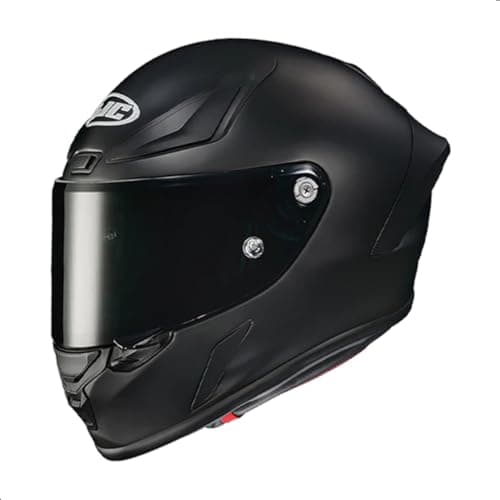
Track-grade certification for the money
HJC's MotoGP-derived flagship: the same PIM+ carbon shell HJC races, carrying DOT + ECE 22.06 and FIM racing homologation, for a fraction of an Arai or Shoei race lid.
Price as of Sep 18, 2026. Prices change — Amazon's at checkout is the one that counts.
#ad · we may earn a commission from this link to HJC RPHA 1N
The HJC RPHA 1N is the helmet that makes a mockery of the idea that track-grade protection has to cost Arai or Shoei money. It's the same PIM+ carbon shell HJC races in MotoGP and WorldSBK, and it carries the certification to prove it: DOT + ECE 22.06 and FIM racing homologation, the standard actual race helmets must meet — at a price well under the Japanese flagships.
As always, we haven't crash-tested this helmet. The certifications come from the standards bodies and HJC's homologation, the specs from HJC, and the ride impressions are aggregated from owners. Where a figure is a manufacturer claim, we say so.
FIM homologation is the part that matters
Most street helmets carry DOT and ECE. The RPHA 1N adds FIM homologation— the Fédération Internationale de Motocyclisme standard that race helmets must pass to be worn in professional competition. It's a genuinely stricter, track-focused benchmark that tests the shell to racing demands, and very few helmets at this price carry it. On a site that ranks by the mark on the shell, that's a headline: the RPHA 1N holds the current road standard (ECE 22.06) and a race homologation, which together are about as strong a certification story as a full-face can tell.
Light carbon, serious ventilation
The PIM+ carbon shell keeps it to around 1,510 g— light for a full race helmet — and the ACS ventilation system (five intakes, four exhausts) flushes heat front-to-back, which also helps keep the visor clear. This is a helmet built to be ridden hard on a hot track day and stay cool and composed doing it. The aero shell reduces drag and stays stable at the kind of speeds it's designed for.
The honest cons: it's a race lid
The RPHA 1N is track-focused, and that has costs for street use. The fit and shell are firm and sporty, not plush and touring-soft — it's made to be worn tucked behind a screen at speed, not to cosset you on a commute. There's no sun visor, so you run a tinted shield or sunglasses. And while it's a value flagship, it's premium-priced for an HJC. None of that is a flaw; it's the nature of a race helmet.
Who should skip it
Touring and commuting riders who want a plush, quiet, sun-visor-equipped helmet — the Shoei GT-Air 3 or the sport-touring HJC RPHA 12 suit daily riding far better. But if you want the strongest certification résumé in sport full-face — DOT, ECE 22.06 and FIM — at a price that undercuts the Japanese race lids, the RPHA 1N is one of the best-value serious helmets you can buy. See it against its sport-touring sibling in RPHA 1N vs RPHA 12.
The scorecard
How it scores, and who should skip it
- Certification
- 9.5
- Ventilation
- 9
- Weight
- 8.5
- Value
- 9
- Finish
- 8.5
Pros
- Carries FIM racing homologation on top of DOT + ECE 22.06 — a track-grade cert most street lids can't show
- PIM+ carbon shell keeps it light (~1,510 g) for a full race helmet
- ACS ventilation (5 intakes, 4 exhausts) flushes heat and reduces visor fog
Cons
- A hard, track-focused shell and fit — less plush than a touring lid
- No sun visor, and premium-priced for an HJC (though far under Arai/Shoei race helmets)
Don't buy this if…
…you want a comfortable touring or commuting helmet — this is a race-derived lid; a sport-touring RPHA 12 or a touring full-face suits daily riding better.
Price as of Sep 18, 2026. Prices change — Amazon's at checkout is the one that counts.
#ad · we may earn a commission from this link to HJC RPHA 1N
How we picked
We do not crash-test helmets
We compiled published specifications, cited each helmet's certification (DOT, ECE 22.06, Snell, SHARP) from the standards body or manufacturer homologation, and aggregated owner reports, then scored against a published method. The scores are judgments from documented research — not measurements we took. We do not run a crash lab. Certifications reflect the US-market build; where it differs from the European version, we say so and cite it.
Questions
Frequently asked
Is the HJC RPHA 1N FIM homologated?
Is the RPHA 1N good for street riding?
How much does the HJC RPHA 1N weigh?
Keep reading
Related
- All full-face helmetsThe full ranked roundup, by certification.
- RPHA 1N vs RPHA 12HJC's flagship race lid against its value sport-touring one.
- Best track-day full-face helmetsWhere the RPHA 1N ranks for the track.
- HJC RPHA 1N safety ratingWhat FIM homologation adds over ECE 22.06.
- RPHA 1N vs Shoei RF-1400FIM race homologation against the Snell sport-touring benchmark.
Receipts
Sources
We do not run a crash lab, and we do not pretend to. Certifications are cited to the standards body or the manufacturer's stated homologation; where a US model's certification differs from its European namesake, we say so. Where we could not verify something, we say so on the page rather than quietly leaving it out. Read our full method.