A visor that fogs at every stoplight is the most annoying — and the cheapest to fix — problem on any helmet. The genuine solution is a Pinlock system: a Pinlock-ready shield plus a Pinlock insert that creates a double-glazed, moisture-absorbing inner lens. This roundup covers that upgrade path, because unlike a helmet, an accessory is only useful if it fits your exact shield — so we lead with fitment, then with what actually stops fog.
We haven't lab-tested these accessories; the specs come from Pinlock and the manufacturers, and the impressions are aggregated from owners. One honest note that governs this whole page: a shield or insert only helps if it's made for your helmet's shield system. We tell you exactly what each one fits, and if none of them matches your helmet, the same Pinlock principle applies — buy the insert and shield cut for your model.
How the Pinlock system works — and why it beats sprays
Fog forms when warm, moist breath hits a cold visor. Anti-fog sprays and coatings help a little and wear off fast. A Pinlock insertworks differently and far better: it's a second lens that clips onto pins inside a Pinlock-ready shield, sealed by a silicone bead, creating a thin insulating air gap — double glazing for your face. The inner lens stays warm and its moisture-absorbing material keeps it clear. It's the closest thing to a permanent fog fix short of a heated visor, which is why nearly every premium helmet ships Pinlock-ready. The catch: you need both a Pinlock-ready shield (with the pins) and the correct insert for that shield.
Pinlock 120 Max Vision Insert — the anti-fog fix itself
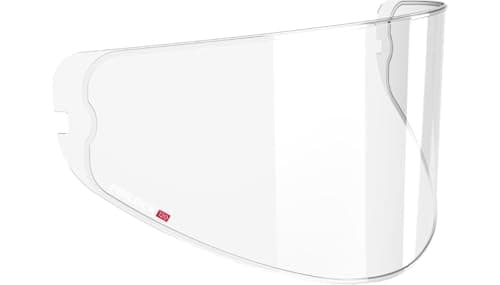
This is the part that does the work, and our top pick because it's the actual solution to fog rather than a shield you also need. The Pinlock 120 is the widest Max Vision size, giving up to 120 degrees of distortion-free clarity, and a genuine Pinlock insert is the most effective anti-fog measure short of a heated visor. It snaps in in seconds with no tools. The honest cons are all about fitment: this specific lens is cut for AGV VAS-Z / DKS232 shields(as used on several AGV models), not universal — the wrong insert won't seal against the pins — and it adds a faint inner-lens line at the very edge of vision. If you ride an AGV that uses this shield, it's the single best anti-fog upgrade you can make; if you don't, buy the Pinlock insert cut for your shield instead, and read our Pinlock installation guide.
Shoei CWR-F2 Face Shield — the RF-1400 fix
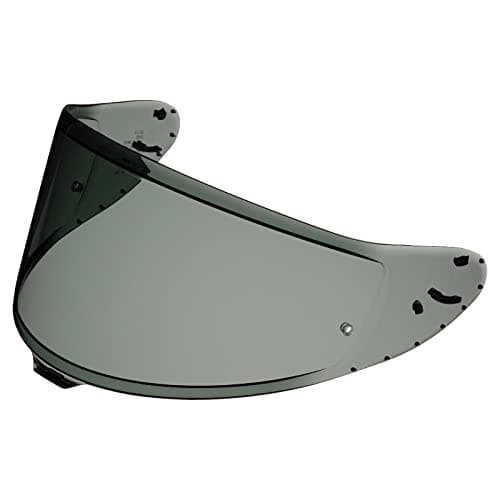
If you own a Shoei RF-1400(or its NXR2 twin) and your visor is scratched, hazed, or you want to set up Pinlock anti-fog, this is the genuine OEM shield. It's Pinlock-ready with the pins fitted, optically true, and sealed the way a generic shield never quite is — a scratched visor scatters light dangerously at night, so a proper replacement is a safety upgrade as much as a convenience. The honest cons: it fits only the Shoei CWR-F2 system(RF-1400 / NXR2), not the CNS-3 shield on the Neotec or GT-Air, and the Pinlock anti-fog insert is a separate purchase. For an RF-1400 owner, it's the correct shield and the base of the anti-fog setup.
HJC HJ-37 Pinlock-Ready Shield — the RPHA 91 fix
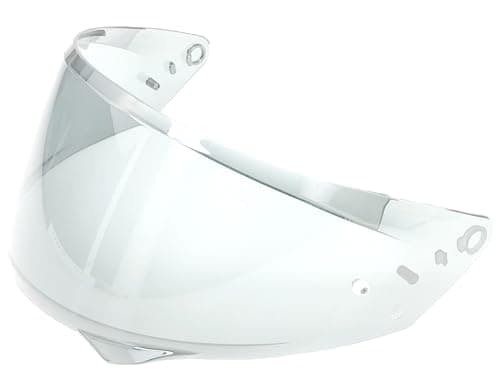
The equivalent for our top modular pick, the HJC RPHA 91. The HJ-37 is the genuine Pinlock-readyshield for the RPHA 91 — the right fix for a scratched or worn visor, and the base for adding a Pinlock insert for fog-free cold mornings. It's anti-scratch and UV-blocking, and it's inexpensive relative to living with a hazed visor or replacing a helmet. The honest cons mirror the Shoei's: it fits only the RPHA 91 (HJC uses different shields per model — the i91 takes the HJ-33), and the Pinlock insert is separate. For an RPHA 91 owner, it's the correct shield and a cheap way to keep the helmet like new.
OEM shields vs cheap generics
It's tempting to save a few dollars on a no-brand replacement shield, and for the visor — the one thing between your eyes and the road — it's a false economy. A genuine OEM shield is molded to the exact curvature of your eyeport, seals cleanly against the gasket, and meets the same optical standards as the helmet; a cheap generic often seals poorly (letting in wind, water and noise), distorts slightly at the edges, and may not take a Pinlock insert properly. On a scratched shield you replace for clarity, buying one that's optically worse defeats the purpose. The genuine CWR-F2 (RF-1400) and HJ-37 (RPHA 91) above are the correct parts; for other helmets, buy the OEM shield for your model.
The same logic applies to the Pinlock insert: use a genuine Pinlock made for your shield, not a lookalike. The seal and the moisture-absorbing lens are the whole mechanism, and a generic that doesn't seat properly is why some riders wrongly conclude "Pinlocks don't work." Spend the small amount on the right parts once, and your fog and visor problems are solved for years — cheaper, in the end, than replacing a helmet you could have refreshed for the price of a shield.
So which anti-fog upgrade?
Start with what you own. If your visor fogs and you already have a Pinlock-ready shield, buy the Pinlock insert cut for your exact shield — for AGV VAS-Z shields, the Pinlock 120 above is it; for other helmets, match the insert to your shield code. If your visor is also scratched or worn, replace the shield first with the genuine Pinlock-ready item — the Shoei CWR-F2 for an RF-1400, the HJC HJ-37for an RPHA 91 — then add the insert. Either way you're fixing fog for a fraction of a new helmet's price. And if your helmet isn't here, the principle holds: Pinlock-ready shield plus the matching insert. Our anti-fog guide covers the non-Pinlock tricks too.