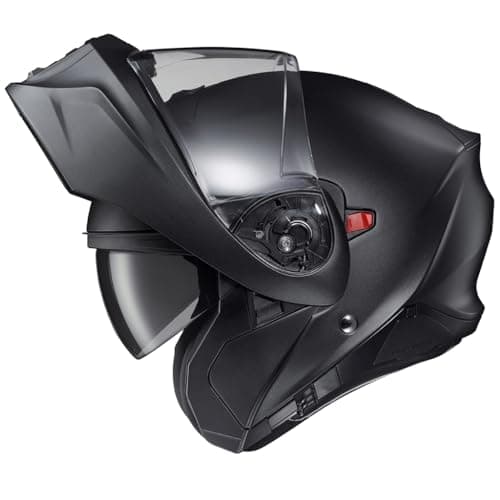
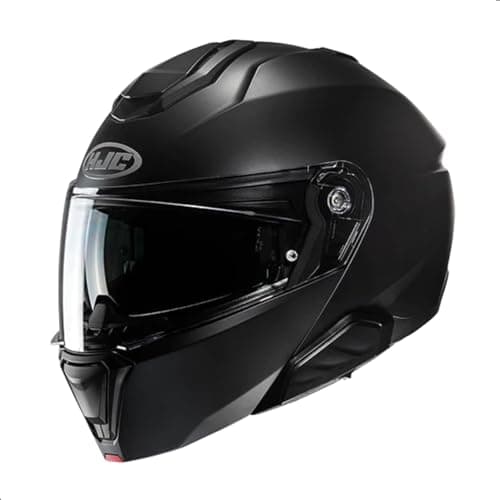
The good news about budget modulars is that a cheap flip-up from a real brand is a genuinely usable helmet — sun visor, comms-ready, comfortable. The honest news is that the certification story gets murkier at this price than it does higher up, and this is exactly where a certification-first site has to earn its name. So here are two budget modulars under $300 worth buying, ranked by the mark on the shell — with every caveat stated plainly, not buried.
We haven't crash-tested these helmets. Certifications come from the standards bodies and retailer listings, specs from the manufacturers, and ride impressions are aggregated from owners. Two things are true at this price and we'll repeat them: certification is not what you pay extra for at the flagship level (you pay for carbon weight savings, quiet and finish), and where a budget helmet's certification has a caveat, we'd rather tell you than let a spec sheet imply otherwise.
How we ranked the budget field
Certification first, then features and comfort. Neither of these helmets carries the full genuine ECE 22.06 P/J story of a mid-tier lid like the HJC RPHA 91— that's the trade you make for the price — so we rank on what each one actually, verifiably holds, and how honest the rest of the package is. Both have a drop-down sun visor and take comms. Where they separate is the exact certification and the party trick.
HJC i91 — the comfort-per-dollar pick
Our budget pick, on comfort and honest value. The i91 is marketed DOT-approved, ships with an HJ-33 Pinlock-ready shield, and has a drop-down sun visor plus Smart HJC comms readiness — a genuinely complete daily helmet for the money, from a major maker. The honest certification caveat is the whole reason it's not higher up the site: we don't assert current ECE 22.06 on the US unit, because HJC's European i91 exists in both 22.05 and 22.06 variants, so you should confirm the label rather than assume. It's also polycarbonate and heavier at ~1,720 g. But for comfort, features and brand at this price, it's the one — see the i91 review. It's also the widest size range on the site, running to 5XL on a shell built for the top sizes, which is why it leads our roundup for big heads.
Scorpion EXO-GT930 Transformer — the 3-in-1 versatility pick
The GT930 earns its place on versatility. It's the only helmet here — and one of few at any price — that converts from a full-face into a genuine open-face, chin bar removed, with P/J homologation making that open mode approved. Add the sun visor and it's a legitimately clever helmet. The honest caveat is the certification: it's ECE 22.05, not 22.06, so it lacks the rotational test the newer standard adds (a few listings claim 22.06 — treat that as unverified), and the polycarbonate shell is heavy at ~1,890 g. If the convert-to-open trick is what you want and you've accepted the 22.05 note, it's a defensible, honest budget buy — full detail in the GT930 review.
The honest ceiling of a budget modular
It's worth naming what neither of these does, so you buy with your eyes open. Neither is light — both are polycarbonate and heavier than any composite or carbon flip-up. Neither is whisper-quiet — budget shells and extra seams cost you decibels, so earplugs matter even more here (see the quiet-helmet guide for why no helmet replaces them). And neither carries the full ECE 22.06 P/J plus independent SHARP story you get one tier up. If any of those is a dealbreaker, the honest move is to stretch to the LS2 Advant X or the RPHA 91 rather than expect a sub-$300 helmet to do it.
What to check before you buy a budget modular
Two checks matter more on a cheap flip-up than on a premium one. First, the actual certification label on the helmet you're buying, not the marketing copy — this is the price bracket where ECE status gets fuzzy, where a listing might claim more than the box carries, and where confirming the sticker is genuinely worth your time. Both picks here are honest once you know what they are (the GT930 is ECE 22.05; the US i91 is DOT-marketed), but the discipline of checking is the habit that protects you across the whole budget market. Second, fit— budget helmets often come in fewer shell sizes, so a size that's "close enough" can leave you with a helmet that's loose at the neck (which leaks air and noise) or presses at the temples.
It's also worth setting expectations on the parts that don't appear on a spec sheet. Budget modulars are heavier, so a long day is more tiring than it would be in a composite lid; they're louder, so earplugs move from "nice" to "necessary"; and the shield and vent mechanisms, while perfectly functional, don't have the buttery action of a flagship. None of that makes them bad buys — they're honest helmets at honest prices — but going in with clear eyes is how you end up happy with a budget purchase rather than wishing you'd stretched.
The upgrade path, if you can stretch
It's worth knowing what a modest stretch beyond this bracket buys, because the jump is bigger than the price gap suggests. For not much more than the top of the budget range, the LS2 Advant X gets you genuine ECE 22.06 P/J anda forged-carbon shell that's dramatically lighter than either budget pick — the single biggest comfort upgrade you can make. A step beyond that, the HJC RPHA 91adds an independent SHARP 4/5 score on top of 22.06 P/J. If your budget has any flex at all, we'd point you at the Advant X before either helmet on this page — the weight and certification gains are that meaningful. The budget picks here are for when the price ceiling is genuinely firm.
So which budget modular?
For most riders, the HJC i91— it's the more comfortable, better-finished daily helmet, with a Pinlock-ready shield and a real brand behind it, and DOT is a genuine standard. Choose the Scorpion EXO-GT930instead if the convert-to-open-face feature is something you'll actually use and you're fine buying it as the ECE 22.05 helmet it is. Either way, fit decides everything at this price too: measure your head with our sizing guide before you buy.