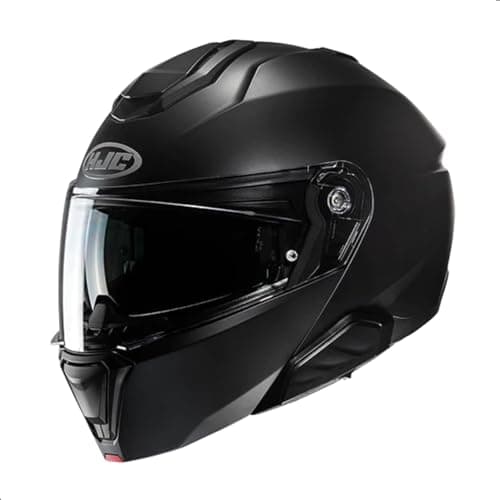
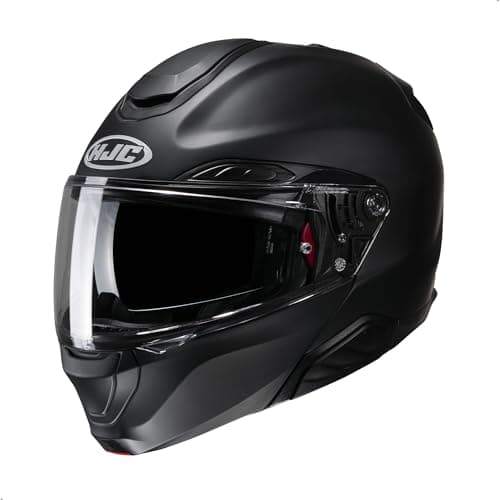
This is the cleanest upgrade decision HJC offers: the i91, the cheapest comfortable modular in the range, against the RPHA 91, our top modular pick overall. Same brand, same flip-up format, same sun-visor-and-comms convenience — but the price roughly doubles, and the question is whether what it buys is worth it to you.
Certification: the RPHA 91 wins, clearly
This is the heart of it. The US i91 on Amazon is marketed DOT-approved, and HJC's European i91 has shipped in both ECE 22.05 and 22.06 depending on the run — so we don't assert current 22.06 on the US unit. The RPHA 91 carries genuine ECE 22.06 with P/J homologation and an independent 4/5 SHARPscore. If you rank a helmet by the mark on the shell and the data behind it, the RPHA 91 is the materially stronger helmet, and it isn't close.
Weight, quiet and finish
The RPHA 91's composite (PIM EVO) shell is lighter at ~1,740 g than the i91's polycarbonate ~1,720 g feel-and-finish class, quieter at highway speed, and plusher inside. The i91 is perfectly comfortable — its whole reason to exist is comfort per dollar — but the RPHA 91 is a noticeable step up in refinement, the kind you feel on a 300-mile day. Both take HJC's Smart HJC comms and both have a drop-down sun visor and a Pinlock-ready shield, so the convenience features are a wash; the difference is materials, weight and the certification.
Price and value
The i91 is roughly half the RPHA 91's price, and that is its entire argument. If your budget is the constraint, DOT is enough for you, and you want a real-brand flip-up with a sun visor and Pinlock capability, the i91 delivers exactly that and nothing you don't need. If you can stretch, the RPHA 91 gives you current certification, independent safety data and a better helmet to live with.
Everyday comfort and who each suits
In daily use the two feel more alike than the price gap suggests, which is a credit to the i91: both are comfortable, both have the sun visor and Pinlock-ready shield, both take HJC comms, and both flip up easily in gloves. The RPHA 91 pulls ahead where you'd expect a helmet at twice the price to — the composite shell is a little lighter and noticeably quieter, the interior feels a grade more premium, and the finish is tidier. On a short commute you might not notice; on a 300-mile day you will. Think of the i91 as the helmet that does 85% of what the RPHA 91 does for half the money, with the missing 15% being certification, quiet and refinement.
So the decision is really about your riding and your budget. A new or occasional rider on a tight budget who commutes and takes the odd short trip is well served by the i91 and won't feel short-changed. A rider who does long days, cares about the current ECE 22.06 standard, or simply wants the better helmet and can afford it should buy the RPHA 91 and not look back. The nice thing about them sharing a brand is that the upgrade path is seamless if you start with the i91 and later want more.
The verdict
Buy the i91if price leads and DOT satisfies you — it's the honest cheap option and a fine commuter. Buy the RPHA 91if you want the certification story done right: genuine ECE 22.06 P/J, a 4/5 SHARP score, and a lighter, quieter, plusher helmet. For most riders who can afford the step, the RPHA 91 is the one we'd point at — it's our top modular pick for a reason. Read the full RPHA 91 review or the i91 review for the detail on each.