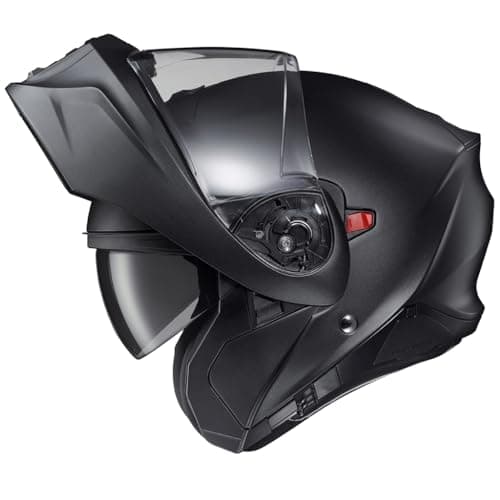
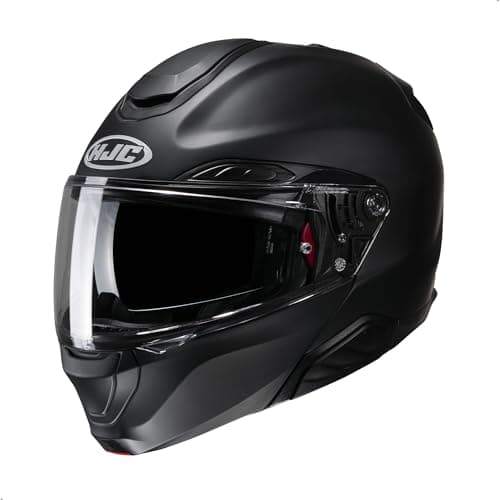
These two aren't quite in the same price class, but riders cross-shop them constantly, because they answer the same question in opposite ways. The Scorpion EXO-GT930 sells versatility — it converts to a true open-face — at a budget price. The HJC RPHA 91 sells certification: genuine ECE 22.06 P/J and independent SHARP data. Which one you want depends on which of those you value more.
Certification: the RPHA 91 wins
The GT930 is DOT + ECE 22.05 P/J. The RPHA 91 is DOT + ECE 22.06 P/J with a 4/5 SHARP score. The step from 22.05 to 22.06 adds a rotational (oblique) impact test and more impact points — a real, current upgrade — and the RPHA 91 has been independently SHARP-tested on top. Both carry the P/J mark, so both are approved to ride open; the difference is the impact standard and the independent data behind it.
Versatility: the GT930 wins
The GT930's party trick is real and the RPHA 91 can't match it: the chin bar removes so the helmet converts into a genuine open-face, not just a flip-up. For a rider who wants one lid for cold full-face commutes and hot open-face cruises, that's a legitimate reason to choose it. Both have drop-down sun visors; only the GT930 becomes an actual jet helmet.
Weight, quiet and price
The RPHA 91's composite shell (~1,740 g) is lighter and quieter than the GT930's polycarbonate (~1,890 g), and better finished. The GT930 is the cheaper helmet by a clear margin. So the money question is blunt: the GT930 saves you cash and adds the open-face trick; the RPHA 91 costs more and gives you the current certification, independent data, less weight and less noise.
Features and everyday use
Both are well-equipped daily helmets, so features don't separate them the way certification and the open-face trick do. Each has a drop-down internal sun visor, a Pinlock-ready main shield and clean comms readiness, and both flip up easily for gas stops. Where the RPHA 91 pulls ahead is the stuff that comes with a better shell: it's lighter, quieter and plusher, and it feels like the more expensive helmet because it is. The GT930 answers with sheer flexibility — no RPHA 91 turns into an open-face — and with a price that leaves money in your pocket for gear or a comms unit.
It's worth being honest that these two aren't really competing for the same buyer. The GT930 is for the value-and-versatility shopper who wants maximum configurability for minimum spend; the RPHA 91 is for the certification-first rider who wants the current standard and independent data and will pay for it. If you find yourself genuinely torn, that usually means the open-face feature is pulling you toward the Scorpion while your safety priorities pull you toward the HJC — and only you can weigh which matters more for the riding you actually do.
The verdict
If the convert-to-open-face feature is genuinely useful to your riding and budget leads, the GT930is a defensible, honest pick — as long as you've accepted it's a 22.05 helmet. For everyone else, the RPHA 91is the better helmet on the axes that matter most on this site: it out-certifies the Scorpion, it's lighter and quieter, and it's our top modular pick overall. Read the GT930 review and the RPHA 91 review for the full picture.