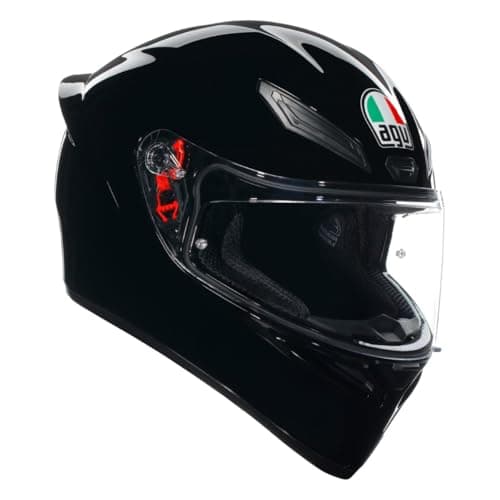
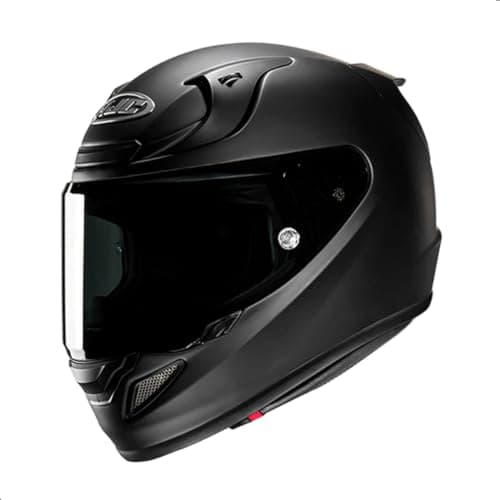
These two prove that genuine ECE 22.06 doesn't require flagship money — both the HJC RPHA 12 and the AGV K1 S carry the current standard at accessible prices. The difference is the shell: the RPHA 12 uses light composite, the K1 S budget thermoplastic. So this is a clean look at what the step up buys.
Certification: a genuine tie
Both hold genuine DOT + ECE 22.06— the current rotational-test standard. Neither is SHARP-tested, so there's no independent star score to separate them. On the mark that's actually on the shell, they're level, which is the point: the current certification is available at both price points.
Shell and weight: the RPHA 12's edge
Here's where the money goes. The RPHA 12 uses a PIM EVO composite shell (fiberglass, carbon and aramid) at around 1,474 g; the K1 S uses a thermoplastic shell at around 1,600 g. That ~125 g is a real neck-fatigue difference on a long day, and the composite shell generally feels more premium. The RPHA 12 is the lighter, more refined helmet.
Aero, features and character
The RPHA 12 leans sport-touring, with wind-tunnel aero, a rear spoiler and a Pinlock-ready HJ-42 shield for anti-fog. The K1 S is the sportier, wide-view AGV with race-derived aero, and it too takes tinted and Pinlock-ready visors. Both have no sun visor and a sporty fit. So the RPHA 12 is the more rounded sport-touring lid; the K1 S the racier-feeling budget one.
Price and value
The K1 S is the cheaper of the two, and its whole argument is genuine ECE 22.06 at the lowest price. The RPHA 12 costs a little more and gives you the lighter composite shell, the anti-fog provision and the sport-touring polish. Both are strong value; the K1 S wins on outright price, the RPHA 12 on what a modest step up buys.
The verdict
Want the absolute cheapest genuine ECE 22.06 and AGV's sporty character? The AGV K1 S. Want a lighter composite shell, anti-fog provision and sport-touring refinement for a little more? The HJC RPHA 12. Both are smart-value 22.06 lids — read the RPHA 12 review and K1 S review.
How we picked
We compiled published specifications, cited each helmet's certification (DOT, ECE 22.06, Snell, SHARP) from the standards body or manufacturer homologation, and aggregated owner reports, then scored against a published method. The scores are judgments from documented research — not measurements we took. We do not run a crash lab. Certifications reflect the US-market build; where it differs from the European version, we say so and cite it.