HUB 06 · Buying Guides & How-To
How to Remove and Replace a Helmet Visor
Modern helmets are built for tool-less shield swaps, so changing a scratched, tinted or clear visor should take under a minute. Here's the general method, the brand quirks, and how not to snap a tab.
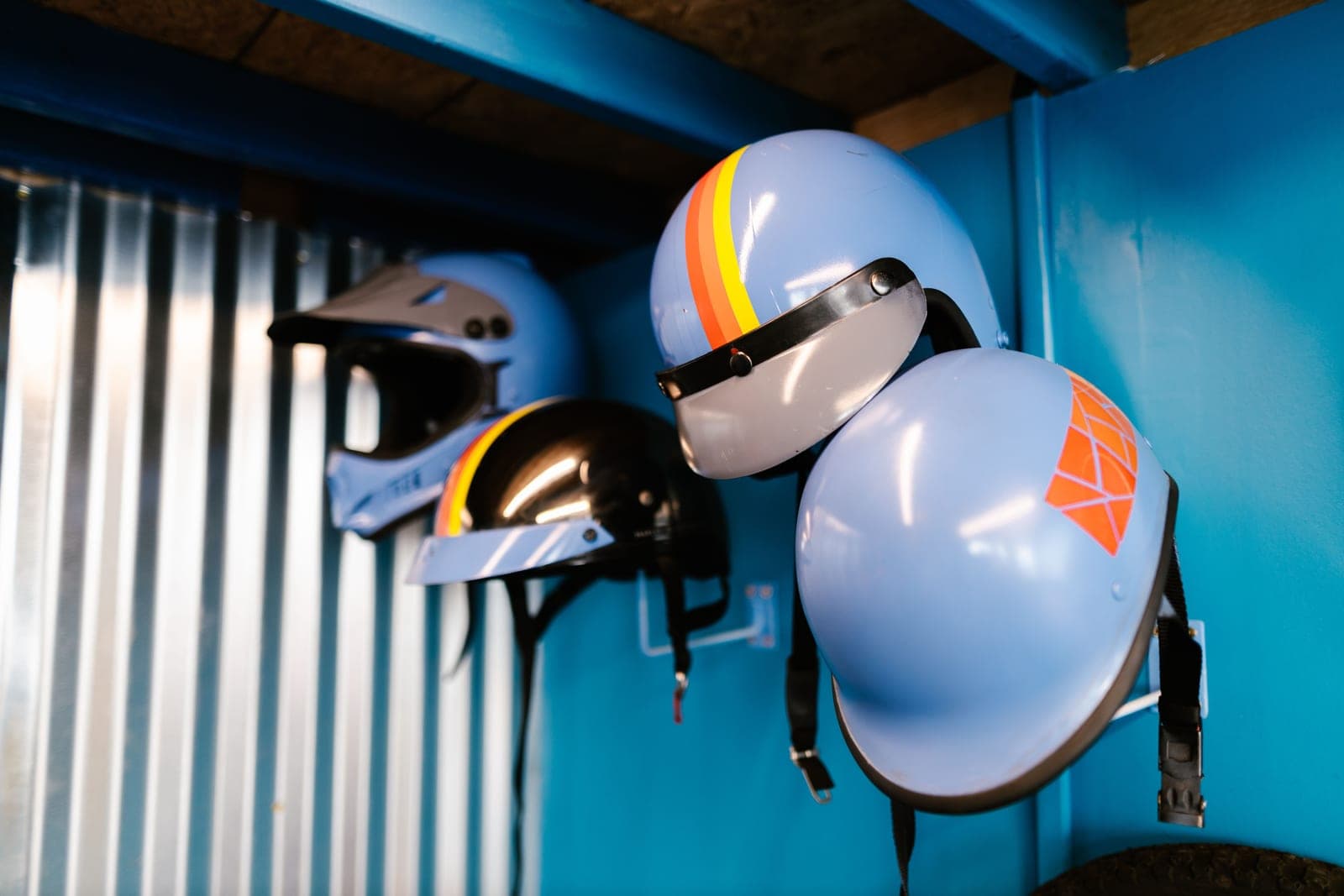
Almost every modern full-face and modular helmet is designed for a tool-less shield swap, so changing a scratched visor, fitting a fresh Pinlock-ready shield, or switching between clear and tinted should take well under a minute. The exact release differs by brand, but the principle is the same everywhere. Here's how to do it cleanly — and how to avoid the one mistake that snaps a mounting tab.
The general method
Nearly all quick-release systems work the same way. Open the visor fully to its highest position — most shields only release at full open. Then find the release lever or buttonat the pivot on each side (some brands have one lever per side, some a single catch). Trip the release and the shield lifts away from the base plate, usually one side at a time. To refit, line the shield's hooks up with the base-plate mechanism and press until it clicks positively homeon both sides. Then close it and check it seats fully into the eyeport seal — a shield that isn't fully clicked in will lift at speed.
Brand differences worth knowing
The details vary. Shoei uses its QR-E/QR base plates with a spring-loaded trigger you pull down while the visor is fully open — quick once you know it. HJC (RPHA 91, RPHA 12, RPHA 1N) uses a lever you flip at each pivot to release the shield. AGV uses its XQRS quick-release, and its race lids use a locking mechanism you disengage first. Araiis the outlier: rather than a central pivot, it uses side pods (the VAS system) that you pop off to change the shield, which keeps the smooth shell but is a slightly more involved ritual. Whichever you own, a two-minute read of the helmet's manual (or a look at the maker's how-to) the first time saves fumbling.
Buy the right shield for your model
A shield is not universal — it's cut for a specific helmet's base plates and eyeport, so you must buy the one for your exact model. The Shoei RF-1400 uses the CWR-F2; the HJC RPHA 91 uses the HJ-37; the RPHA 12 uses the HJ-42; the RPHA 1N uses the HJ-35. Our shields and inserts roundup covers the common ones and how to match a Pinlock insert to the shield. Fitting a generic shield often means a poor seal and distortion, so genuine is worth it for the one thing between your eyes and the road.
The mistakes to avoid
Three things. Don't force a release that isn't tripped — if the shield won't come off, the lever isn't fully engaged or the visor isn't at full open; forcing it snaps a tab. Don't refit a shield that isn't clicked home on both sides; a half-seated visor lifts and whistles at speed (see fixing a loose or rattling visor). And don't touch the inside of a Pinlock lens or drag grit across the shield with your fingers as you work — handle it by the edges. Done gently, a visor swap is one of the easiest and most useful jobs on a helmet.
The bottom line
Open the visor fully, trip the release at each pivot, lift the shield away, then click the new one positively home and check it seals. Buy the genuine shield for your model, work gently, and you can switch between clear, tinted and fresh visors in under a minute — which makes a scratched or hazed shield (see when to replace your visor) a trivial fix rather than a reason to replace a helmet.
Questions
Frequently asked
How do you remove a motorcycle helmet visor?
Are motorcycle helmet visors interchangeable between models?
Why won't my helmet visor come off?
Keep reading
Related
Receipts
Sources
We do not run a crash lab, and we do not pretend to. Certifications are cited to the standards body or the manufacturer's stated homologation; where a US model's certification differs from its European namesake, we say so. Where we could not verify something, we say so on the page rather than quietly leaving it out. Read our full method.