Skip to content
VISOR & VENT

HUB 06 · Buying Guides & How-To

The Best Motorcycle Helmets for Hot Weather

Heat comfort is an airflow-path problem, not a vent-count problem. These are the best-ventilated helmets we cover, ranked by the mark on the shell first and by what each maker actually publishes about moving air second.

By Stephen V.Updated How we rate
#ad

We earn a commission when you buy through our Amazon links, at no extra cost to you. It never changes a ranking, and we tell you when the cheaper helmet is the better buy. How this works.

For riding hard in genuine heat, the HJC RPHA 1N is the pick: a PIM+ carbon shell at roughly 1,510 g carrying DOT, ECE 22.06 andFIM racing homologation, with HJC's ACS ventilation - five intakes and four exhausts - designed to flush heat front-to-back at speed. If that is more helmet than your riding needs, the HJC RPHA 12 is the value answer: the same current ECE 22.06 standard, lighter again at about 1,474 g, with venting tuned for the road rather than the grid.

A caveat that applies to this whole page: nobody publishes comparable airflow measurements for motorcycle helmets, so there is no "cubic feet per minute" table to rank. What we can do is rank on what isdocumented - the certification on the US shell, the shell weight, and the ventilation system each maker publishes - and say plainly where a claim is the manufacturer's. We have not tested these helmets in a wind tunnel and we do not have one.

What actually keeps you cool (and what does not)

A helmet cools you the way a duct does. Intake vents on the brow and chin push air into channels cut through the EPS liner; exhaust vents at the back sit in the low-pressure area behind the shell and pull it out. Air only moves if that whole path is open - which is why vent design matters far more than vent count, and why a shell covered in decorative scoops can flow less air than a clean one with four well-engineered holes. Our ventilation explainer walks through the mechanism in full.

Three more things matter more than riders expect. Weight: in heat, neck fatigue arrives faster, so a 1,250-1,500 g lid is materially less punishing than an 1,800 g one over a long hot day. The chin vent: it feeds your face directly and it is the vent you will actually reach for in traffic. And vents that close - a helmet you can seal is a helmet you can also ride in November, which is why we rate closable, well-sealed vents over permanently-open ones.

Why adventure helmets vent so hard

If you have ever wondered why ADV and dirt helmets look like cheese graters, it is because they are built for slow, high-effort riding where you generate a lot of heat and the bike gives you almost no airflow. Dirt-focused designs get large vents and deep EPS air channels for exactly that reason, and the peak that comes with the look catches air at road speed - the trade you accept for the airflow. That is why an ADV lid like the AGV AX9 is on this list, and also why it will never be the quietest option.

HJC RPHA 1N - the most documented ventilation we cover

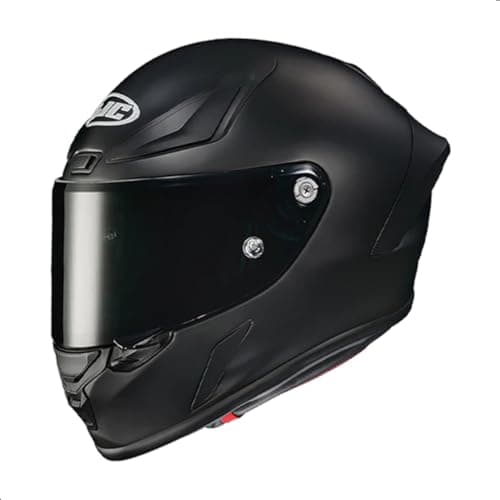
HJC publishes the ACS system on the RPHA 1N as five intakes and four exhausts, and the helmet exists because HJC races in MotoGP - it carries FIM racing homologation on top of DOT and ECE 22.06, which is as serious as road-legal certification gets. Who it is for: fast road and track riders who sweat through summer. The honest cons: a race-focused fit, no sun visor, and flagship money - see the RPHA 1N review.

AGV AX9 - adventure airflow without adventure weight

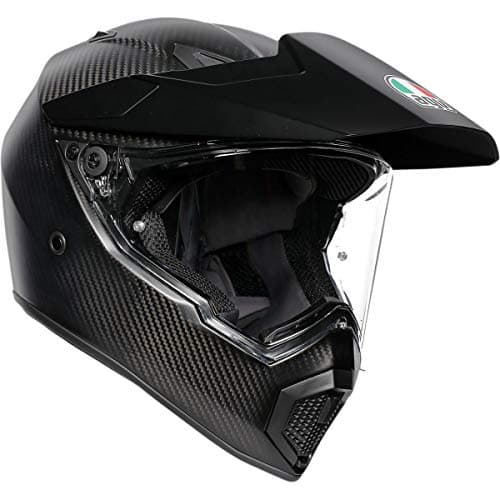
The AX9 is the hot-weather pick for riders who are not on pavement all day: an ADV shell with a removable peak and a goggle-compatible aperture, in a carbon/aramid/glass composite at about 1,510 g, carrying genuine US DOT + ECE 22.06. You get adventure-grade airflow at a weight most ADV helmets cannot touch, plus the option to run it as a street helmet with the peak off. Who it is for:dual-sport and ADV riders in hot country. The honest cons: AGV's intermediate-oval shell runs snug for round-oval heads, and the peak adds noise - detail in the AX9 review.

HJC RPHA 12 - the value hot-weather helmet

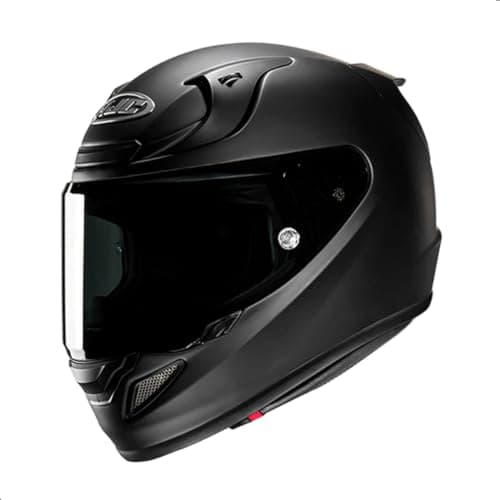
This is the one most riders should actually buy. The RPHA 12 carries genuine DOT + ECE 22.06 in a PIM EVO composite shell at roughly 1,474 g - lighter than the race-homologated 1N - with ventilation tuned for sport-touring: enough to keep you cool at pace without the roar an aggressive track lid makes. Who it is for: the rider who wants the current standard, low weight and real airflow without flagship money. The honest cons: no sun visor, no independent SHARP score, and a sport-oriented fit - see the RPHA 12 review.

Bell Qualifier DLX MIPS - the budget pick that handles glare too

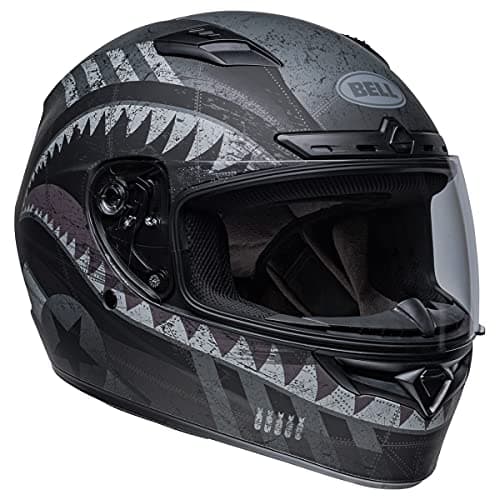
Bell publishes Velocity Flow ventilation on the Qualifier DLX, and the helmet ships with a photochromic (ProTint) shield that darkens in sunlight - which in a hot summer matters as much as airflow, because glare is the other thing that ruins a July ride. It also carries a MIPS rotational-management layer, rare at this price. Who it is for: the budget buyer, the commuter, the second-helmet buyer. The honest cons: polycarbonate at about 1,626 g, basic finish, and we do not assert ECE on it - Bell lists ECE for the model but does not publish the revision for the US unit, so check the label. Full detail in the Qualifier DLX review.

So which hot-weather helmet?

Ride fast and sweat hard? The HJC RPHA 1N. Ride dirt and gravel in the heat? The AGV AX9. Want the best airflow-per-dollar on a current standard? The HJC RPHA 12. On a budget, or fighting glare as much as heat? The Bell Qualifier DLX MIPS. And if what you really want in heat is air on your face, read our open-face and P/J picks - a flip-up you are approved to ride open is the most under-rated hot-weather helmet there is.

The short answer

Quick picks, by the mark on the shell

#HelmetCertificationScorePrice
01
HJC HJC RPHA 1N
HJC RPHA 1N

HJC's MotoGP-derived flagship: the same PIM+ carbon shell HJC races, carrying DOT + ECE 22.06 and FIM racing homologation, for a fraction of an Arai or Shoei race lid.

DOT certifiedECE 22.06 certified
8.9
$569.99Amazon
02
AGV AGV AX9
AGV AX9

The light carbon ADV lid with a huge field of view and genuine US DOT + ECE 22.06 — the sporty end of adventure.

DOT certifiedECE 22.06 certified
8.4
$723.45Amazon
03
HJC HJC RPHA 12
HJC RPHA 12

HJC's value sport-touring flagship: a genuinely light PIM EVO composite shell with ECE 22.06, a Pinlock-ready HJ-42 shield and wind-tunnel aero, for well under premium money.

DOT certifiedECE 22.06 certified
8.6
$227.63Amazon
04
Bell Bell Qualifier DLX MIPS
Bell Qualifier DLX MIPS

The budget full-face with two features you rarely see at the price: a MIPS rotational-management layer and a photochromic (self-tinting) shield in the box.

DOT certifiedECE 22.06 unverified
7.5
$199.95Amazon

#ad · Live prices from the Amazon Product API, as of October 6, 2026. Certifications reflect the US-market build and are cited in Sources. Where a live price has rotted, we show none.

In detail

The picks, in full

01
HJC HJC RPHA 1N

Track-grade certification for the money

HJC RPHA 1N

DOT certifiedECE 22.06 certified
PIM+ carbon shell~1,510 gDOT + ECE 22.06 + FIMACS 5-in / 4-out vents
8.9/10

HJC's MotoGP-derived flagship: the same PIM+ carbon shell HJC races, carrying DOT + ECE 22.06 and FIM racing homologation, for a fraction of an Arai or Shoei race lid.

Certification
9.5
Ventilation
9
Weight
8.5
Value
9
Finish
8.5

Pros

  • Carries FIM racing homologation on top of DOT + ECE 22.06 — a track-grade cert most street lids can't show
  • PIM+ carbon shell keeps it light (~1,510 g) for a full race helmet
  • ACS ventilation (5 intakes, 4 exhausts) flushes heat and reduces visor fog

Cons

  • A hard, track-focused shell and fit — less plush than a touring lid
  • No sun visor, and premium-priced for an HJC (though far under Arai/Shoei race helmets)

Don't buy this if…

…you want a comfortable touring or commuting helmet — this is a race-derived lid; a sport-touring RPHA 12 or a touring full-face suits daily riding better.

$569.99View on Amazon

Price as of October 6, 2026. Prices change — Amazon's at checkout is the one that counts.

#ad · we may earn a commission from this link to HJC RPHA 1N

02
AGV AGV AX9

Sporty, light, wide-view ADV

AGV AX9

DOT certifiedECE 22.06 certified
Carbon/aramid/glass~1,510 gDOT + ECE 22.06Peak + visor + goggles
8.4/10

The light carbon ADV lid with a huge field of view and genuine US DOT + ECE 22.06 — the sporty end of adventure.

Certification
9.5
Weight
9
Field of view
9
Quiet
7
Value
7.5

Pros

  • Genuine US DOT + ECE 22.06 in a light carbon-blend shell
  • One of the widest fields of view of any ADV helmet
  • Three configurations: full ADV, street visor, or goggles

Cons

  • AGV's shape suits intermediate-oval heads; round-oval riders should try before buying
  • Peak buffeting at very high speed like most ADV lids

Don't buy this if…

…you have a round head — Arai's shape will be more comfortable for you over a full day.

$723.45View on Amazon

Price as of October 6, 2026. Prices change — Amazon's at checkout is the one that counts.

#ad · we may earn a commission from this link to AGV AX9

03
HJC HJC RPHA 12

Lightweight ECE 22.06 sport-touring value

HJC RPHA 12

DOT certifiedECE 22.06 certified
PIM EVO composite~1,474 gDOT + ECE 22.06HJ-42 Pinlock-ready
8.6/10

HJC's value sport-touring flagship: a genuinely light PIM EVO composite shell with ECE 22.06, a Pinlock-ready HJ-42 shield and wind-tunnel aero, for well under premium money.

Certification
9
Weight
9
Value
9
Aero / quiet
8
Finish
8

Pros

  • Genuinely light at ~1,474 g in a PIM EVO composite shell — lighter than most sport lids
  • Genuine ECE 22.06 with a Pinlock-ready HJ-42 shield for anti-fog
  • Wind-tunnel shell and rear spoiler cut lift, drag and noise at speed

Cons

  • Not SHARP-tested, so no independent star score like an AGV K6 S
  • No sun visor — a sport lid, so you run a tinted shield or sunglasses

Don't buy this if…

…you want independent SHARP data or a sun visor — the K6 S has the SHARP score, the GT-Air 3 has the sun visor.

$227.63View on Amazon

Price as of October 6, 2026. Prices change — Amazon's at checkout is the one that counts.

#ad · we may earn a commission from this link to HJC RPHA 12

04
Bell Bell Qualifier DLX MIPS

Budget full-face with MIPS and a photochromic shield

Bell Qualifier DLX MIPS

DOT certifiedECE 22.06 unverified
Polycarbonate~1,626 gDOT + MIPSPhotochromic shield included
7.5/10

The budget full-face with two features you rarely see at the price: a MIPS rotational-management layer and a photochromic (self-tinting) shield in the box.

Value
9
Features
9
Certification
6.5
Weight
6.5
Finish
6.5

Pros

  • MIPS rotational-management layer at a genuine budget price
  • Ships with a ProTint photochromic (self-tinting) shield — a feature usually reserved for pricier helmets
  • Comfortable, well-vented (Velocity Flow), with a removable, washable liner

Cons

  • Polycarbonate and heavy (~1,626 g), and not a premium finish
  • The US unit's ECE revision isn't published, so we can't confirm 22.06 — buy it as a DOT + MIPS helmet

Don't buy this if…

…you specifically want confirmed ECE 22.06 or a light composite shell — the AGV K1 S carries genuine 22.06 at a similar price.

$199.95View on Amazon

Price as of October 6, 2026. Prices change — Amazon's at checkout is the one that counts.

#ad · we may earn a commission from this link to Bell Qualifier DLX MIPS

How to shop for a hot-weather helmet

Look for closable vents, not maximum vents. Airflow trades directly against noise and weather sealing. A helmet whose vents genuinely seal shut gives you summer airflow and a usable winter helmet; one with permanently-open ports gives you one season.

Weigh it. Heat makes everything harder, and a lighter shell is the one variable that improves every hot hour. The spread between the helmets on this page is over 150 g, and across the wider field it is closer to 600 g - which you feel by mid-afternoon. Our helmet weight explainer covers what shell material buys you.

Deal with glare and sweat separately. A drop-down sun visor or a photochromic shield solves squinting without carrying a second shield - see photochromic vs tinted vs clear and our sun-visor helmet picks. For sweat, a thin wicking balaclava keeps salt out of the liner and makes the helmet easier to get on and off at fuel stops.

Do not improvise.Riding with the shield cracked open at highway speed is loud and lets grit straight into your eyes, and pulling liner padding out to "get more air" changes how the helmet sits on your head. Work the vents the helmet gives you - and if your current lid is simply the wrong tool for August, that is what this page is for.
Low-cost add-ons

Small stuff that actually helps

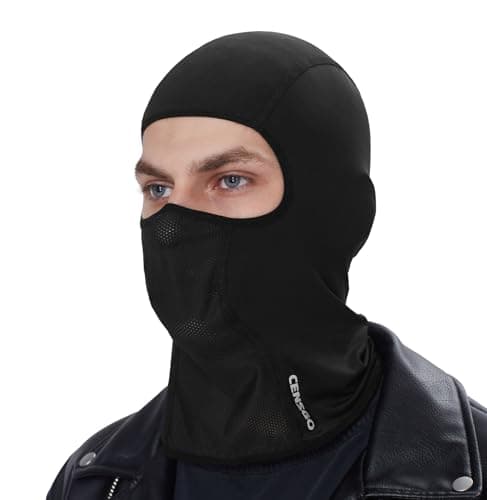
  • CENSGO Motorcycle Balaclava / Helmet Liner

    Keeping the liner clean and fine-tuning a slightly loose fit

    CENSGO Motorcycle Balaclava / Helmet Liner

    A thin under-helmet layer that keeps sweat and hair oil out of a liner you cannot easily wash — and takes up just enough room to settle a helmet that sits a shade loose.

    Skip it if your helmet is already at the tight end of correct — a balaclava does not help in that direction, and cheek pads are the proper adjustment.

#ad · Prices as of October 6, 2026, pulled live from Amazon; where we have no verified price we show none. We may earn a commission.

How we picked

We do not crash-test helmets

We compiled published specifications, cited each helmet's certification (DOT, ECE 22.06, Snell, SHARP) from the standards body or manufacturer homologation, and aggregated owner reports, then scored against a published method. The scores are judgments from documented research — not measurements we took. We do not run a crash lab. Certifications reflect the US-market build; where it differs from the European version, we say so and cite it.

Questions

Frequently asked

What is the best motorcycle helmet for hot weather?
For hard riding in heat, the HJC RPHA 1N: a ~1,510 g PIM+ carbon shell with DOT, ECE 22.06 and FIM racing homologation, and HJC's ACS ventilation published as five intakes and four exhausts. For most riders the HJC RPHA 12 is the better buy - the same ECE 22.06 standard, lighter at about 1,474 g, with road-tuned venting. On a budget, the Bell Qualifier DLX MIPS adds a photochromic shield for glare.
Do more vents mean a cooler helmet?
No. Air only moves if intakes, EPS channels and exhausts line up, so vent design beats vent count - a clean shell with four well-engineered vents can flow more than one covered in decorative scoops. Shell weight and a usable chin vent matter more than the number of holes, and vents that genuinely close are what let one helmet work in both July and November.
Are adventure helmets better in hot weather?
They generally vent harder, because they are designed for slow, high-effort riding where the bike gives you no airflow - dirt-focused designs get large vents and deep EPS air channels. The trade is the peak, which catches air and adds noise at road speed. If most of your hot riding is on pavement, a well-vented full-face like the RPHA 12 is the better compromise.

Keep reading

Receipts

Sources

We do not run a crash lab, and we do not pretend to. Certifications are cited to the standards body or the manufacturer's stated homologation; where a US model's certification differs from its European namesake, we say so. Where we could not verify something, we say so on the page rather than quietly leaving it out. Read our full method.