01
Track-grade certification for the money
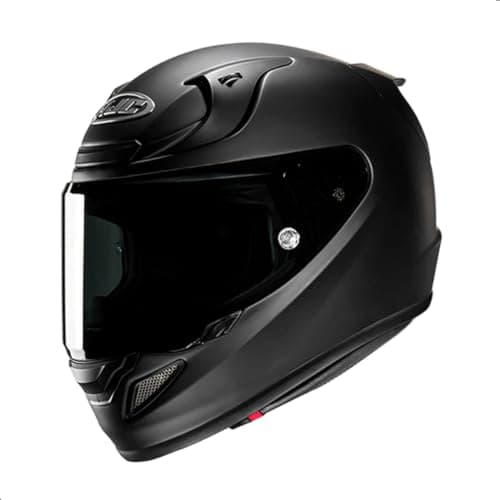
HJC RPHA 1N
DOT certifiedECE 22.06 certified
PIM+ carbon shell~1,510 gDOT + ECE 22.06 + FIMACS 5-in / 4-out vents
8.9/10
HJC's MotoGP-derived flagship: the same PIM+ carbon shell HJC races, carrying DOT + ECE 22.06 and FIM racing homologation, for a fraction of an Arai or Shoei race lid.
- Certification
- 9.5
- Ventilation
- 9
- Weight
- 8.5
- Value
- 9
- Finish
- 8.5
Pros
- Carries FIM racing homologation on top of DOT + ECE 22.06 — a track-grade cert most street lids can't show
- PIM+ carbon shell keeps it light (~1,510 g) for a full race helmet
- ACS ventilation (5 intakes, 4 exhausts) flushes heat and reduces visor fog
Cons
- A hard, track-focused shell and fit — less plush than a touring lid
- No sun visor, and premium-priced for an HJC (though far under Arai/Shoei race helmets)
Don't buy this if…
…you want a comfortable touring or commuting helmet — this is a race-derived lid; a sport-touring RPHA 12 or a touring full-face suits daily riding better.
$675.00View on Amazon
Price as of Sep 18, 2026. Prices change — Amazon's at checkout is the one that counts.
#ad · we may earn a commission from this link to HJC RPHA 1N