HUB 03 · Full-Face Helmets
Bell Qualifier DLX MIPS Review
The budget full-face with two features you rarely see at the price: a MIPS rotational-management layer and a photochromic self-tinting shield included. One honest certification caveat we spell out.
We earn a commission when you buy through our Amazon links, at no extra cost to you. It never changes a ranking, and we tell you when the cheaper helmet is the better buy. How this works.
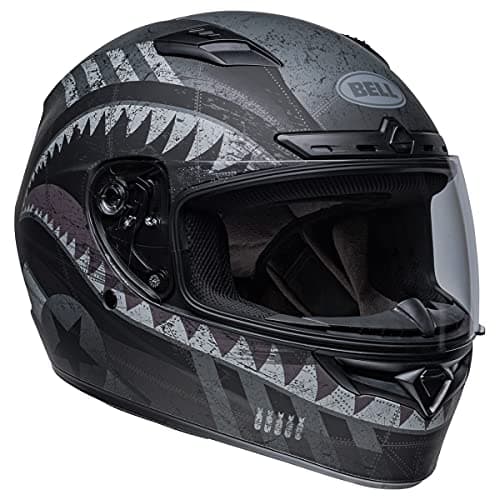
Budget full-face with MIPS and a photochromic shield
The budget full-face with two features you rarely see at the price: a MIPS rotational-management layer and a photochromic (self-tinting) shield in the box.
$199.9515% off
Price as of Sep 18, 2026. Prices change — Amazon's at checkout is the one that counts.
#ad · we may earn a commission from this link to Bell Qualifier DLX MIPS
The Bell Qualifier DLX MIPS packs two features into a budget full-face that you usually have to pay a lot more for: a MIPS rotational-management layer, and a photochromic (self-tinting) shieldin the box. For a rider who wants those conveniences on a budget, it's a lot of helmet — as long as you read the one honest certification caveat.
We haven't crash-tested this helmet. The specs come from Bell, and the ride impressions are aggregated from owners. Where a figure is a manufacturer claim, we say so.
The certification, stated honestly
The US Qualifier DLX MIPS is DOT-certified with a MIPS layer— that's confirmed. Bell also lists ECE for this model, but doesn't publish the 22.05-vs-22.06revision for the US unit, so we won't assert current 22.06 on it — confirm the label if that matters to you. What you can rely on is DOT plus MIPS, which is a genuine rotational-management addition on top of the US legal standard. If you specifically want confirmed ECE 22.06 at a similar price, the AGV K1 S carries it.
MIPS and a photochromic shield — rare at this price
Two features punch above the price. MIPS is a low-friction layer that lets the shell rotate slightly relative to your head in an angled impact, managing rotational forces — a feature usually found on pricier helmets. And the Qualifier DLX ships with a ProTint photochromic shield that self-tints in sunlight and clears in shade, so you get automatic sun protection without buying a separate tinted visor (see our shield-types guide for how those work). Getting both on a budget helmet is genuinely unusual.
The honest cons: weight and finish
It's a polycarbonate helmet and heavy at around 1,626 g, and the finish is functional rather than premium. It's well-vented (Bell's Velocity Flow) and comfortable with a removable, washable liner, but it doesn't feel like a flagship — the money went into MIPS and the photochromic shield, not into a light composite shell or a luxury interior.
Ventilation, comfort and everyday use
The Qualifier DLX is built to be an easy, comfortable daily helmet. Bell's Velocity Flow ventilation moves air well, the interior is removable and washable with a padded wind collar to cut noise and drafts, and the fit is a conventional, accommodating shape that suits a broad range of heads. The included photochromic shield means you rarely need to think about sun — it adjusts on its own — and it's anti-fog and anti-scratch treated. For a rider who wants a fuss-free helmet that handles changing light automatically, it's genuinely convenient.
On value, the pitch is features per dollar: MIPS and a self-tinting shield are things you usually pay much more for, and the Qualifier DLX bundles both at a budget price. What you give up is the light composite shell and premium finish of a pricier lid, and the certainty of a confirmed ECE 22.06 revision. For a rider who values the convenience features and MIPS over outright certification clarity or low weight, it's a lot of helmet for the money — see how it stacks against the genuine-22.06 AGV K1 S.
Who should skip it
Riders who want confirmed ECE 22.06, a light shell, or a premium feel — the AGV K1 S gives genuine 22.06 at a similar price, and composite/carbon lids are lighter. But if MIPS and an included photochromic shield on a budget are what you want, and DOT plus MIPS satisfies you, the Qualifier DLX is a feature-rich value pick — compared with the K1 S in K1 S vs Bell Qualifier DLX.
The scorecard
How it scores, and who should skip it
- Value
- 9
- Features
- 9
- Certification
- 6.5
- Weight
- 6.5
- Finish
- 6.5
Pros
- MIPS rotational-management layer at a genuine budget price
- Ships with a ProTint photochromic (self-tinting) shield — a feature usually reserved for pricier helmets
- Comfortable, well-vented (Velocity Flow), with a removable, washable liner
Cons
- Polycarbonate and heavy (~1,626 g), and not a premium finish
- The US unit's ECE revision isn't published, so we can't confirm 22.06 — buy it as a DOT + MIPS helmet
Don't buy this if…
…you specifically want confirmed ECE 22.06 or a light composite shell — the AGV K1 S carries genuine 22.06 at a similar price.
$199.9515% off
Price as of Sep 18, 2026. Prices change — Amazon's at checkout is the one that counts.
#ad · we may earn a commission from this link to Bell Qualifier DLX MIPS
How we picked
We do not crash-test helmets
We compiled published specifications, cited each helmet's certification (DOT, ECE 22.06, Snell, SHARP) from the standards body or manufacturer homologation, and aggregated owner reports, then scored against a published method. The scores are judgments from documented research — not measurements we took. We do not run a crash lab. Certifications reflect the US-market build; where it differs from the European version, we say so and cite it.
Questions
Frequently asked
Is the Bell Qualifier DLX ECE 22.06?
Does the Bell Qualifier DLX come with a photochromic shield?
What is MIPS on the Bell Qualifier DLX?
Keep reading
Related
- All full-face helmetsThe full ranked roundup, by certification.
- K1 S vs Bell Qualifier DLXThe budget full-face decision, head to head.
- Photochromic vs tinted vs clear visorsHow the included self-tinting shield works.
- Bell Qualifier DLX vs RPHA 12The step up from this budget pick, and whether it's worth it.
Receipts
Sources
We do not run a crash lab, and we do not pretend to. Certifications are cited to the standards body or the manufacturer's stated homologation; where a US model's certification differs from its European namesake, we say so. Where we could not verify something, we say so on the page rather than quietly leaving it out. Read our full method.