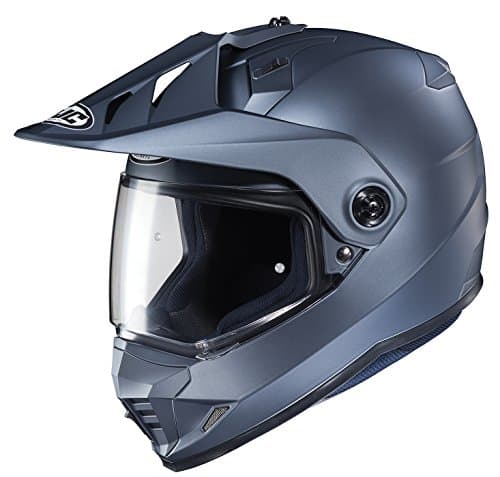
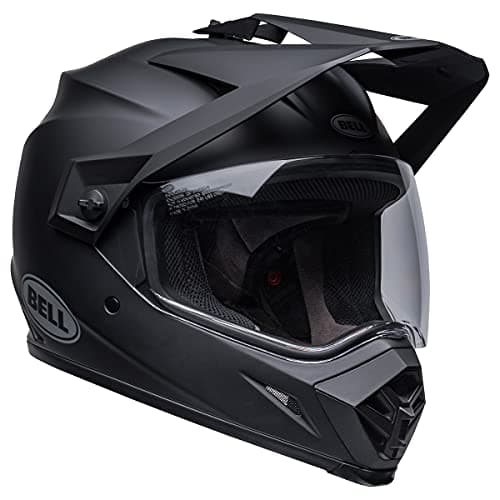
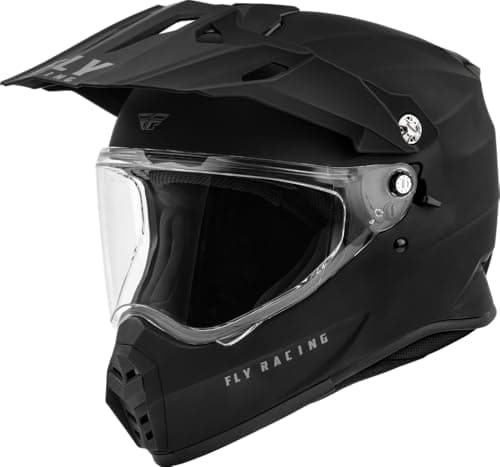
Between these two, buy the Fly Racing Trekker. It is lighter at a published ~1,588 g (3.5 lb) against the DS-X1's ~1,673 g, it adds a drop-down anti-fog sunshade almost no dual-sport helmet at this price offers, its shield is designed to clear goggles and goggle straps without removal, and it covers XS-3XL across 53-66 cm. Who the DS-X1 is for:the rider who wants the Pinlock-prepared shield and HJC's three separate EPS shell sizes, and who will take a DOT-only label to get the cheapest genuinely convertible lid on the shelf. And the honest third answer, which we will not bury at the bottom of the page: for similar money the Bell MX-9 Adventure MIPS carries DOT + ECE 22.06, MIPS and an independent SHARP 4/5 score, and neither helmet in the title can match that.
We do not crash-test helmets and we have no lab. Every weight, spec and certification below is the manufacturer's published figure or a cited review, listed in Sources - and where a maker leaves a certification vague, we say so rather than reading it generously.
Head to head
| | Fly Racing Trekker | HJC DS-X1 |
|---|
| Certification (US) | DOT; Fly states "ECE / DOT Approved" without naming the revision | DOT (FMVSS 218) only - no ECE, no Snell |
| Shell | Polymer | Polycarbonate composite |
| Published weight | ~1,588 g (3.5 lb) | ~1,673 g at LG-2XL (1,575 g at XS) |
| EPS / shell sizes | XS-3XL, 53-66 cm, round-oval | Three EPS sizes: XS/S, M/L, XL/2XL |
| Sun visor | Yes - drop-down anti-fog sunshade | No |
| Anti-fog provision | Sunshade coating and airflow; no published Pinlock provision | Pinlock-prepared HJ-27 shield included |
| Goggle use | Shield accommodates goggles and straps closed | Converts shield-off for goggles; reviewers say the shield will not raise high enough to keep it on |
| Retention | Not published as a named system | Double D-ring |
| SHARP result | Not tested | Not tested |
The certification problem, stated honestly
This is the uncomfortable part of the budget dual-sport shelf, and it is the same on both helmets in different ways.
The DS-X1 is DOT onlyon the US build - webBikeWorld's review states it meets the DOT standard in the USA, and RevZilla lists DOT with no ECE or Snell. DOT is the US legal minimum and it is self-certified by the manufacturer, so it is a floor rather than an achievement.
The Trekker is more ambiguous, which is not the same as better. Fly states "ECE / DOT Approved (FMVSS218 Approved)" on its own product page but does not name the ECE revision, and Cycle Gear and RevZilla both list only "ECE / DOT approved". We do not assert 22.06 on that. What makes the silence meaningful rather than accidental is that Fly names the revision explicitly on other models- the Sentinel line is sold as "ECE 22.06" - so the company clearly publishes the code when a helmet holds it. Check the label on the helmet you receive. The difference between the two revisions is explained in ECE 22.06 explained, and the broader hierarchy in DOT vs ECE vs Snell vs SHARP.
Fly Racing Trekker - the better of the two
The Trekker wins on the things you will actually notice. The drop-down anti-fog sunshade is genuinely rare at this price in a peaked helmet, and it removes the need to carry a tinted shield or sunglasses under a visor. The shield is designed to accommodate goggles and goggle straps with the shield closed, which is the single most useful thing a dual-sport shield can do - it means you are not forced to remove and stow it at the trailhead. It has switchable on/off vents in the chin bar, brow and rear, a removable washable antimicrobial liner, and XS-3XL across 53-66 cm in a round-oval shape - a wide range for the money. Who it is for: the dual-sport rider who wants a sun visor and goggle compatibility in one helmet without stepping up a price class.
The honest cons: Fly does not publish the ECE revision, it is 3.5 lb in a polymer shell - heavy for standing on the pegs, and heavier than any carbon convertible - and there is no published Pinlock provision, so fog management is the sunshade coating and airflow rather than an insert. Full detail in the Fly Racing Trekker review.
HJC DS-X1 - the cheapest genuinely convertible lid
The DS-X1 is the entry point to the category and it has two things the Trekker does not. HJC's "easy converting system" takes it from shield-and-visor to visor-only for goggles, which is the whole point of a dual-sport helmet, and it ships with a Pinlock-prepared HJ-27 shield - real anti-fog provision the cheaper rivals leave out. It is also built in three EPS sizes rather than one shell padded across the range, with a double D-ring and moulded speaker pockets. Who it is for: the rider who wants the lowest-cost convertible dual-sport and values a Pinlock-ready shield over a sun visor.
The honest cons: DOT only, which is the weakest certification story in our adventure coverage; webBikeWorld found the shield will not raise high enough to mount goggles comfortably without taking it off first, which undercuts the convertible claim in practice; and reviewers consistently flag upper ventilation as the weak point, with a narrow peak-adjustment range. More in the HJC DS-X1 review.
Bell MX-9 Adventure MIPS - what we would actually buy at this money
We include it because it would be dishonest not to. For similar money the MX-9 Adventure carries genuine DOT + ECE 22.06, adds a MIPSrotational-management layer on top of the shell, was independently SHARP-tested at 4 of 5 stars, and weighs about 1,696 g. That is the strongest evidence any helmet in this price class offers, and it is the reason both helmets above list it in their own "don't buy if" lines. Who it is for: the budget ADV rider whose first filter is the certification rather than the feature list.
The honest cons: it is a polycarbonate build and does not feel premium, and it is louder and less refined at speed than a Shoei or Arai - this is a value-and-safety pick, not a plush one. It also has no sun visor and no shield-off conversion, so if the sunshade or goggle setup is what you came for, the two helmets above still answer something it does not. Detail in the Bell MX-9 Adventure review and the certification page at Bell MX-9 Adventure safety rating.
Peaks, goggles and the thing budget ADV helmets all get wrong
Every helmet on this page is a peaked polymer or polycarbonate shell, and that combination has two consequences nobody puts on the box. First, peaks generate lift and noise at highway speed - the expensive ADV helmets spend their engineering budget on exactly this, and these do not, so expect head-tug above 60 mph. Second, weight is where the savings land: all three are between about 1,588 g and 1,696 g, where a carbon convertible like the Klim Krios Pro is around 1,450 g with ECE 22.06. If you ride dirt standing up, those grams are the first thing you will want back, and helmet weight explained covers why.
If you are running goggles rather than a shield, the goggle matters as much as the helmet - the class is covered across our best dual-sport helmets roundup, and the format question itself in dual-sport vs adventure helmets.
The verdict
Fly Racing Trekker if you want the sun visor, the wider size range and the goggle-friendly shield, and you accept that Fly will not name the ECE revision. HJC DS-X1 if you want the cheapest convertible with a Pinlock-prepared shield and three real EPS sizes, and DOT is enough for you. Bell MX-9 Adventure MIPS if the certification comes first - which, on this site, it usually does. The full class ranking is at best budget adventure helmets and all adventure and dual-sport helmets.