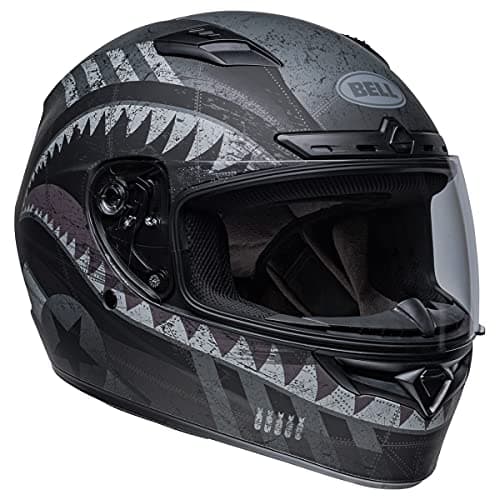
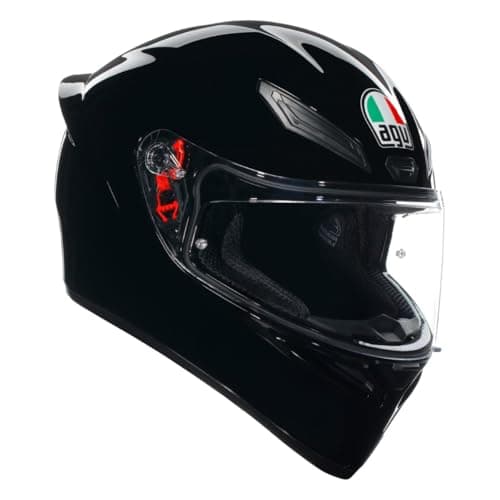
At the budget end of the full-face class, these two make opposite arguments. The AGV K1 S leads with certification — genuine ECE 22.06. The Bell Qualifier DLX MIPS leads with features — a MIPS layer and a photochromic shield in the box. Which wins depends on what you value at the price.
Certification: the K1 S wins
The K1 S carries genuine DOT + ECE 22.06 — the current rotational standard, confirmed. The Bell is DOT with MIPS; Bell lists ECE for the model but doesn't publish the 22.05-vs-22.06 revision for the US unit, so we don't assert current 22.06 on it. On the certification a buyer can actually confirm, the AGV holds the current ECE standard and the Bell holds DOT plus MIPS — a genuine rotational-management addition, but not the same as confirmed 22.06.
Features: the Bell wins
The Qualifier DLX answers with things the K1 S doesn't have. MIPS adds a rotational-management layer on top of the shell. And it ships with a ProTint photochromic shield that self-tints in sun and clears in shade — automatic sun protection with no separate tinted visor to buy (see our shield-types guide). Getting both on a budget helmet is unusual, and it's the Bell's real appeal.
Weight and character
Both are heavy for the class — the K1 S ~1,600 g thermoplastic, the Bell ~1,626 g polycarbonate — so neither is a lightweight. The K1 S is the sportier, wide-view AGV; the Bell is a more conventional road full-face with strong ventilation. Neither has a built-in drop-down sun visor (the Bell's photochromic main shield does that job instead).
The verdict
Want the current ECE 22.06 certification at a budget price? The AGV K1 S. Want MIPS and an automatic self-tinting shield, and DOT plus MIPS satisfies you? The Bell Qualifier DLX MIPS. It's genuinely a certification-vs-features decision — read the K1 S review and Qualifier DLX review for the detail.
How we picked
We compiled published specifications, cited each helmet's certification (DOT, ECE 22.06, Snell, SHARP) from the standards body or manufacturer homologation, and aggregated owner reports, then scored against a published method. The scores are judgments from documented research — not measurements we took. We do not run a crash lab. Certifications reflect the US-market build; where it differs from the European version, we say so and cite it.