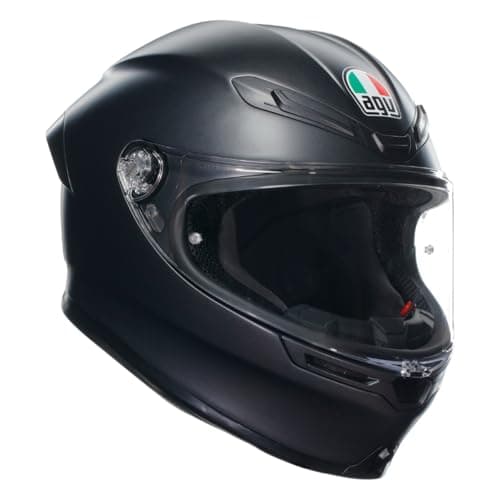
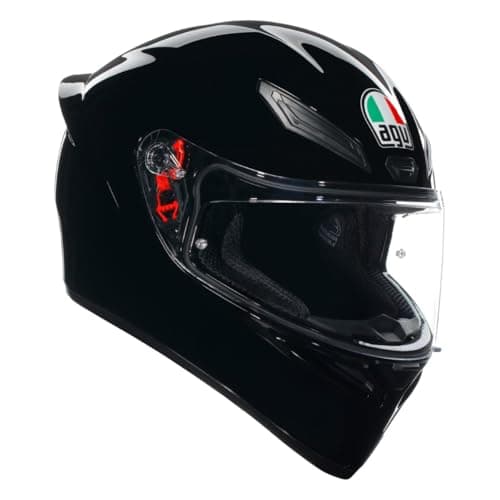
Short answer: the AGV K1 S carries genuine US DOT + ECE 22.06- the current global standard, including the oblique rotational-impact test - in AGV's high-resistance thermoplastic shell at about 1,600 g. It has not been SHARP-tested and we have not sourced a Snell certification for it. The notable part is the price: this is a budget helmet holding the same homologation as helmets costing several times more, which is the whole reason it exists.
We do not crash-test helmets and we have no lab. What follows is the published homologation and the independent test record, read honestly, with every claim sourced at the foot of the page. For the full buyer's picture, see our AGV K1 S review.
The certification on the shell: DOT + ECE 22.06
AGV publishes the K1 S as homologated DOT (FMVSS 218, the self-certified US legal minimum) and ECE 22.06. The 22.06 mark is the one doing the work: it is independently administered rather than self-declared, and it was the first standard to add an oblique impact test for rotational forces on top of the straight-line impact test - covered in full in our 22.06 explainer.
What makes this worth a dedicated page is how unusual it is at the price. Our certifications explainer covers the US market gap: plenty of helmets sold here - including flagships - carry DOT or Snell rather than the ECE 22.06 their European equivalents hold. AGV is consistent about 22.06 across its range, so on the K1 S you are getting the same homologation as the carbon-aramid K6 S, in a cheaper shell. Where the two helmets separate is everything that is not the homologation.
Where the K6 S pulls ahead, and why
Two things, both real. First, independent test data: the K6 S has been SHARP-tested at a perfect 5/5, and the K1 S has not been tested at all. SHARP is the UK government program that buys helmets off the shelf, impact-tests them at multiple speeds and points, and publishes a graded 1-to-5-star result - the closest thing to a consumer crash-test score. A homologation is pass/fail; a star score tells you how far clear the helmet was. The K1 S's lack of one is missing data rather than a bad result, but it is a genuine gap if published evidence is what you are buying on. The K6 S safety rating page covers that score in detail.
Second, weight and shell material. The K1 S is thermoplastic at about 1,600 g; the K6 S is carbon-aramid at about 1,255 g. That 345 g gap is a third of a kilo on your neck, and mass matters in a safety discussion because rotational forces act on it and because fatigue is what ends concentration on a long ride. Our helmet weight explainer covers what each shell material buys. K1 S vs K6 S puts the two side by side on price as well.
Is the AGV K1 S Snell approved?
We have not sourced a Snellcertification for the K1 S and do not claim one. AGV's route is DOT plus ECE 22.06 across the range rather than Snell, which is the route the US-market Japanese flagships take - the Shoei RF-1400 (Snell M2025) and Arai Contour-X (Snell M2025) are the Snell builds we rate. Snell is a voluntary, re-tested standard with impact energies above the legal floor; ECE 22.06 is a broader, independently administered homologation that includes the rotational test Snell does not. Neither is categorically superior, and our safest helmets page compares the two routes directly.
The things that are not certifications
AGV derives the K1 S's aero and its wide field of view from its racing helmets, and a wide view is a real safety asset - the hazard you see early is the one you avoid. But it is a design feature, not a tested standard, and the same goes for a shell material or a vent count. Judge the mark first and treat the rest as what it is.
One genuine caveat on this helmet is fit, and it bears on safety directly. AGV interiors suit intermediate-oval heads and run snug for round-oval riders, and a helmet that does not fit cannot deliver the protection it was certified for. Work out your head shape before you buy, and measure properly with our sizing guide. There is no sun visor either, so plan for glare - see photochromic vs tinted vs clear.
Confirming it on the helmet you buy
Certification varies by market and production run, so read the labels inside the helmet rather than the listing. A genuine US K1 S carries the DOT label and an ECE 22.06 approval tag - a white label with the E-mark and an approval number beginning 06. An older 22.05 helmet begins 05. Gray-market and old stock exist for every brand, which is why the two-digit prefix is worth five seconds of your time.
The bottom line
The K1 S's safety rating is better than its price suggests: genuine DOT + ECE 22.06, the current independently administered standard with the rotational test, on a budget helmet. What you are not getting is independent graded data - no SHARP stars, no Snell - and you are carrying 345 g more than the K6 S for the privilege of paying less. For a first helmet, a second helmet or a track-day spare, that is a strong trade, and it is more homologation than several pricier helmets offer in the US. Fit it correctly and replace it on schedule - our replacement guide covers when. The full review is here.