Helmet fit has two dimensions and most buyers only measure one. Circumference gets you a size band; shape decides whether that size is comfortable. The three labels you will see are round oval, intermediate oval and long oval, describing how much longer a head is front-to-back than it is side to side. Most helmets are built intermediate oval because most heads are. If helmets always pinch your temples while feeling loose front-to-back, you are rounder than the average shell - and an Arai is the brand to try first, because Arai is the one maker that openly builds to stated internal shapes.
This is not marketing vocabulary. Research by Dr. Jan Beringer at the Hohenstein Institute used 3D scanners to map volunteers' heads and found six general shapes from narrow to round, with "remarkable variations in head shapes within the same head circumference." The study also makes the safety point: where a helmet's internal shape does not match the wearer's head, the resulting space between padding and head can mean less than optimal protection, as well as the pressure points that make a helmet unwearable.
The three shapes
Round oval. Head width is close to head length - a fairly circular footprint seen from above. In a shell built longer than your head, the padding contacts your temples first and crushes them while your forehead and the back of your head float.
Intermediate oval. Slightly longer front-to-back than side to side. This is the most common shape and the default target for nearly every manufacturer, which is why most riders can buy most brands.
Long oval. Noticeably longer front-to-back. In an average shell you get pressure on the forehead and the back of the skull while the sides have visible gaps, and the helmet often sits higher than it should.
How to tell which you are
The quickest method is a photograph. Have someone shoot the top of your head from directly above with your hair flat, and look at the outline: close to circular is round oval, clearly longer front-to-back is long oval, and slightly longer is intermediate.
The more reliable method is to let a helmet tell you. Put one on, leave it on for ten to fifteen minutes, and note where it hurts. Temple or side pressure with front-to-back looseness means the helmet is more long-oval than your head: you need a rounder interior. Forehead and rear-crown pressure with side gaps means the opposite: you need a longer interior. Uniform snugness with no single hot spot is a correct shape, and that is what you are shopping for. Pair this with our head-measuring guide so you are testing the right size band in the first place.
What padding can and cannot fix
Cheek pads and liners are genuinely useful: thicker or thinner cheek pads change how firmly the helmet clamps your jaw, and most premium helmets offer them in multiple thicknesses - see cheek pads and liners explained. What they cannot do is change the shape of the EPS liner, which is the part that manages an impact and the part your temples are pressing against. A shape mismatch is a structural mismatch, and the usual response - buying a size up to relieve the pressure - gives you a helmet that moves on your head and is louder, without fixing anything.
Why almost nobody publishes their internal shape
Here is the frustrating part of this topic: the information you need is mostly not published. webBikeWorld has made this point for more than a decade - Arai designs and labels helmets by internal shape, and most other manufacturers do not state the internal shape of their helmets at all. Retailers sometimes fill the gap in a product listing, which is how the four helmets below made this page: they are the ones we cover whose shape a maker or a major retailer actually documents. For everything else, the honest answer is to try it on - which is also why we keep saying that fit, not the badge, is what makes a certification real.
Helmets with a documented internal shape
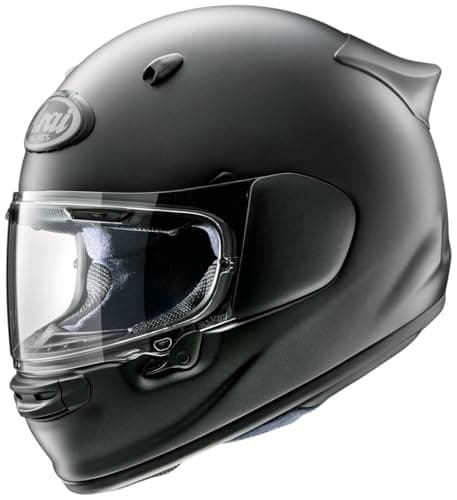
Arai Contour-X - the round-oval answer, and the brand that publishes shape guidance for its range so you can confirm the shape of the exact model before you buy. DOT + Snell M2025 in the US (the European Quantic is ECE 22.06, 4/5 SHARP), about 1,530 g, with the smooth glancing-off shell Arai is known for. Who it is for: round-oval riders who have never had a comfortable helmet. Detail in the Contour-X review.
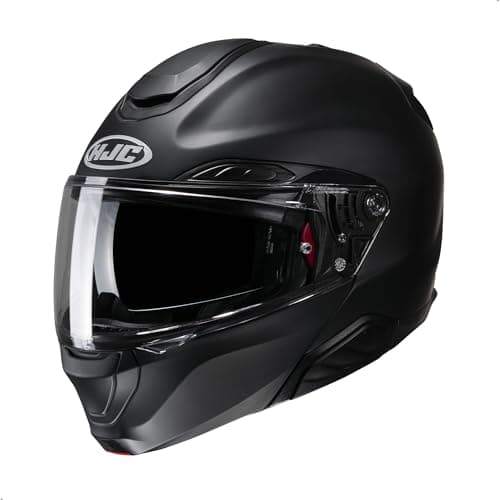
HJC RPHA 91 - documented intermediate oval, which is the shape most riders need, and the best-certified helmet on this page: ECE 22.06 with P/J homologation and an independent SHARP 4/5. Being a flip-up, it is also the easiest of these to try on over glasses. Who it is for: intermediate-oval riders who want the current standard - see the RPHA 91 review.
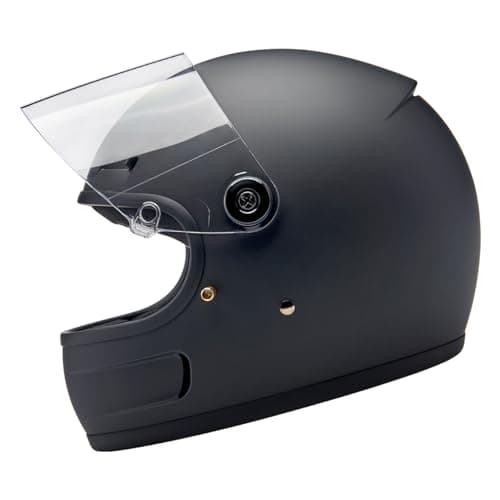
Biltwell Gringo SV - documented intermediate oval, built in three shells with five EPS options, and certified DOT + ECE 22.06 despite the retro styling. Who it is for: intermediate-oval riders who want classic looks and refuse to give up the current standard or the chin bar.
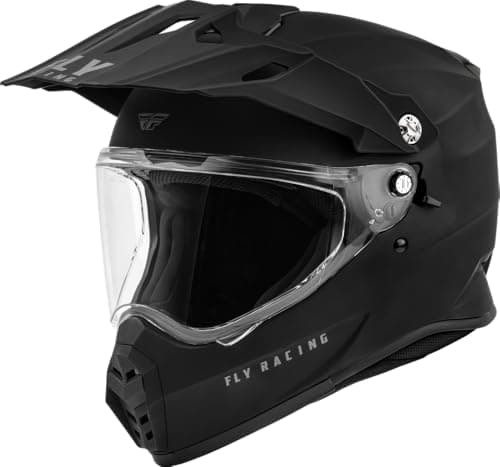
Fly Racing Trekker - documented round oval, which is unusual at a budget price, with a drop-down sunshade and a shield that takes goggles. Certification is the caveat: Fly states "ECE / DOT approved" without naming the ECE revision, so we do not assert 22.06 - check the label on the helmet you receive. Who it is for: round-oval riders on a budget, especially dual-sport riders.
The bottom line
Measure your circumference, then diagnose your shape from where a correctly-sized helmet presses. If the pressure is at your temples, go rounder - start with Arai. If it is on your forehead and the back of your head, go longer. And when a listing does not state the internal shape, which is most of the time, treat that silence as a reason to try before you buy rather than a reason to guess. A certification only protects the head it actually fits.