HUB 04 · Bluetooth & Comms Helmets
Cardo Packtalk Pro Review
The only bolt-on intercom with automatic crash detection, and the only review of it you need is the one that explains what the feature requires before it will help you.
We earn a commission when you buy through our Amazon links, at no extra cost to you. It never changes a ranking, and we tell you when the cheaper helmet is the better buy. How this works.
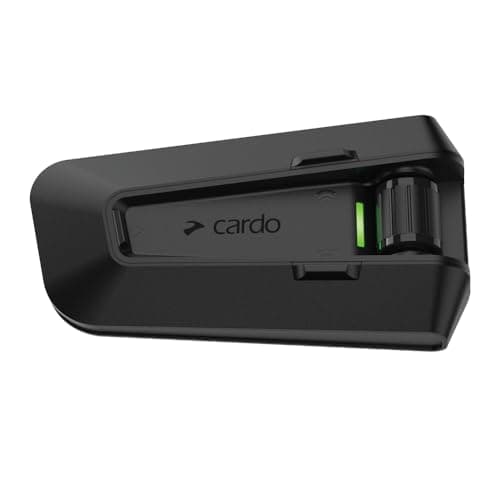
Flagship Mesh with crash detection
Cardo's flagship: second-generation Dynamic Mesh for up to 15 riders, 45 mm JBL speakers as standard, automatic crash detection, and a 3-year warranty — the most capable bolt-on you can buy.
$499.9510% off
Price as of November 12, 2026. Prices change — Amazon's at checkout is the one that counts.
#ad · we may earn a commission from this link to Cardo Packtalk Pro
The Packtalk Pro is the top of Cardo's range and the most capable bolt-on intercom you can buy, and the single feature it is sold on - automatic crash detection- is also the one that needs the most careful reading. It works through your phone, the Cardo Connect app and Cardo's cloud, which means it needs cell service. Who it is for: a rider who puts in solo miles where phones have signal and wants someone notified if they go down. Who should not buy it: anyone who rides in a group and would be just as well served by the cheaper Packtalk Edge, which runs the same Mesh.
We have not range-tested this unit, drained its battery on a clock or staged a crash to see whether the detection fires. Every number below is Cardo's published specification as carried on US retail spec sheets. What we add is the reading - which features are doing real work, which are refinements, and where the headline feature stops.
The published specification
| Spec | Published figure |
|---|---|
| Mesh | 2nd-generation Dynamic Mesh Communication, up to 15 riders |
| Rider-to-rider range | Up to 1 mile / 1.6 km |
| Group range | Up to 5 miles / 8 km across the DMC group |
| Bluetooth | 5.2, with 2 channels for phone and GPS |
| Speakers | 45 mm JBL stereo |
| Talk time | Up to 13 hours; standby about 10 days |
| Charging | Up to 2 hours; 2 hours of talk from a 20-minute charge; USB-C |
| Crash detection | Yes - phone inertia sensors plus an internal IMU |
| Water rating | IP67 |
| Warranty | 3 years |
Crash detection: the feature, and the three things it needs
This is the first time a mainstream motorcycle intercom has shipped automatic crash detection, and the implementation is more interesting than the marketing suggests. It reads your phone's inertia sensors together with an IMU inside the headset itself - using two independent sensor sources rather than one, which is the right way to avoid a false alarm every time you drop the helmet on a bench. If it decides you have crashed, it can alert an emergency contact.
Now the part to understand before you pay for it. Crash detection on this unit is a connected service, not a standalone sensor. Cardo states it requires:
- a paired smartphone, powered on and with you;
- the Cardo Connect app running;
- a live connection to Cardo Cloud - which means cell service.
Cardo also lists the feature as available in selected regions, so check it covers yours before it decides your purchase.
Read that requirement list against where you actually ride, because there is an awkward overlap. The rider who benefits most from automatic crash notification is the one riding alone a long way from help - and a long way from help is frequently a long way from a cell tower. That is not a reason to dismiss the feature. On a commute, a highway tour, a populated backroad or a group ride where you might get separated, it is a genuine safety net that nothing else in this class offers, and it costs you nothing to have running. It is a reason not to treat it as a satellite beacon. If your solo riding is genuinely remote, a dedicated satellite messenger does a job this cannot, and the two are complementary rather than alternatives.
One more honest note: we cannot tell you how reliably it fires. Nobody can without crashing repeatedly under instrumentation, and we do not do that. Treat it as a well-designed best-effort system, not a guarantee.
Mesh: the part that earns its money every ride
Crash detection is the headline, but second-generation Dynamic Mesh is what you will notice on every group ride. DMC builds a self-healing network: riders drop out of range and rejoin without anybody re-pairing anything, and the network re-routes around whoever just stopped for fuel. Up to 15 riders, 1 mile rider-to-rider, up to 5 miles across the group.
The contrast with a Bluetooth chain is the whole argument for spending money on comms at all. In a chain, the rider in the middle leaving takes the conversation with them. We go through that failure mode in best intercoms for group riding, and it is the reason a two-rider budget unit like the Sena 5S is a different product rather than a cheaper version of this one.
Worth knowing: the Pro joins the same DMC groups as the Packtalk Edge, so nobody else in your group has to upgrade for you to buy this.
Audio, controls and weatherproofing
The Pro ships 45 mm JBL stereo speakers as standard, where JBL audio was once a paid upgrade on the Packtalk line - so part of what reads as an upgrade is Cardo bundling what it used to sell separately. There is FM radio with RDS and a six-station memory, Automatic Volume Control that adjusts to ambient noise, private chat with a single group member, and multilingual status announcements.
Controls are the best part of owning a Cardo. Natural Voice Operationtakes "hey Cardo" commands so you are not hunting for a button with a gloved hand, there is an automatic on/off, and the Air Mount magnetic mount makes moving the unit between helmets genuinely quick. The roller wheel remains the most usable control anyone puts on an intercom.
IP67 is published, which matters more than it sounds. Plenty of units at lower prices publish nothing at all about water ingress - Sena publishes no IP rating for its 5S or 5R, for instance. A rating in writing is a claim you can hold a manufacturer to. Add over-the-air updates and a 3-year warranty, and the ownership story is the strongest in the category.
Where it is beaten, and by what
A fair review of a flagship has to name the things that beat it, and two do.
Battery. Up to 13 hours of talk time is respectable for a Mesh radio, and Mesh radios are power-hungry - but it is not a big number in absolute terms. Sena publishes 36 hours for its 5R and 18 for the 5S. If what you actually wanted was an intercom that lasts an entire weekend of riding between charges, and you only ever talk to one person, you are shopping in the wrong class and our budget intercom roundup is the better page. The 20-minute fast charge for 2 hours of talk is the real mitigation here - a coffee stop buys you an afternoon.
Its own cheaper sibling. The Packtalk Edge runs the same dynamic Mesh, the same Bluetooth 5.2, the same 1-mile rider-to-rider range, the same IP67, the same 13-hour talk time and the same fast charge, with 40 mm JBL speakers instead of 45 mm and a 2-year warranty instead of 3. It costs meaningfully less and it remains our top overall bolt-on pick. If crash detection is not the reason you are here, the Edge is the better purchase and we would rather tell you that than sell you the flagship. The side-by-side is in Packtalk Pro vs Packtalk Edge.
And the standing limitation of every comms unit, which we will keep repeating: a headset carries no safety certification of any kind. The shell it bolts to carries all of it. Choose the helmet on its certification first - that is what DOT vs ECE vs Snell vs SHARP is for - and then bolt the comms to the helmet you chose. Buying a helmet because it came with comms in it is the wrong order of operations.
The verdict
The Packtalk Pro is the most capable bolt-on intercom on the market and it earns that on Mesh, controls, audio and the ownership package - IP67 in writing, over-the-air updates and three years of warranty. If you were going to buy a flagship Cardo anyway, this is the one, and nothing else in the class is close on features.
Whether it is worth the premium over the Edge comes down to one question, and it is not a spec question: do you ride alone, in places with cell coverage, and want someone told if you crash? If yes, the Pro is the only unit that offers that and the money is well spent. If no - if you ride in groups, or your solo miles are out past the last bar of signal - buy the Edge, run the same Mesh, and put the difference toward earplugs and a better helmet. That is the buyer-first answer even though it is the cheaper one.
The scorecard
How it scores, and who should skip it
- Audio
- 9.5
- Range/Mesh
- 9.5
- Safety features
- 9
- Weatherproofing
- 9.5
- Value
- 6.5
Pros
- Automatic crash detection using the phone's inertia sensors plus an internal IMU, which can alert an emergency contact — no other bolt-on intercom offers it
- 45 mm JBL speakers fitted as standard, where JBL audio used to be a paid upgrade on the Packtalk line
- Second-generation DMC for up to 15 riders with a self-healing connection, 1 mile rider-to-rider and up to 5 miles across a group, plus IP67 and a 3-year warranty
Cons
- Crash detection needs cell service, the Cardo Connect app and a paired smartphone to work at all — it is a connected service, not a standalone sensor, and it is region-limited
- The most expensive single comms unit on this site, and the Packtalk Edge delivers the same core Mesh experience for noticeably less
- Cardo publishes 13 hours of talk time, which is shorter than several much cheaper Bluetooth-only units manage
Don't buy this if…
…crash detection is not the reason you are here — the Packtalk Edge gives you the same dynamic Mesh, the same IP67 and JBL speakers for less money.
$499.9510% off
Price as of November 12, 2026. Prices change — Amazon's at checkout is the one that counts.
#ad · we may earn a commission from this link to Cardo Packtalk Pro
What is actually worth paying for in a premium intercom, in the order it will matter to you.
Mesh, if you ride with two or more other people
This is the one feature that changes the experience rather than polishing it. A Bluetooth chain breaks when any rider in the middle drops out; Mesh re-forms around them. Both the Pro and the Edge have it, which is exactly why the Edge is enough for most riders.
A published IP rating, if the bike is year-round transport
IP67 is a specific, testable claim, and both Packtalks carry it. Units at lower prices frequently publish nothing at all about water resistance. If you commute through winter, a rating in writing is worth real money.
Crash detection, judged on your actual riding
Judge this on where you ride, not on the idea of it. It needs a phone, the app and cell service, and it is region-limited. Commuters and highway tourers get a real safety net. Riders whose solo miles are in canyons and forest roads should understand they are buying a feature that may be unavailable exactly when it is needed, and should look at a satellite messenger instead or as well.
What not to pay for
Speaker diameter past a point, and advertised range. Range is quoted in open terrain with line of sight; hills, trees and traffic cut it hard. And wind noise, not speaker size, is what limits intercom clarity at speed - which means the quietest helmet you can buy and a set of filtered earplugs will do more for your audio than any upgrade inside this price class. Fitting the speakers directly over your ear canals is free and does more than 5 mm of driver.
How we picked
We do not crash-test helmets
We compiled published specifications, cited each helmet's certification (DOT, ECE 22.06, Snell, SHARP) from the standards body or manufacturer homologation, and aggregated owner reports, then scored against a published method. The scores are judgments from documented research — not measurements we took. We do not run a crash lab. Certifications reflect the US-market build; where it differs from the European version, we say so and cite it.
Questions
Frequently asked
How does the Cardo Packtalk Pro's crash detection work?
Is the Cardo Packtalk Pro worth it over the Packtalk Edge?
How long does the Cardo Packtalk Pro battery last?
Is the Cardo Packtalk Pro waterproof?
Does the Packtalk Pro work with the Packtalk Edge and older Cardo units?
Does the Packtalk Pro make a helmet safer?
Keep reading
Related
- Packtalk Pro vs Packtalk EdgeThe upgrade question, settled on the one feature that differs.
- Cardo Packtalk Edge reviewOur top overall bolt-on pick, and the cheaper way to the same Mesh.
- Sena vs CardoThe ecosystem decision that comes before any model choice.
- Best intercoms for group ridingWhy Mesh, not crash detection, is what you use every ride.
- Sena 5S reviewThe other end of the market: two riders, no Mesh, a fraction of the money.
Receipts
Sources
- RevZilla - Cardo Packtalk Pro spec sheet (2nd-generation DMC pairing up to 15 riders, 1 mile / 1.6 km rider-to-rider and 5 mile / 8 km group range, Bluetooth 5.2 with 2 channels, auto-healing connection, up to 13 h talk time and ~10 days standby, up to 2 h charge with 2 h of talk from a 20-minute charge, USB-C, 45 mm JBL stereo speakers, FM radio with RDS and six-station memory, Automatic Volume Control, private chat, Natural Voice Operation, automatic on/off, Air Mount, crash detection via phone inertia sensors plus internal IMU requiring cell service and the Cardo Connect App and Cardo Cloud, IP67, over-the-air updates, 3-year warranty)
- Motorcycle News - Cardo Packtalk Pro first impressions (automatic crash detection as the headline change; JBL speakers previously a separate upgrade on the Packtalk line)
- Cardo - Packtalk Edge (same DMC Mesh, 40 mm JBL speakers, published IP67, 2-year warranty) - the comparison point for the upgrade decision
- Sena - 5R and 5S (36 h and 18 h published talk time, no published IP or water rating) - used here as the battery-life comparison
- Amazon - Cardo PACKTALK PRO Motorcycle Helmet Communication System, 1-Pack (availability and price verified via the Amazon product API)
We do not run a crash lab, and we do not pretend to. Certifications are cited to the standards body or the manufacturer's stated homologation; where a US model's certification differs from its European namesake, we say so. Where we could not verify something, we say so on the page rather than quietly leaving it out. Read our full method.