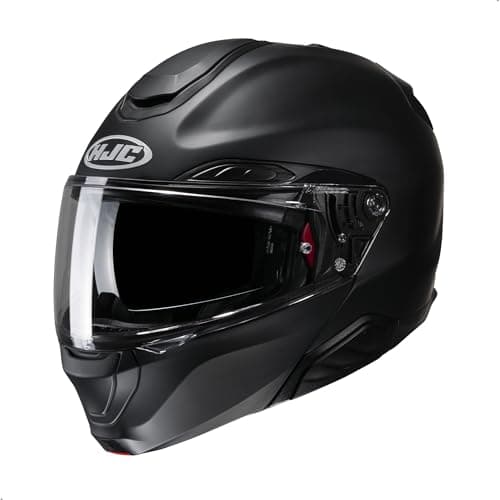
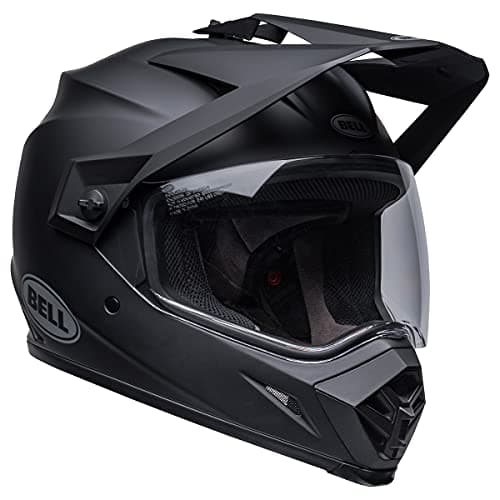
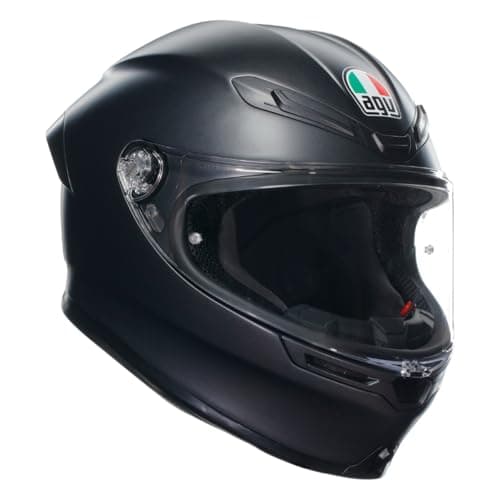
If you want the safest motorcycle helmet with evidence behind the claim, the pick is the AGV K6 S: it is the one full-face we cover that holds genuine US DOT + ECE 22.06 and a perfect 5/5 SHARPscore from the UK government's independent test program, in a ~1,255 g carbon-aramid shell. Who it is for: the rider who wants to buy on published safety data rather than reputation. If you need a chin bar that opens, the HJC RPHA 91 is the best-documented modular - ECE 22.06 with P/J approval and 4/5 SHARP - and on a budget the Bell MX-9 Adventure MIPS stacks 22.06, MIPS and an independent 4/5 SHARP score for a fraction of either.
Read the framing before the ranking, because it changes what this page is worth to you. There is no government or industry list of the safest helmets - no regulator ranks them, and we have no lab and do not crash-test anything. Every helmet legally sold in the US has already passed the same pass/fail DOT floor, so the DOT sticker cannot separate them. What can separate them is the small amount of graded, published evidence that exists: an independent star score, a stricter voluntary standard, and whether the US-market unit carries the rotational-impact test at all. That is the only basis for the order below, and every claim is sourced at the foot of the page.
The four pieces of evidence worth paying for
ECE 22.06 is the current global standard and the first to add an oblique (rotational) impact test to the straight-line one. It is independently administered rather than self-certified, which is the single biggest step up from DOT. The trap is that the mark is market-specific: several flagships sold in the US are DOT or Snell builds, not the ECE 22.06 version their European reviews describe. Our 22.06 explainer covers what the test added, and the certifications explainer covers the US-versus-EU trap in full.
SHARPis the closest thing to a consumer crash-test score. The UK's program buys helmets off the shelf - so a maker cannot submit a hand-picked sample - impact-tests them at multiple speeds and points, and publishes a graded 1-to-5-star result. That grading is why it does work no homologation can: a pass/fail mark tells you a helmet cleared a bar, while a star score tells you how far clear it was. Its limit is that it leads on linear impact and only covers models it has bought, so an absent score is not a bad score.
Snell M2025 is a voluntary, re-tested standard with impact energies above the legal floor, and it is the route most US-market Japanese flagships take instead of ECE. It is a genuine additional hurdle rather than a marketing badge. And MIPS is the one on this list that is not a certification at all - it is a low-friction layer inside the helmet aimed at rotational forces, a feature worth having that replaces no mark. A MIPS helmet still has to pass its standards on its own merits.
Why no brand is the safest brand
The safest motorcycle helmet brand is the most common version of this search, and it has no honest answer, because certification is granted per model and per market - not per badge. The same manufacturer will sell you a genuine ECE 22.06 helmet and a DOT-only one in the same showroom, and in several cases the US and European versions of one model carry different marks under different names. Shoei is the clearest example on this page: the US RF-1400 is a DOT + Snell M2025 build, while its European twin the NXR2 is the helmet that scored 5/5 SHARP. Both are excellent; they are not the same homologation. Buy the model and check the label, never the logo.
AGV K6 S - the strongest evidence on one shell
The K6 S is here because it is the rare case where every available piece of evidence lines up on the US unit: genuine DOT + ECE 22.06 homologation, a perfect 5/5 SHARP score, and class-leading low weight at about 1,255 g in a carbon-aramid shell. Weight belongs in a safety discussion more than riders expect, because mass is what rotational forces act on and fatigue is what ends concentration on a long day. Who it is for: riders buying on published data who do not need a sun visor. The honest cons: no internal sun visor, and a sport-oriented fit that runs snug on round heads. Detail in the K6 S review and the K6 S safety rating page.
HJC RPHA 91 - the best-documented helmet that opens
A modular has a joint where a full-face has none, which is exactly why its certification matters more rather than less. The RPHA 91 answers it: ECE 22.06 with P/J dual homologation - meaning it is approved to ride both closed and open, not merely capable of it - plus an independent 4/5 SHARP score, in a PIM EVO composite shell at about 1,740 g. Who it is for: the touring or commuting rider who wants a flip-up without dropping to the legal floor to get one. The honest cons: not as quiet as a Shoei Neotec 3, and the interior is a notch less plush than the premium Japanese brands. See the RPHA 91 review, its safety rating page, and are modular helmets safe for the mechanism.
Bell MX-9 Adventure MIPS - the most safety evidence per dollar
This is the pick that makes the page useful rather than aspirational. The MX-9 Adventure carries genuine DOT + ECE 22.06, adds a MIPS rotational-management layer, and has been SHARP-tested at 4/5 - three independent pieces of evidence, at a budget price where most helmets offer one. Who it is for: the rider on a real budget, the second-helmet buyer, and anyone who has been told safety is something you have to spend up for. The honest cons: a polycarbonate shell at about 1,696 g, and it is louder and less refined at speed than a premium lid. Full detail in the MX-9 Adventure review and its safety rating page.
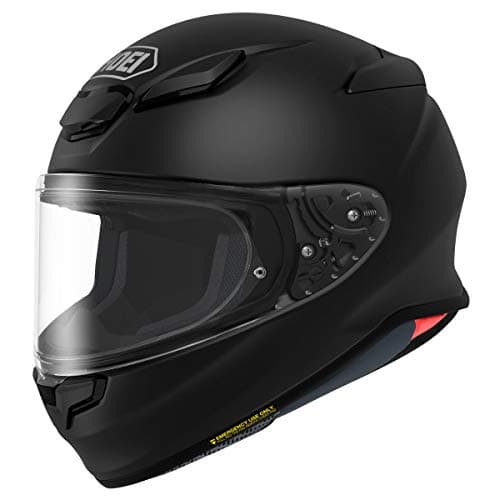
Shoei RF-1400 - the Snell route, done properly
The RF-1400 is the best argument on this page that ECE 22.06 is not the only credible answer. The US helmet is a DOT + Snell M2025 build - a voluntary standard with impact energies above the legal floor - in a multi-ply AIM+ shell at roughly 1,385 g, with the shield seal and quietness that make Shoei the sport-touring default. Its European twin, the NXR2, is a 5/5 SHARP helmet; we are careful not to transfer that score to the differently homologated US unit. Who it is for: the sport-touring rider who wants Snell, low weight and a hushed helmet. The honest cons: no sun visor, and no ECE 22.06 on the US box. See the RF-1400 review and its safety rating page.
The thing that outranks every helmet on this list
Fit. A helmet is a one-use crush structure held in position by its padding, and a lid that can shift or roll on your head has already given away the geometry its test results depended on - SHARP makes the same point in its own buying advice. A correctly fitted 4/5 helmet protects you better than a 5/5 you bought a size up because it felt comfortable in the shop. Measure first with our sizing guide, work out your head shape, and use cheek pads to fine-tune. Then retire the helmet on schedule - our replacement guide covers the age and impact rules, because the safest helmet in the world is worthless once its liner has taken a hit.
So which is the safest helmet for you?
Want the strongest evidence available on a US-market shell? The AGV K6 S. Need a chin bar that opens without giving up the current standard? The HJC RPHA 91. Shopping on a budget and refusing to compromise on documented safety? The Bell MX-9 Adventure MIPS. Prefer Snell, low weight and quiet for long sport-touring days? The Shoei RF-1400. And if you are weighing whether the money buys real protection or just finish, our are expensive helmets worth it page answers exactly that with the same evidence.
Safety data is one lens. If you want the same market read with weight, noise and price folded back in, our best motorcycle helmets of 2026 page ranks a winner in every category rather than ranking purely on test evidence.
How to judge a safety claim yourself
Read the ECE label's revision number, not the listing. A genuine 22.06 helmet carries a white approval tag inside whose number begins with 06; an older 22.05 helmet begins 05. This is the single most useful habit this site tries to teach, because it is how you tell a current helmet from a carry-over, and a US build from a European one.
Treat a missing SHARP score as missing data, not a bad result. SHARP only rates what it buys, so excellent helmets - the HJC RPHA 1N and RPHA 12 among them - simply have no score. Compare like with like: a 4/5 against a 5/5 is meaningful, a 4/5 against silence is not.
Do not let MIPS or a carbon shell stand in for a mark. MIPS is a feature, carbon is a material, and neither is a certification. Check what the shell is homologated to first, then treat the rest as what it is: a useful addition on top.
Be suspicious of a star rating nobody can show you. SHARP scores live in a public database, linked below for every scored helmet on this page. If a seller quotes a safety rating that is not in a published source, it is marketing. And no review page anywhere - this one included - is a crash test.