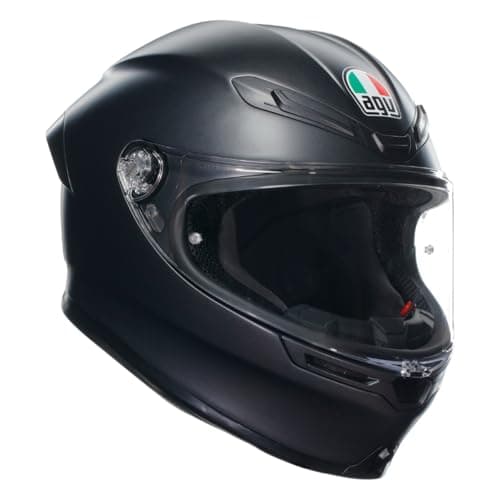
The best motorcycle helmet of 2026 is the AGV K6 S, and the reason is documentary rather than impressionistic: it holds genuine US DOT + ECE 22.06, it is one of only a handful of helmets to have been SHARP-tested at a full 5 of 5 stars, and it weighs about 1,255 g in carbon-aramid. Who it is for: the rider who wants the single best-documented helmet on the US market and does not need a drop-down sun visor or a flip-up chin bar to get it. If you do need one of those things, the next four picks on this page are the best-documented helmet in each of the categories that provide them.
This is the one page on Visor & Vent that crosses every category, so it is worth being precise about how it was built. We do not crash-test helmets and we have no lab. Every certification below is taken from the manufacturer's published homologation or directly from the standards body, every weight and spec from the manufacturer, and every star rating from SHARP's own published result for that exact build. Where a US helmet is homologated differently from its European twin - which happens constantly, and is the single biggest trap in helmet shopping - we give you the US answer and say what the European version holds instead. Nothing here is a test result we generated, and there are no awards we invented.
The ranking rule: what the shell can prove
Helmet roundups usually rank on feel, and feel is not transferable - your head is not our head. So the lead axis here is certification, in a specific order of evidential weight. An independent SHARP star rating is the strongest thing a helmet can show you, because SHARP buys helmets at retail and crash-tests them comparatively. ECE 22.06 is next, because it is an independently lab-verified type approval that includes the oblique rotational-impact test that 22.05 never had. Snell M2025 is a voluntary, re-tested standard that sits on top of DOT and is favoured by Shoei and Arai in the US market. And DOT (FMVSS 218) on its own is the US legal floor - and it is self-certified by the manufacturer, which is why we treat it as a floor and not an achievement. The full comparison is in DOT vs ECE vs Snell vs SHARP.
After certification come weight, noise, the shield and sun-visor provision, and value - in that order, because grams and decibels are the two things that decide whether you still enjoy hour four. We did not rank on brand prestige and we did not rank on graphics.
The five picks, by category
| Helmet | Category it wins | Certification (US build) | Published weight | Shell |
|---|
| AGV K6 S | Best overall / best full-face | DOT + ECE 22.06, SHARP 5/5 | ~1,255 g | Carbon-aramid |
| HJC RPHA 91 | Best modular | ECE 22.06 P/J, SHARP 4/5 | ~1,640 g | PIM+ composite |
| Klim Krios Pro | Best adventure | DOT + ECE 22.06 | ~1,450 g (L) | Full carbon fiber |
| HJC RPHA 12 | Best value | DOT + ECE 22.06 | ~1,474 g | PIM EVO composite |
| Shoei Neotec 3 | Quietest touring | DOT (US); EU build is ECE 22.06 P/J, SHARP 5/5 | ~1,750 g | AIM multi-composite |
Weights and shells are the manufacturers' published figures; certifications are the US-market build and are cited individually in Sources. Prices are live and date-stamped in the quick-picks table below - we never type a number into the page.
AGV K6 S - the best-documented helmet you can buy in the US
Nothing else on this page has the evidence the K6 S has. It is a genuine US DOT + ECE 22.06 helmet, and SHARP crash-tested it to a perfect 5/5 - an independent, comparative result rather than a pass/fail type approval. It does that in a carbon-aramid shell at about 1,255 g, which is lighter than almost every full-face at any price, and it carries the enormous racing-derived field of view AGV is known for. Who it is for: the rider who wants the strongest safety documentation available and will trade convenience features for it.
The honest cons: there is no internal sun visor, so you commit to a tinted shield or sunglasses, and the fit is sport-snug - round-oval heads get pinched. Full detail in the AGV K6 S review, and the certification on its own page at AGV K6 S safety rating.
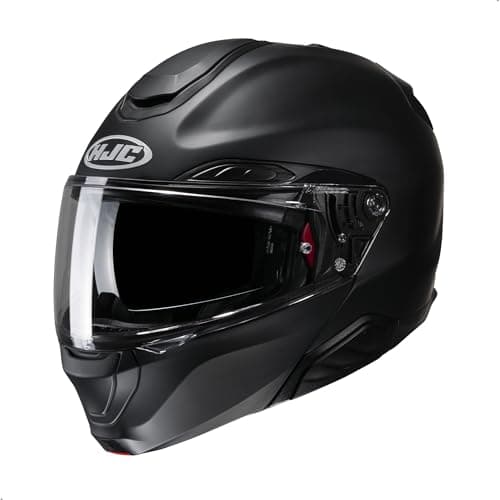
HJC RPHA 91 - the best modular, and the only one here with a star rating
If you want a chin bar that lifts, this is the one. The RPHA 91 is ECE 22.06 with P/J dual homologation - meaning it is approved to ride both closed and open, which most flip-ups are not - and SHARP tested the model at 4 of 5 stars. In a category where the usual honest answer is "DOT on the US build and trust the brand", a 22.06 P/J modular with an independent star score is a genuinely different proposition. Who it is for: the touring or commuting rider who wants flip-up convenience without dropping to the legal minimum on the shell.
The honest cons: it is heavier than a one-piece full-face at about 1,640 g, and a modular is never as quiet as a sealed full-face because there is a seam across your face. More in the RPHA 91 review, and we answer the obvious follow-up in are modular helmets safe?
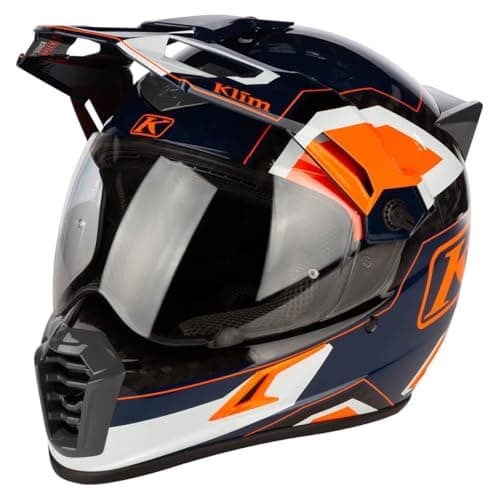
Klim Krios Pro - the best adventure helmet, and the lightest way to hold 22.06
The Krios Pro is the ADV pick because it refuses the usual adventure-helmet compromise. It publishes genuine US DOT + ECE 22.06 in a full carbon shell at about 1,450 g, and it converts between peak-and-goggles ADV trim, a street configuration with the shield, and a dirt setup - one helmet instead of two. Who it is for: the adventure rider who wants the current rotational standard and cares about grams because they spend time standing on the pegs.
The honest cons: it is a flagship price, and it is quieter with the visor fitted than in full peak-and-goggle mode - peaks make noise, and physics does not care how much carbon you bought. See the Krios Pro review, the adventure helmet roundup for the rest of the class, and our 2026 ADV helmet notes for how the category moved this year.
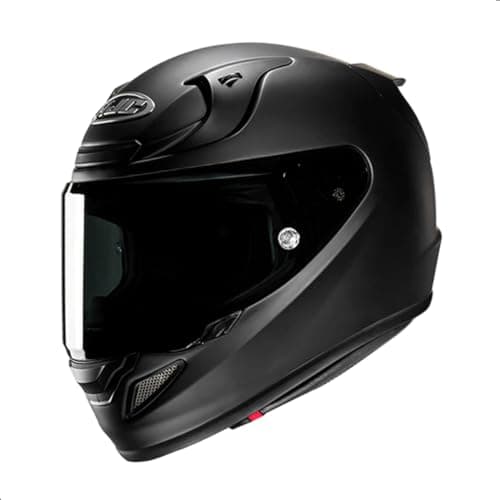
HJC RPHA 12 - the value pick that embarrasses the price ladder
The RPHA 12 is the helmet we point at when someone insists the current ECE revision costs flagship money. It is genuine DOT + ECE 22.06in HJC's PIM EVO composite - fiberglass, carbon and aramid - at a published ~1,474 g, with a Pinlock-ready HJ-42 shield in the box. That is flagship specification at a budget price. Who it is for: the rider who wants 22.06 and a light composite shell for the least money, and does not need a sun visor.
The honest cons: no SHARP result exists for it, so the 22.06 approval is the whole of the evidence, and there is no drop-down sun visor. Detail in the RPHA 12 review; the whole bracket is in best budget full-face helmets.
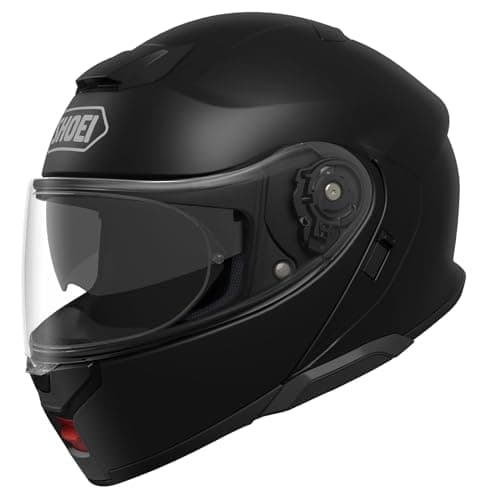
Shoei Neotec 3 - the quietest way to cover distance
The Neotec 3 is the touring answer, and it is also the clearest illustration of the US-vs-EU trap on this page. The European Neotec 3 is ECE 22.06 (P/J) and scored a full 5/5 at SHARP; the US unit is a DOT build - a different homologation of the same helmet. We rank it fifth for exactly that reason, and we rank it at all because nothing else here comes close on sealing and noise for a long day at highway speed. Who it is for:the long-distance tourer whose first complaint is wind noise, and who is content with DOT plus Shoei's engineering on the US-market shell.
The honest cons: it is the heaviest helmet on this page at about 1,750 g, it is expensive, and if the certification code is what you are buying, the US build does not print 22.06. The full argument is in the Neotec 3 review, the head-to-head with our modular winner is Shoei Neotec 3 vs HJC RPHA 91, and the homologation story in general is in why the US and European versions differ.
What changed going into 2026
Two things, and neither is a new shell shape. First, ECE 22.06 has stopped being a premium feature. In 2022 the current revision mostly meant a flagship; in 2026 you can have it in a sub-$300 composite full-face, a forged-carbon modular and a value adventure lid. That changes the shopping question from "can I afford 22.06?" to "why does this helmet not publish it?" Second, Snell M2025 has rolled through the US line-ups of Shoei and Arai, which means several of the best helmets on the US market carry a strong voluntary standard and not the ECE revision - so a shortlist built on the 22.06 code alone will miss them. Both facts are why this page ranks on evidence rather than on a single mark.
Fit still beats everything above
A 5/5 SHARP helmet one size too big is worse than a correctly fitted DOT helmet, because every certification test assumes a helmet that stays in place on your head. Measure your head before you shortlist anything - how to measure your helmet size takes two minutes - and if helmets in your size have pinched your forehead or rocked on your crown before, read helmet head shapes explained first. Three of the five helmets here run sport-snug, which is a fit profile and not a defect.
So which one?
Want the best-documented helmet on the market, full stop? The AGV K6 S. Need the chin bar to lift? The HJC RPHA 91. Riding dirt roads and highway in the same day? The Klim Krios Pro. Want the current standard for the least money? The HJC RPHA 12. Covering 500-mile days and tired of wind noise? The Shoei Neotec 3. If none of those is your riding, go to the category that is: full-face, modular, adventure or Bluetooth and comms.