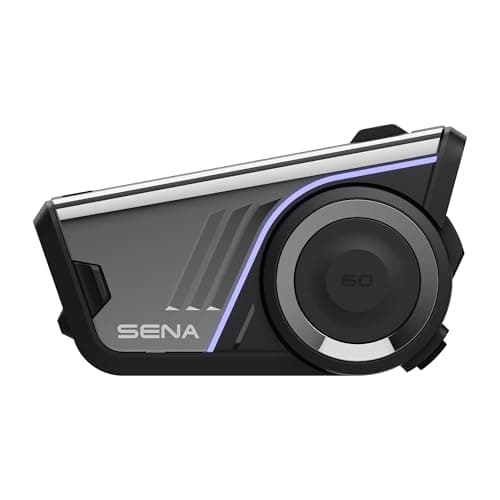
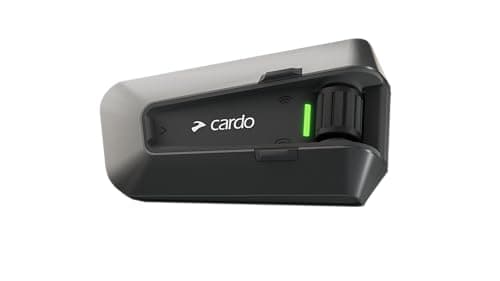
For music, the pick is the Cardo Packtalk Edge: JBL 40 mm drivers - a real step up in clarity over the thin 32 mm speakers at the bottom of the market - in the one unit here that also publishes an IP67 seal, so rain is not a reason to stop listening. Who it is for: the rider who listens on every ride and wants the best bolt-on full stop. If you want the longest published battery for all-day listening, the Sena 60S is the answer - second-generation Harman Kardon audio and 24 hours of published Bluetooth talk time - and on a budget the Cardo Spirit HD keeps 40 mm HD drivers and adds FM radio for a fraction of either.
Read this before the picks, because it will save you money: the loudest variable in motorcycle audio is not the intercom - it is the helmet. Wind noise at highway speed sits on top of whatever you are listening to, so riders fix it by turning the volume up, which is the wrong lever. A quieter helmet and a set of earplugs will do more for music quality than any upgrade on this page. Our quietest helmets and how to make your helmet quieter pages are genuinely the first two things to read if your music sounds thin at 70 mph.
What you can actually rank audio on
Driver size. This is the one hard number every maker publishes, and it is the single best predictor of whether music sounds full or tinny. The practical line is 40 mm: the Packtalk Edge, the 60S, the Spirit HD, the Sena 5S and 5R all use 40 mm drivers, while the cheapest Cardo Spirit drops to 32 mm thin speakers - the biggest audio compromise in the whole comms range, and audible on a loud bike.
The audio partnership. Cardo runs JBL, Sena runs Harman Kardon, with second-generation speakers and mic on the 60S. Take these as a signal of intent rather than a ranking: we have no measured frequency response for any unit here and are not going to print one.
The music features, which are not universal. This is where spec sheets diverge more than riders expect. FM radio is on the Spirit HD (six channel presets) but not the cheaper Spirit. Music sharing - streaming the same track to a pillion or another rider - and Audio Multitasking, which lets intercom audio and music coexist instead of cutting one off, are listed on the Sena 5S but not on the cheaper 5R. If you ride two-up and want to share what you are listening to, that single line on the spec sheet decides your purchase.
Battery, honestly compared. Music drains a unit faster than talking does, so published talk time is the closest proxy you get. Sena publishes figures and Cardo largely does not: 24 hours Bluetooth / 17 hours Mesh on the 60S with a 1.5-hour USB-C charge, 18 hours on the 5S, and an outlier 36 hours on the 5R. Cardo publishes quick-charge numbers for the Spirit line - two hours of talk from a 20-minute charge, a full charge inside two hours - but no headline total talk time, so its ceiling is not on the record.
Cardo Packtalk Edge - the best-sounding bolt-on you can buy
The Edge is our music pick because it combines the drivers with the things that let you keep using them. JBL 40 mmspeakers, Cardo's app and over-the-air updates behind them, dynamic DMC mesh for when you are riding with others, and a published IP67 rating - genuinely weatherproof rather than water-resistant, which is the difference between listening through a shower and switching off. Who it is for: the rider who listens constantly and wants no caveats. The honest cons: premium money, and the magnetic Air Mount is excellent but a proprietary part to keep track of. See the Packtalk Edge review.
Sena 60S - the one that lasts the whole day
If your riding is long days rather than commutes, the 60S is the better music unit for one documented reason: 24 hours of published Bluetooth talk time against a 1.5-hour charge, with second-generation Harman Kardon speakers and mic, Mesh 3.0, the cellular Wave intercom, and a published IPX7 rating - the one spec its predecessor never had on the record. Who it is for:tourers, and anyone already in the Sena ecosystem. The honest cons: a clear price step over the 50S, which got Mesh 3.0 and Wave by firmware; and Wave needs cellular coverage plus your phone's data and battery. See the 60S review and Sena vs Cardo for the brand-level decision.
Sena 5S - the music-sharing pick on the budget shelf
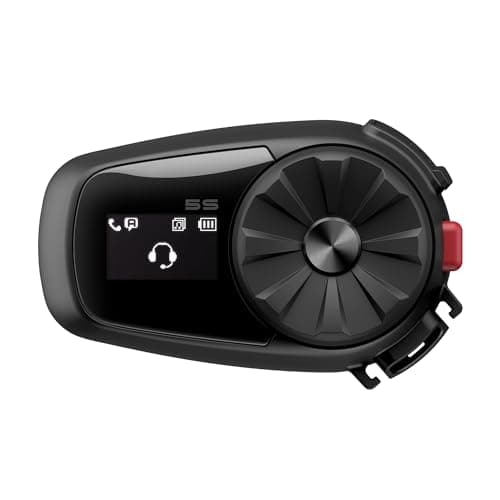
The 5S earns its place on a music page specifically because of its feature list rather than its price: Sena publishes Audio Multitasking and music sharing on it, along with 40 mm HD speakers, an LCD screen so you can confirm a connection at a glance instead of counting beeps, 18 hours of talk time and the fastest refill in its class at 1.5 hours. Who it is for: the rider who shares music with a pillion, on a budget. The honest cons: two riders maximum, no published IP or water rating, and the spec sheet lists a wired boom microphone only - check the kit contents if you ride a full-face. See the budget intercom guide for the full budget shelf.
Cardo Spirit HD - 40 mm drivers and FM, for the least money
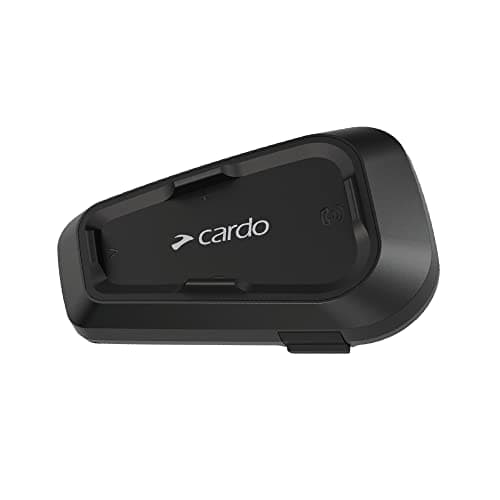
The Spirit HD is the cheapest unit here we would recommend for music, because it keeps the spec that matters: 40 mm HD speakers, the same driver size as Cardo's flagships. It adds a built-in FM radio with six presets - genuinely useful when you have no signal and no downloaded playlist - and ships with both a hybrid/boom and a wired mic so it fits a full-face, flip-front or open-face. Who it is for: the solo rider or fixed pair who wants decent audio and nothing else. The honest cons: two riders only with no mesh at any firmware level, no published IP rating for the Spirit line, and no published total talk time. See the Spirit HD review.
What about a helmet with the audio built in?
There is a second route, and for some riders it is the better one: an integrated helmet with the comms and speakers designed into the shell. The Sena Impulse and Sena Stryker both carry Harman Kardon speakers and microphones in molded pockets, with no bolt-on to rattle and no mount to lose - the Impulse adding a drop-down sun visor and an integrated rear taillight. The trade is that you cannot upgrade the comms independently; when the electronics date, you replace the helmet. Read the Impulse review and Stryker review, and note that both are DOT builds - the comms carry no helmet rating of their own.
So which intercom for music?
Listening on every ride, in all weather, and want the best? The Cardo Packtalk Edge. Long days where battery decides it? The Sena 60S. Sharing music with a pillion without spending flagship money? The Sena 5S. Cheapest unit that still has real drivers? The Cardo Spirit HD. And whichever you buy, buy a set of earplugs first - cutting wind roar is the only upgrade on this page that improves every track you own.
Getting good audio out of a motorcycle helmet
Fix the noise floor before the speakers. At highway speed wind roar sits on top of the music, and turning the volume up only moves both. Earplugs plus a well-sealed helmet lower the floor so you can hear detail at a sane volume - our noise guide sets out why that works.
Get the speakers close to your ears. Most helmets have molded EPS speaker pockets; a driver sitting off-axis or buried in padding sounds muffled no matter what it cost. Position them over your ear canal, and use the spacer pads in the box if the pockets are deep.
Check for 40 mm, and for Audio Multitasking if you talk and listen.Driver size is the published spec worth shopping on. And if intercom audio cutting your music dead would annoy you, confirm Audio Multitasking is on the model's own spec sheet - it is on the Sena 5S and not on the cheaper 5R.
Keep the volume honest. Riding already exposes you to sustained wind noise, and stacking loud music on top of it is a hearing risk rather than a feature. Lower the noise floor, then listen quieter - and check the law where you ride, because rules on headphones and earplugs while riding vary by state.