HUB 04 · Bluetooth & Comms Helmets
Cardo Spirit HD Review
The cheapest intercom we would actually buy, because it keeps the one component that decides whether you enjoy using it - 40 mm speakers. What it does not keep is a third rider, a Mesh network, or a published water rating.
We earn a commission when you buy through our Amazon links, at no extra cost to you. It never changes a ranking, and we tell you when the cheaper helmet is the better buy. How this works.
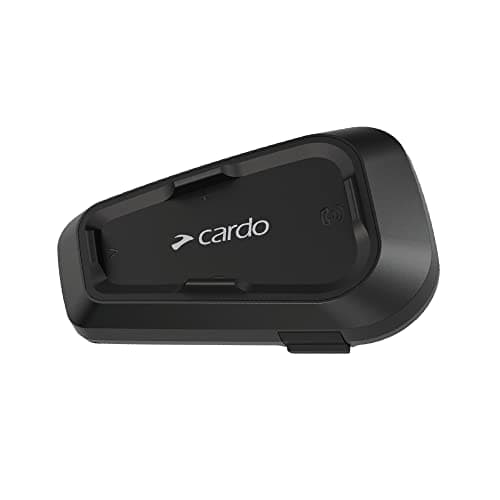
Best budget intercom overall
The best budget bolt-on: 40 mm HD speakers, FM radio, both microphone types in the box and Cardo's app and over-the-air updates behind it — for two riders only.
$179.9510% off
Price as of October 21, 2026. Prices change — Amazon's at checkout is the one that counts.
#ad · we may earn a commission from this link to Cardo Spirit HD
Buy the Cardo Spirit HD if you ride with one other person - a pillion or a regular riding partner - and want a real comms brand behind the unit. Cardo publishes 40 mm HD speakers, the same driver size as its flagships, up to 600 m of range, FM radio with six presets, a hybrid/boom mic and a wired mic in the box, the Cardo Connect app with over-the-air updates, and a 2-year warranty. Who it is for: two-up riders and fixed pairs who want good audio and support rather than the most features.
The ceiling is equally clear and we will not soften it: this is a two-rider device with no Mesh, and no firmware update turns it into one. If you ride in a group of three or more, stop here and read our group-riding intercom guideinstead. Everything below comes from Cardo's own published specifications, cited at the foot of the page; we have not bench-tested range or battery life and will not invent figures for either.
The 40 mm speakers are the actual reason to buy it
Budget intercoms are where speaker diameter quietly gets cut, and it is the component you notice on every ride. The Spirit HD uses 40 mm HD drivers - the same size Cardo fits to the Packtalk Edge, whose units are tuned by JBL. The cheaper Cardo Spirit drops to 32 mm, and on a loud bike at highway speed that difference is the gap between music you enjoy and music you turn off. If you are spending at this level at all, spending it on drivers is the right call - which is why the Spirit HD leads our budget intercom roundup.
Both microphones in the box, which decides whether it fits your helmet
Cardo ships the Spirit HD with a hybrid/boom mic and a wired mic. That sounds like packaging trivia and is actually the compatibility story: a boom mic reaches round into the chin bar of an open-face or a flip-front, while a wired mic tucks into the chin curtain of a sealed full-face where a boom has nowhere to go. Units that ship one mic make your helmet type their problem, not theirs. With both in the box, the Spirit HD fits a full-face, a modular or an open-face without a second purchase.
FM radio, the app, and the part a marketplace unit cannot match
Cardo lists a built-in FM radio with six channel presets on the Spirit HD - and not on the cheaper Spirit - plus the Cardo Connect app for setup and over-the-air software updates, and a 2-year warranty.
The warranty and the update path are the real argument against saving another thirty dollars on an unbranded intercom. A comms unit lives outdoors on the side of a helmet, gets dropped, and depends on firmware to keep pairing properly with phones that update twice a year. A company that ships OTA updates and honors a two-year warranty is buying you years of use; a marketplace listing with impressive-sounding specs and no support channel is buying you a gamble. That pattern is the whole reason our budget guide ranks on published specs and support rather than on listing claims.
The hard ceiling: two riders, no Mesh
Cardo publishes "connects up to 2 riders" for the Spirit and Spirit HD. There is no third rider at this price from any premium brand - Sena publishes the same two-rider figure for its 5S and 5R - and there is no Mesh network, which is the thing that makes group riding work.
Why that matters more than the number suggests: a Bluetooth intercom pairs devices in a chain, so the conversation depends on every link. When the rider in the middle drops back for fuel, riders beyond them lose the connection and somebody re-pairs at the next stop. Mesh treats every unit as a node and re-routes around riders who fall out of range. For two people the chain is fine - there is no middle. For four it is a chore. Our group-riding guide covers the published rider ceilings on the Mesh units, and the catch that Cardo DMC and Sena Mesh are separate, incompatible networks.
Two things Cardo does not publish
We flag absent data rather than filling it in, and there are two gaps here worth knowing before you buy.
No IP rating for the Spirit line. Cardo describes its units as waterproof but publishes no IP figure for the Spirit or Spirit HD, where the Packtalk Edge is rated IP67 - sealed against dust and temporary immersion. Treat the Spirit HD as weather-resistant rather than immersion-rated. It is not a claim that it fails in rain; it is a claim that nobody has published a number, and that is a different thing from a tested one.
No headline total talk time. Cardo gives quick-charge figures - two hours of talk after a 20-minute charge, and a full charge within two hours - but no total talk-time ceiling for the Spirit HD. Sena, by contrast, publishes 18 hours for the 5S and 36 hours for the 5R. If all-day battery is your priority and you want it on the record, that is a genuine reason to look at those two instead, and our budget roundup sets all five units side by side.
Spirit HD versus Cardo Spirit
This is the decision most buyers at this level are actually making, and in our view the HD is the best-value step in the bracket. Moving from the Spirit to the Spirit HD buys you 40 mm speakers instead of 32 mm, published range up from 400 m to 600 m, and the FM radio Cardo lists only on the HD. Everything else is identical: both microphone types, the Cardo Connect app, over-the-air updates, the two-year warranty, two riders. You are paying a small premium for the one component you cannot upgrade later, which is the right place to spend. The full spec-by-spec read, plus a third option that beats both on published battery, is in Cardo Spirit vs Spirit HD.
Spirit HD versus Packtalk Edge - when to skip the budget tier entirely
Three reasons to spend up to the Edge rather than buy twice. Mesh: Cardo publishes up to 31 riders in a single DMC group after its free Mesh Boost update, with mixed groups containing un-updated units capped at 15. Range: up to 1 mile between two units and up to 5 miles across a group, because Mesh relays through the riders in between. And IP67, on the record. If you ride in groups, in bad weather, or expect to grow into a group within a couple of seasons, the Edge is the cheaper purchase over time - the Packtalk Edge review has the detail. If you genuinely ride two-up and always will, the Edge is paying for a network you will never switch on.
Fitting it to the helmet you own
Two practical checks. First, speaker pockets: a 40 mm driver needs depth, and in a helmet with shallow ear recesses it presses on your ear within an hour. Helmets with molded EPS ear pockets handle it properly - the Biltwell Gringo SV is an example at the budget end, and the purpose-built comms channels on the shells in our Bluetooth modular roundup are the premium answer. Second, mic placement: use the boom on an open-face or flip-front, the wired mic in a sealed full-face. On a dual-sport lid such as the Fly Racing Trekker, where no comms channel is published, having both mics in the box is what makes the fit workable.
When you set it up, pair the phone first, then the intercom, then your partner's unit - doing it out of order is the most common reason a pairing "will not take." The sequence logic in our comms pairing guide is brand-agnostic even though the worked example is a Sena.
One thing a comms unit never does
It carries no helmet safety certification. The shell does. Bolting a well-reviewed intercom to an uncertified lid changes nothing about what happens in a crash, which is why we rank helmets by the mark on the shell first and treat comms as a separate decision - see DOT vs ECE vs Snell vs SHARP. Choose the helmet on its certification, then choose the intercom.
Who should skip it
Skip the Spirit HD if you ride in a group of three or more - buy Mesh, and buy the brand your group already runs. Skip it if you want a published water rating or a published total talk time, because Cardo gives neither for this line. Skip it if you want the longest battery on paper at this price, where Sena's 5R publishes 36 hours. And skip the Spirit HD in favor of the plain Spirit only if the budget genuinely will not stretch, understanding that you are giving up the speakers to save it. For a pair of riders who want good audio, both mics, FM and a real warranty, this is the unit we would buy.
The scorecard
How it scores, and who should skip it
- Audio
- 7.5
- Range/Mesh
- 5
- Ease of use
- 8.5
- Weatherproofing
- 7.5
- Value
- 9
Pros
- 40 mm HD speakers — the same driver size as Cardo's flagships, and a real step up on the 32 mm units below
- Built-in FM radio with 6 channel presets, and both a hybrid/boom mic and a wired mic in the box, so it fits full-face, flip-front or open-face
- Cardo Connect app with over-the-air software updates and a 2-year warranty — the support story a marketplace unit cannot match
Cons
- Connects up to 2 riders. There is no Mesh and no third rider at this price
- Cardo states its units are waterproof but publishes no IP rating for the Spirit line — treat it as weather-resistant, not immersion-rated like the IP67 Packtalk Edge
- Cardo's product page gives quick-charge figures (2 hours of talk after a 20-minute charge, full charge within 2 hours) but no headline total talk time, so the battery ceiling is not on the record
Don't buy this if…
…you ride in a group of three or more — this is a two-rider device and no firmware update turns it into Mesh; step up to a Mesh unit instead.
$179.9510% off
Price as of October 21, 2026. Prices change — Amazon's at checkout is the one that counts.
#ad · we may earn a commission from this link to Cardo Spirit HD
How we picked
We do not crash-test helmets
We compiled published specifications, cited each helmet's certification (DOT, ECE 22.06, Snell, SHARP) from the standards body or manufacturer homologation, and aggregated owner reports, then scored against a published method. The scores are judgments from documented research — not measurements we took. We do not run a crash lab. Certifications reflect the US-market build; where it differs from the European version, we say so and cite it.
Questions
Frequently asked
Is the Cardo Spirit HD waterproof?
How many riders can the Cardo Spirit HD connect?
Is the Cardo Spirit HD worth more than the Cardo Spirit?
How long does the Cardo Spirit HD battery last?
Keep reading
Related
- Best budget Bluetooth intercomsWhere the Spirit HD ranks against the other four under $200.
- Best intercoms for group ridingRead this instead if your group is three or more.
- Cardo Packtalk Edge reviewWhat the Spirit HD is a scaled-down version of: DMC Mesh, IP67.
- Best Bluetooth modular helmetsShells with purpose-built comms channels and speaker depth.
- How to pair a comms unitPhone, then intercom, then the group - the order that works.
- Biltwell Gringo SV reviewA budget helmet with molded ear pockets deep enough for 40 mm drivers.
Receipts
Sources
- Cardo - Spirit HD (40 mm HD speakers, up to 600 m, 2 riders, FM radio with 6 presets, hybrid/boom + wired mic, full charge within 2 hours, 2-year warranty; no IP rating published)
- Cardo - Spirit (32 mm speakers, up to 400 m, 2 riders, hybrid/boom + wired mic, 2-year warranty)
- Cardo - Packtalk Edge (Bluetooth 5.2, 40 mm JBL, IP67, Air Mount)
- Cardo - Mesh Boost (up to 31 riders; mixed groups limited to 15)
- Sena - 5S (18 h talk time, 2 riders) and 5R (36 h talk time, 2 riders)
We do not run a crash lab, and we do not pretend to. Certifications are cited to the standards body or the manufacturer's stated homologation; where a US model's certification differs from its European namesake, we say so. Where we could not verify something, we say so on the page rather than quietly leaving it out. Read our full method.