Bell helmets are good, and the reason is narrower and more useful than "good brand": Bell puts MIPS rotational-management layers into helmets priced where almost nobody else does, and one of its models - the Bell MX-9 Adventure MIPS - is the cheapest helmet we cover that carries genuine DOT + ECE 22.06, MIPS, and an independent SHARP 4/5 score at the same time. If you want the most documented protection per dollar on this site, that is the helmet, whatever your riding style - which is why it shows up in our beginner picks too.
What Bell is notis a premium quiet-touring brand. These are polycarbonate and composite helmets with functional rather than luxurious finish, and on two of the three models below we will not assert an ECE rating because Bell does not publish the revision for the US unit. We have not crash-tested any of them; certifications come from the standards bodies and Bell's own product pages, cited at the foot of the page.
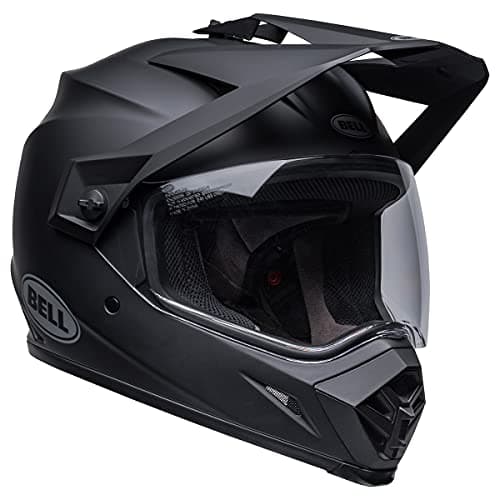
Bell MX-9 Adventure MIPS - the most documented safety per dollar we cover
This is the headline. The MX-9 Adventure carries genuine DOT + ECE 22.06, adds a MIPS low-friction layer for rotational impacts, and has been independently tested by SHARP at 4/5 - a combination that is rare at any price and almost unheard of at this one. It is a polycarbonate adventure lid at about 1,696 g, built in three shell sizes from XS to 3XL, with a two-point removable peak and an aperture Bell describes as designed to work with any dirt goggle.
Who it is for: anyone who wants maximum published safety evidence for minimum money - and that genuinely includes street riders, because with the peak removed it is a conventional road helmet underneath. The honest cons: it is heavier than a composite lid, the interior is functional rather than plush, and like every peaked helmet it is louder on the highway than a sealed touring helmet. Full detail in the MX-9 Adventure review, and the certification picked apart in its safety rating page.
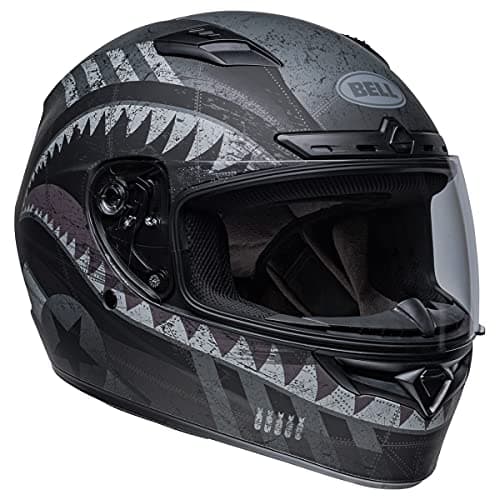
Bell Qualifier DLX MIPS - the budget full-face that solves glare too
The Qualifier DLX is the one to buy if you want a plain road helmet for as little as possible without giving up rotational-impact hardware. It is DOT with a MIPS layer, ships with a photochromic ProTint shieldthat darkens in sunlight, uses Bell's Velocity Flow ventilation, and covers XS-3XL across three shells - polycarbonate, at about 1,626 g.
Who it is for: commuters, new riders and second-helmet buyers. A photochromic shield in the box is a real saving - you are not buying a second tinted shield or a helmet with an internal sun visor to solve the same problem. The honest cons: we do not assert ECE on it (Bell lists ECE for the model but does not publish the 22.05/22.06 revision for the US unit, so check the label), the finish is basic, and it is louder and heavier than a mid-tier composite. See the Qualifier DLX review.
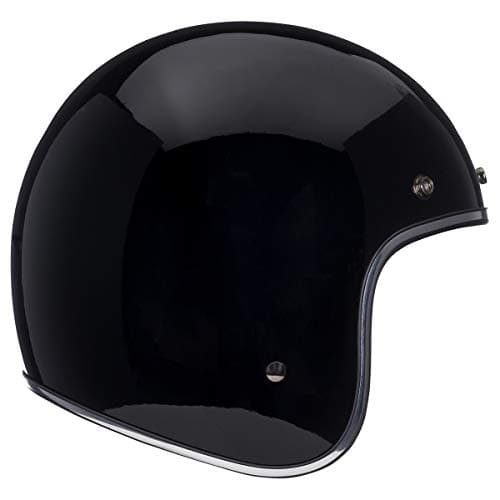
Bell Custom 500 - the classic that is better engineered than it looks
The Custom 500 is Bell's low-profile open-face, and the reason we rate it above cheaper 3/4 helmets is five shell and EPS liner sizes - where budget open-faces stretch two shells across the whole range and make up the difference in padding. It is DOT (FMVSS 218), with a stainless double-D ring, a multi-density EPS liner and the industry-standard five-snap visor pattern.
Who it is for: cruiser and cafe riders who want the vintage silhouette from a maker that still tools up five shells for it. The honest cons are the class, not the helmet: no chin bar, no Snell (no open-face carries it), no SHARP data (the scheme does not rate this class), and no ECE claim from us for the same reason as the Qualifier. Our open-face guide covers what you are trading and the P/J alternative if you want the option of a chin bar.
What Bell is not the answer to
Quiet. If your priority is a hushed touring helmet, none of these is it - a peaked ADV lid and a budget polycarbonate full-face are both louder than a sealed premium touring helmet. Our quietest-helmets guide covers that field, and how to make your helmet quieter is the cheaper fix either way.
Low weight.Bell's value comes in polycarbonate and composite shells, not carbon. If grams are your deciding factor, the lightweight full-face picks are several hundred grams below these.
A sun visor. Bell solves glare on the Qualifier with a photochromic shield rather than a drop-down internal visor. If you want the internal visor specifically, see our sun-visor helmet picks.
So which Bell?
Want the strongest documented safety story for the least money, street or dirt? The MX-9 Adventure MIPS. Want the cheapest sensible road helmet, with glare handled out of the box? The Qualifier DLX MIPS. Want a well-built classic open-face and you accept the trade? The Custom 500. In all three cases, get the size right first with our measuring guide - a MIPS liner in a helmet that does not fit is worth less than a plain helmet that does.
What MIPS is, and what it is not
MIPS is a low-friction layer between the liner and your head that lets the shell rotate a few millimetres relative to your skull during an angled impact. Rotational forces are the mechanism ECE 22.06 added an oblique impact test for, so a MIPS layer and a 22.06 approval are addressing the same family of injuries by different routes - which is why the MX-9 Adventure having both, plus an independent SHARP score, is unusual.
What MIPS is not is a substitute for certification or fit. It is hardware inside the helmet, not a standard the helmet passed, and it does nothing extra if the helmet is the wrong shape for your head. Read our DOT vs ECE vs Snell vs SHARP explainer for what each mark actually tests, and our head-shape guide for the fit half.
Check the ECE label yourself on Bell helmets
This is the one recurring annoyance with the brand in the US. Bell lists ECE for several models without publishing the revision for the US unit, and retail listings disagree with each other. We will not assert what Bell does not publish - so on the Qualifier DLX and the Custom 500, look at the white label on the chin strap of the helmet you actually receive. A code beginning 06 is the current 22.06 series; an 05 code is the previous standard. On the MX-9 Adventure, the 22.06 approval is published and SHARP has tested it, which is why it leads this page.