Skip to content
VISOR & VENT

HUB 03 · Full-Face Helmets

Full-Face vs Open-Face Helmets

One format covers your jaw and chin, the other does not. Everything else - heat, noise, visibility, the feeling of air on your face - follows from that single structural difference.

By Stephen V.Updated How we rate
#ad

We earn a commission when you buy through our Amazon links, at no extra cost to you. It never changes a ranking, and we tell you when the cheaper helmet is the better buy. How this works.

For almost every rider, almost all of the time, the answer is full-face - and if you want one pick, it is the Shoei RF-1400: DOT + Snell M2025 at about 1,385 g, with the shield seal that makes it the quiet reference in its class. Who the open-face answer is for: the rider doing short, slow, around-town miles who genuinely values air on their face and is making the coverage trade knowingly. That is a real rider and we are not going to pretend otherwise - but it is a narrower case than the sales floor suggests, and this page is about understanding the trade precisely rather than being talked out of it.

We do not crash-test helmets and we have no lab. What follows is drawn from the published homologations for each helmet, the manufacturers' own specifications, and what the certification standards themselves do and do not test - all cited at the foot of the page. Where a US-market build is certified differently from its European twin, we give the US answer.

The one structural difference, and everything that follows from it

A full-face helmet has a chin bar: a continuous, EPS-lined structure running under your jaw and in front of your chin, bonded into the shell. An open-face (also called a three-quarter, or a 3/4) has the crown, the sides and the back - and nothing in front of your face. That is the whole of the difference, and every other difference between the formats is downstream of it.

Why it matters so much: the chin and lower face region is the most frequently struck part of a motorcycle helmet in a crash, which is exactly why the certification standards devote specific tests to it. ECE 22.06 and DOT both run impact tests at defined points on the shell, and ECE additionally runs a chin-bar test on helmets that have one. An open-face cannot pass a chin-bar test because it does not have a chin bar - so the standard simply does not apply, and no amount of certification on the rest of the shell changes what is in front of your face. This is also why no open-face helmet carries a Snell M-series rating, and why SHARP does not star-rate the class at all: there is no comparative result for a structure that is absent.

What each format actually gives you

 Full-faceOpen-face (3/4)
Chin and jaw coverageYes - EPS-lined chin barNo
Highest standard availableECE 22.06, Snell M2025, SHARP starsDOT, and ECE where the maker publishes it
Wind noiseLower - sealed shield and neck rollMuch higher - open air at your ears and jaw
Eye protectionShield included and sealedUsually an accessory; the Custom 500 ships without one
Heat at low speedWarmer in trafficNoticeably cooler - the real reason people buy them
WeightHeavier - a chin bar is structureLighter, and sits lower on the head
Glasses and commsShield seal complicates fogging; molded speaker pockets standardEasy on and off; wired mic usually needed for comms

The honest case for an open-face

It is not nothing. In stop-start summer traffic a full-face is genuinely hot, and the heat is not a comfort footnote - a rider who is overheating is a rider who is not concentrating. Open-faces are also lighter, which matters on a short commute with a lot of head-turning, and they sit lower on the head so they feel less like wearing a bowling ball. They are far easier to put on and take off with glasses, and some riders simply do not tolerate the enclosed feeling of a chin bar - claustrophobia is a real reason and worth respecting.

What makes that case hold or collapse is speed and duration. Around town at town speeds, the trade is defensible. At sustained highway speeds it gets much weaker: wind noise alone becomes a hearing-damage question over hours (the physics is in how to make your helmet quieter), there is nothing sealing your eyes from grit and rain, and the impact exposure is highest where the coverage is absent.

The modular middle ground

There is a third answer this comparison usually skips: a modular helmet with P/J dual homologation, which is approved to be ridden both closed and open. That is the format that genuinely gives you both - a certified chin bar when you are moving and an open face at the lights - and the key phrase is P/J, because most flip-ups are approved only in the closed position. The HJC RPHA 91 and LS2 Advant X both carry 22.06 with P/J. If that is what you were really asking for, start at modular helmets, read are modular helmets safe? for the structural caveats, and compare the formats directly in modular vs full-face helmets.

What to look for once you have picked a format

If you go full-face: look for a named certification (ECE 22.06 or Snell M2025, not just DOT), a Pinlock-ready shield so you can ride in the cold, weight under about 1,500 g if you do long days, and a shield seal you can hear the difference in. A drop-down sun visor is a convenience, not a safety feature, and the sportier shells skip it.

If you go open-face: the two things that matter most are shell sizing - a helmet with multiple real shell and EPS sizes fits far better than one shell padded out across the range - and eye protection, because you will be buying it separately. Check the snap pattern before you buy shields, and budget for earplugs from day one rather than as an afterthought.

The four helmets that answer this, and who each is for

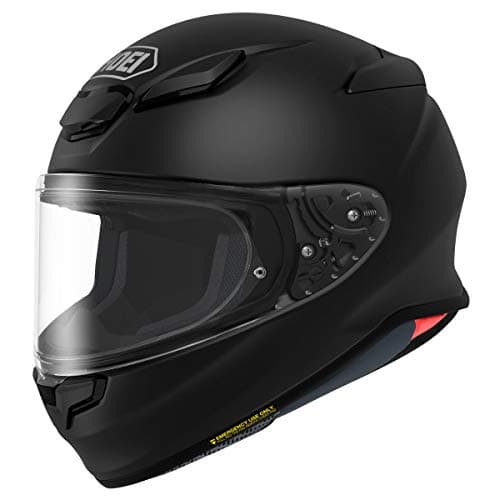
Shoei RF-1400 - the full-face default. DOT + Snell M2025, multi-ply AIM+ at about 1,385 g, and its European twin the NXR2 took a perfect 5/5 at SHARP. Who it is for: the rider covering real distance who wants quiet and finish. Honest cons: no internal sun visor, and the US build is Snell rather than ECE 22.06. Detail in the RF-1400 review.

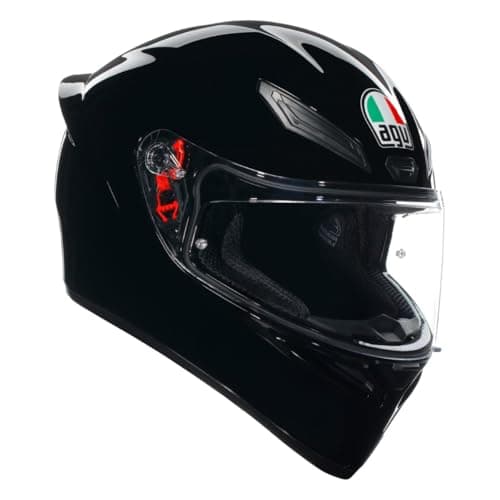
AGV K1 S - the cheapest way into a named current standard. Genuine US DOT + ECE 22.06 in a thermoplastic shell with a race-derived aero profile and a wide eyeport. Who it is for: the rider who wants 22.06 at the lowest price it comes at. Honest cons: about 1,600 g and it feels like the cheaper construction it is; no sun visor; no SHARP result. See the K1 S review.

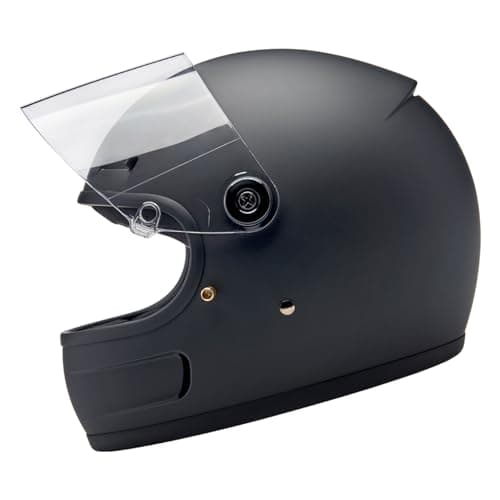
Biltwell Gringo SV - the helmet for the rider who wanted an open-face for the look. It gives you the period silhouette and keeps the chin bar, with Biltwell stating DOT plus ECE R22.06, in three shell sizes with five EPS options. Who it is for: the retro rider who does not actually want less coverage. Honest cons: heavy at a published 3.69 lb, no sun visor, no published Pinlock provision, basic venting.

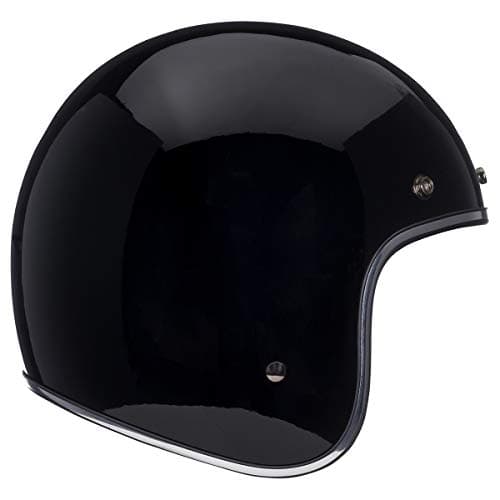
Bell Custom 500 - the open-face done properly, with the trade stated. Five separate shell and EPS sizes, a thin shell that sits low, and the 5-snap pattern that accepts the whole aftermarket of bubble shields and peaks. Who it is for: the around-town cruiser rider making the coverage trade knowingly. Honest cons: no chin bar at all; sold in the US as a DOT build with US listings disagreeing about ECE, so we assert no revision; no shield, seal or sun visor in the box, and it is widely reported to run small. The class is in best open-face motorcycle helmets, and the model in full in our Bell Custom 500 review.

So, full-face or open-face?

Full-face if you ride highway miles, ride in the cold or wet, ride for more than about an hour at a time, or want access to the strongest certifications that exist - which is most riders. Open-face if your riding is genuinely short and slow, heat is your limiting factor, and you have read the chin-bar paragraph above and accepted it. Modular with P/J if what you actually wanted was both. Whichever you choose, fit decides more than format does - start with how to measure your helmet size, and the ranked full-face list is at full-face helmets.
The short answer

Quick picks, by the mark on the shell

#HelmetCertificationScorePrice
01
Shoei Shoei RF-1400
Shoei RF-1400

The sport-touring default for a reason: light, quiet, Snell-certified, and its European twin scored a perfect 5/5 SHARP.

DOT certifiedECE 22.06not heldSnell M2025 certified
8.7
$549.99Amazon
02
AGV AGV K1 S
AGV K1 S

The cheapest way into a genuine ECE 22.06 AGV full-face — race-derived aero and a wide field of view in a thermoplastic shell, at a budget price.

DOT certifiedECE 22.06 certified
8.1
$212.44Amazon
03
Biltwell Biltwell Gringo SV
Biltwell Gringo SV

The classic-looking lid that doesn't trade the chin bar for the look — and one of the very few retro full-faces carrying genuine ECE 22.06 on the US box.

DOT certifiedECE 22.06 certified
7.6
$299.95Amazon
04
Bell Bell Custom 500
Bell Custom 500

The default classic three-quarter lid, and an honest one: five real shell sizes, a DOT label, and no chin bar at all — which is the entire trade you are making.

DOT certifiedECE 22.06 unverified
6.9
$179.95Amazon

#ad · Live prices from the Amazon Product API, as of October 21, 2026. Certifications reflect the US-market build and are cited in Sources. Where a live price has rotted, we show none.

In detail

The picks, in full

01
Shoei Shoei RF-1400

All-round sport-touring

Shoei RF-1400

DOT certifiedECE 22.06not heldSnell M2025 certified
Multi-ply AIM+~1,385 g (M)DOT + Snell M20255/5 SHARP (EU NXR2)
8.7/10

The sport-touring default for a reason: light, quiet, Snell-certified, and its European twin scored a perfect 5/5 SHARP.

Certification
9
Weight
9
Quiet
8.5
Finish
9
Value
8

Pros

  • Light for a fiberglass-composite full-face at ~1,385 g
  • DOT + Snell M2025, and the EU NXR2 twin is a 5/5 SHARP helmet
  • Quiet, with a superb shield seal and easy shield swaps

Cons

  • No internal sun visor — you commit to a tint or carry a spare shield
  • US build is Snell, not ECE 22.06, if 22.06 is your priority

Don't buy this if…

…you want a drop-down sun visor for commuting — look at the GT-Air 3 instead.

$549.99View on Amazon

Price as of October 21, 2026. Prices change — Amazon's at checkout is the one that counts.

#ad · we may earn a commission from this link to Shoei RF-1400

02
AGV AGV K1 S

Budget sport full-face with genuine ECE 22.06

AGV K1 S

DOT certifiedECE 22.06 certified
Thermoplastic shell~1,600 gDOT + ECE 22.06Race-derived aero
8.1/10

The cheapest way into a genuine ECE 22.06 AGV full-face — race-derived aero and a wide field of view in a thermoplastic shell, at a budget price.

Certification
9
Value
9
Field of view
8.5
Weight
7
Finish
7

Pros

  • Genuine DOT + ECE 22.06 at a genuinely budget price — the current standard without spending up
  • A wide field of view and aero shell derived from AGV's racing helmets
  • The affordable way into AGV's sporty fit and styling

Cons

  • Thermoplastic shell is heavier (~1,600 g) and less premium than a composite or carbon lid
  • No sun visor, and the sporty fit runs snug for round heads

Don't buy this if…

…you want low weight, a plush finish or independent SHARP data — the carbon-aramid K6 S delivers all three for more money.

$212.44View on Amazon

$249.0015% off

Price as of October 21, 2026. Prices change — Amazon's at checkout is the one that counts.

#ad · we may earn a commission from this link to AGV K1 S

03
Biltwell Biltwell Gringo SV

Classic looks without losing the chin bar

Biltwell Gringo SV

DOT certifiedECE 22.06 certified
Injection-molded ABS~1,674 g (3.69 lb)DOT + ECE 22.063 shells / 5 EPS
7.6/10

The classic-looking lid that doesn't trade the chin bar for the look — and one of the very few retro full-faces carrying genuine ECE 22.06 on the US box.

Certification
9.5
Value
8
Finish
8
Quiet
6.5
Weight
6

Pros

  • Genuine ECE 22.06 on a retro-styled helmet — the rotational-impact revision, not a 22.05 carry-over
  • Three shell sizes with five EPS options, so the shell scales with your head instead of padding out one size
  • Molded EPS ear pockets and a removable, washable liner — it takes a comms unit and a wash

Cons

  • No drop-down sun visor and no published Pinlock provision — you manage sun and fog with the shield you have
  • Heavy for a full-face at a published 3.69 lb, and ABS rather than a composite shell
  • Ventilation is basic by touring standards — a classic shell with vent ports added, not an aero project

Don't buy this if…

…you ride long sunny highway days — a drop-down sun visor and a better-sealed touring shell like the GT-Air 3 will do more for you than the styling does.

$299.95View on Amazon

Price as of October 21, 2026. Prices change — Amazon's at checkout is the one that counts.

#ad · we may earn a commission from this link to Biltwell Gringo SV

04
Bell Bell Custom 500

A certified open-face classic

Bell Custom 500

DOT certifiedECE 22.06 unverified
Composite shell5 shell + EPS sizesDOT (FMVSS 218)5-snap visor pattern
6.9/10

The default classic three-quarter lid, and an honest one: five real shell sizes, a DOT label, and no chin bar at all — which is the entire trade you are making.

Weight
9
Fit range
8.5
Value
8.5
Certification
5
Coverage
3.5

Pros

  • Five separate shell and EPS sizes — the shell genuinely scales, which is rare at any price
  • Thin-profile shell sits low on the head rather than ballooning above it
  • Integrated 5-snap pattern accepts the whole aftermarket of bubble shields, flat shields and peaks

Cons

  • No chin bar, so the most-struck part of a helmet is simply not covered — no open-face can fix that
  • No published cheek-pad thickness options, so the fit is what it is, and it is widely reported to run small
  • No shield, no seal and no sun visor in the box — eye protection and wind noise are on you

Don't buy this if…

…you ride highway miles, or you want the certification a chin bar makes possible — the Biltwell Gringo SV keeps the classic look and keeps the chin bar.

$179.95View on Amazon

Price as of October 21, 2026. Prices change — Amazon's at checkout is the one that counts.

#ad · we may earn a commission from this link to Bell Custom 500

How we picked

We do not crash-test helmets

We compiled published specifications, cited each helmet's certification (DOT, ECE 22.06, Snell, SHARP) from the standards body or manufacturer homologation, and aggregated owner reports, then scored against a published method. The scores are judgments from documented research — not measurements we took. We do not run a crash lab. Certifications reflect the US-market build; where it differs from the European version, we say so and cite it.

Questions

Frequently asked

Is a full-face helmet safer than an open-face?
In one specific and important way, yes: a full-face has an EPS-lined chin bar covering the chin and lower face, which is the most frequently struck region of a motorcycle helmet, and an open-face has nothing there. That is a structural difference no certification can offset - it is also why no open-face carries a Snell M-series rating and why SHARP does not star-rate the class.
Why do open-face helmets have worse certifications?
They do not necessarily score worse on the tests that apply to them - the tests that apply are simply fewer. ECE's chin-bar impact test cannot be run on a helmet without a chin bar, Snell's M-series requires one, and SHARP does not publish comparative star ratings for the class. So the strongest thing an open-face can usually show you is DOT, plus ECE where the maker publishes a revision.
Can I get the benefits of both?
Close to it, with a modular helmet carrying P/J dual homologation - approved to ride with the chin bar both down and up. The HJC RPHA 91 and LS2 Advant X both hold ECE 22.06 with P/J. Watch for that exact code: most flip-ups are approved only in the closed position, which means riding one open is outside its approval.
Are open-face helmets cooler to ride in?
Yes, clearly, and that is the honest reason to buy one. In stop-start traffic and summer heat an open-face moves far more air across your face than any full-face vent arrangement, and overheating is a genuine concentration problem rather than just a comfort one. The trade is wind noise, which gets much worse with speed, and no eye protection or seal.
Do open-face helmets need a separate visor?
Usually, yes - and you should plan for it. The Bell Custom 500, for example, ships without a shield at all, using an integrated 5-snap pattern that accepts aftermarket bubble shields, flat shields and peaks. Check the snap pattern before you buy, and budget for earplugs at the same time; an open-face is loud from the first mile.

Keep reading

Receipts

Sources

We do not run a crash lab, and we do not pretend to. Certifications are cited to the standards body or the manufacturer's stated homologation; where a US model's certification differs from its European namesake, we say so. Where we could not verify something, we say so on the page rather than quietly leaving it out. Read our full method.