Skip to content
VISOR & VENT

HUB 02 · Modular & Flip-Up Helmets

Modular vs Full-Face: Which Should You Buy?

The safety gap between a flip-up and a one-piece is smaller than the internet thinks and it is not zero - and the two numbers that settle it are a letter code and a percentage almost no review mentions.

By Stephen V.Updated How we rate
#ad

We earn a commission when you buy through our Amazon links, at no extra cost to you. It never changes a ranking, and we tell you when the cheaper helmet is the better buy. How this works.

Buy a modular if you talk to people at stops, wear glasses, tour, commute in traffic, or want one helmet that is both a full-face and - with the right mark - an approved open-face. The pick is the HJC RPHA 91: ECE 22.06 with P/J homologation and an independent SHARP 4/5 score. Buy a full-face if you want the lightest, quietest, structurally simplest helmet for the money - the AGV K6 S is about 1,255 g with DOT + ECE 22.06 and a perfect SHARP 5/5. Both of those are good answers. What follows is how to tell which one is yours.

We have not crash-tested any of these helmets. The certifications come from the standards bodies and each maker's published homologation and describe the US-market build; the SHARP scores and latch percentages are SHARP's published results, all cited at the foot of the page.

The format difference in one paragraph

A full-face is one continuous shell. A modular (flip-up) splits the chin bar onto a hinge so you can raise it at a stop. Everything else follows from that: the modular has more parts, a seam through the shell, a latch, and usually 100-300 g more weight - and in exchange it gives you a face you can uncover without taking the helmet off. Our helmet types explainer places both against open-face and adventure formats.

The safety question, answered with the two numbers that matter

One: the P/J mark. Under the ECE standard a flip-up can be homologated as P (approved only as a full-face, bar down while moving), J (approved only as an open-face), or P/J (passed both, so it is simultaneously an approved full-face and an approved jet). A modular carrying P/J was impact-tested with the chin bar in both positions. That is the mark that makes a flip-up a genuine full-face rather than a compromise, and it is printed on the label most buyers never read.

Two: SHARP's latch percentage. SHARP publishes, for flip-ups only, the percentage of its impact tests in which the chin bar stayed fully locked - and deliberately does not fold that figure into the star rating. It is the single most useful number in this category and almost no review quotes it. The RPHA 91 holds 4/5 stars with the face guard fully locked in 80% of impacts; the European Shoei Neotec 3 holds 5/5 with 93%. Our are modular helmets safe? page works through what those numbers do and do not mean.

Put together: a P/J-homologated flip-up with a published latch percentage is a well-evidenced helmet, and the honest summary is that the structural simplicity of a one-piece is a real advantage that a good modular narrows rather than erases. If you want the strongest available evidence in a one-piece, that is the K6 S at 5/5; if you want it in a flip-up, the RPHA 91.

Weight, noise and the things you feel every ride

Weight is the clearest practical gap. The full-faces here are about 1,255 g (K6 S) and 1,385 g (RF-1400); the modulars are about 1,740 g (RPHA 91) and 1,880 g (Neotec 3). Four to six hundred grams is a real difference by hour six, and it is why lightweight full-face buyers rarely end up in a flip-up.

Noise is less one-sided than the format suggests. A modular has a chin-bar seam that can whistle, but the quietest helmets we cover include premium touring modulars built around sealing - the Neotec 3 is the benchmark. Meanwhile the dominant noise source above about 40 mph is aerodynamic and heavily influenced by your windscreen, not just the helmet, as our quietest-helmets guide explains. Earplugs beat format either way.

Glasses, drinks, conversations and gas stations are where the modular wins outright. Putting glasses on with the chin bar raised is simply easier - which is why our helmets-for-glasses guide leans modular - and so is talking to someone without a muffled shout. If you ride with a pillion, in city traffic, or in a group, these small things are the ones you notice daily.

The four helmets, and who each is for

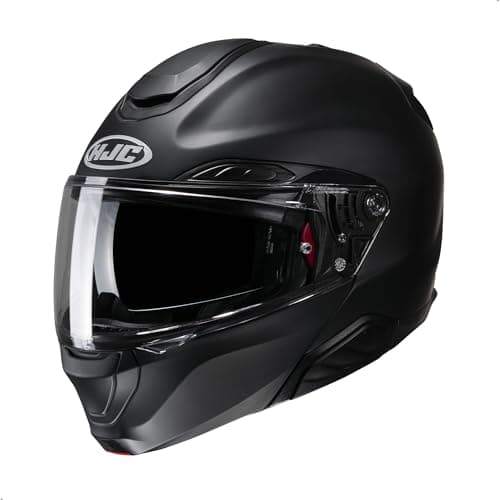
HJC RPHA 91 (modular) - ECE 22.06 P/J, SHARP 4/5, 80% latch, sun visor, about 1,740 g. Who it is for: the rider who wants flip-up convenience with the best documented safety story in the format. See the RPHA 91 review.

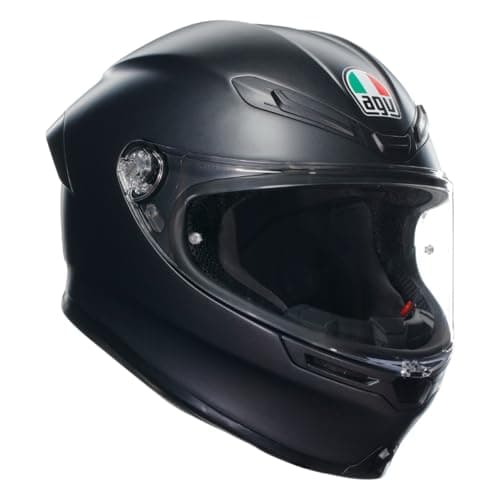
AGV K6 S (full-face) - DOT + ECE 22.06, SHARP 5/5, carbon-aramid, about 1,255 g. Who it is for: the rider who wants the lightest, best-evidenced helmet here and does not need to open it. No sun visor, sporty fit - the K6 S review has the detail.

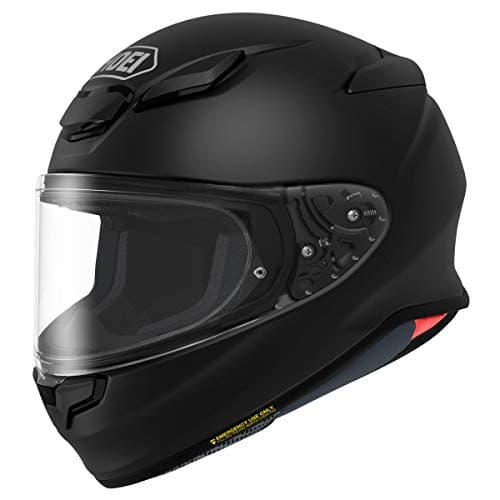
Shoei RF-1400 (full-face) - DOT + Snell M2025, about 1,385 g, and its European twin the NXR2 scored 5/5 with SHARP. Who it is for: the sport-touring rider who wants a refined one-piece and values Snell. See the RF-1400 review.

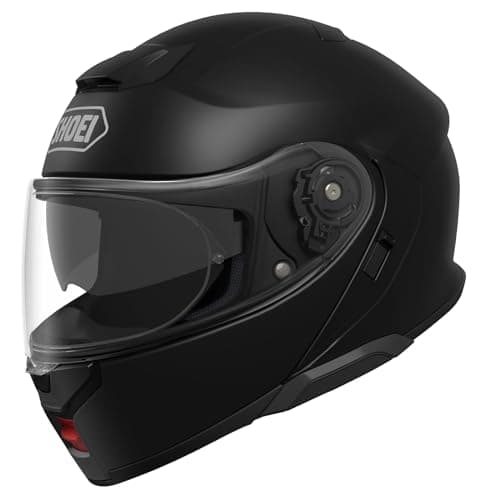
Shoei Neotec 3 (modular) - the quiet-touring benchmark, about 1,880 g, and in the US a DOT build (the European unit is ECE 22.06 P/J, 5/5 SHARP, 93% latch). Who it is for: the long-distance tourer buying silence and comms integration with eyes open about the US homologation - the Neotec 3 review spells it out.

So, modular or full-face?

Commuting, touring, glasses, group riding, or you want the option of riding with your face open? Modular, and make sure it says P/J. Fast road riding, track days, hot weather, or you simply want the least helmet on your neck? Full-face. Still torn? Weigh how often you actually stop: the flip-up's whole value is in what happens when the bike is not moving. For the full field in each format, start at the modular hub or the full-face hub.

The short answer

Quick picks, by the mark on the shell

#HelmetCertificationScorePrice
01
HJC HJC RPHA 91
HJC RPHA 91

The value-flagship modular that quietly out-certifies the big names: ECE 22.06 P/J, a 4/5 SHARP score, at half a Neotec's price.

DOT certifiedECE 22.06 certifiedSHARP ★★★★☆
8.6
$559.99Amazon
02
AGV AGV K6 S
AGV K6 S

Featherweight carbon-aramid, genuine ECE 22.06, and a perfect 5/5 SHARP score — the safety data leader of this list.

DOT certifiedECE 22.06 certifiedSHARP ★★★★★
9.1
$639.00Amazon
03
Shoei Shoei RF-1400
Shoei RF-1400

The sport-touring default for a reason: light, quiet, Snell-certified, and its European twin scored a perfect 5/5 SHARP.

DOT certifiedECE 22.06not heldSnell M2025 certified
8.7
$541.00Amazon
04
Shoei Shoei Neotec 3
Shoei Neotec 3

The quiet-touring benchmark. Superb to live with — but the US build is DOT-only, and that is the one thing every other reviewer forgets to mention.

DOT certifiedECE 22.06not held
8.5
$949.99Amazon

#ad · Live prices from the Amazon Product API, as of October 6, 2026. Certifications reflect the US-market build and are cited in Sources. Where a live price has rotted, we show none.

In detail

The picks, in full

01
HJC HJC RPHA 91

Best-certified modular for the money

HJC RPHA 91

DOT certifiedECE 22.06 certifiedSHARP ★★★★☆
PIM EVO composite~1,740 g (M)ECE 22.06 P/JSHARP 4/5
8.6/10

The value-flagship modular that quietly out-certifies the big names: ECE 22.06 P/J, a 4/5 SHARP score, at half a Neotec's price.

Certification
9.5
Value
9.5
Quiet
8
Weight
8
Finish
8

Pros

  • ECE 22.06 with P/J dual-homologation — legally approved to ride with the chin bar up
  • Independently SHARP-tested at 4/5, a real safety data point
  • Composite shell keeps weight and price down together

Cons

  • Not as whisper-quiet as a Neotec 3
  • Interior plushness is a notch below the premium Japanese brands

Don't buy this if…

…outright touring silence matters more to you than certification and price — the Neotec 3 is quieter.

$559.99View on Amazon

Price as of October 6, 2026. Prices change — Amazon's at checkout is the one that counts.

#ad · we may earn a commission from this link to HJC RPHA 91

02
AGV AGV K6 S

Lightest full-face with top safety data

AGV K6 S

DOT certifiedECE 22.06 certifiedSHARP ★★★★★
Carbon-aramid~1,255 gDOT + ECE 22.06SHARP 5/5
9.1/10

Featherweight carbon-aramid, genuine ECE 22.06, and a perfect 5/5 SHARP score — the safety data leader of this list.

Certification
9.5
Safety data
9.5
Weight
9.5
Field of view
9
Value
8

Pros

  • ~1,255 g — one of the lightest full-face helmets on the market
  • Genuine DOT + ECE 22.06 and a perfect 5/5 SHARP score
  • Huge field of view derived from AGV's racing helmets

Cons

  • No internal sun visor
  • Sport-oriented fit is snug for round heads

Don't buy this if…

…you tour long days and want a sun visor and maximum quiet — a touring full-face or modular fits better.

$639.00View on Amazon

Price as of October 6, 2026. Prices change — Amazon's at checkout is the one that counts.

#ad · we may earn a commission from this link to AGV K6 S

03
Shoei Shoei RF-1400

All-round sport-touring

Shoei RF-1400

DOT certifiedECE 22.06not heldSnell M2025 certified
Multi-ply AIM+~1,385 g (M)DOT + Snell M20255/5 SHARP (EU NXR2)
8.7/10

The sport-touring default for a reason: light, quiet, Snell-certified, and its European twin scored a perfect 5/5 SHARP.

Certification
9
Weight
9
Quiet
8.5
Finish
9
Value
8

Pros

  • Light for a fiberglass-composite full-face at ~1,385 g
  • DOT + Snell M2025, and the EU NXR2 twin is a 5/5 SHARP helmet
  • Quiet, with a superb shield seal and easy shield swaps

Cons

  • No internal sun visor — you commit to a tint or carry a spare shield
  • US build is Snell, not ECE 22.06, if 22.06 is your priority

Don't buy this if…

…you want a drop-down sun visor for commuting — look at the GT-Air 3 instead.

$541.00View on Amazon

Price as of October 6, 2026. Prices change — Amazon's at checkout is the one that counts.

#ad · we may earn a commission from this link to Shoei RF-1400

04
Shoei Shoei Neotec 3

Premium quiet touring

Shoei Neotec 3

DOT certifiedECE 22.06not held
AIM composite~1,880 gDOT (US build)Sun visor + comms-ready
8.5/10

The quiet-touring benchmark. Superb to live with — but the US build is DOT-only, and that is the one thing every other reviewer forgets to mention.

Certification
7
Quiet
9.5
Comms integration
9.5
Finish
9.5
Value
7

Pros

  • Among the quietest modulars you can buy, with an excellent seal and sun visor
  • Purpose-built channel for the Sena SRL3 — clean comms with no bolt-on
  • Shoei fit, finish and shield mechanism are the class reference

Cons

  • The US version carries DOT only — no ECE 22.06 rotational-test homologation on the box you buy here
  • Heavy, and flagship-priced

Don't buy this if…

…the ECE 22.06 rotational standard is your deciding factor — the US Neotec 3 doesn't carry it; a genuine-22.06 modular like the HJC RPHA 91 does.

$949.99View on Amazon

Price as of October 6, 2026. Prices change — Amazon's at checkout is the one that counts.

#ad · we may earn a commission from this link to Shoei Neotec 3

If you buy modular, check these three things

Is it P/J? If you intend to ever ride with the bar up, this is not optional - a modular without the P/J mark is approved only as a full-face, whatever the marketing photograph shows. The label on the chin strap tells you.

Does the bar latch positively? You want an unambiguous click, one-handed, in gloves. A mechanism you have to fiddle with is a mechanism you will leave half-closed.

Is there a SHARP latch percentage? Not every model has been tested, but where it exists it is free evidence about the one component that is unique to this format.

If you buy full-face, check these two

Can you get it on and off over glasses? A one-piece makes you thread eyewear through a closed aperture every ride. If that annoys you in the shop, it will annoy you for years.

Is there provision for the shield you will want? A Pinlock-prepared shield and a sun solution (an internal visor, or a photochromic shield) are what make a one-piece liveable year-round - see the Pinlock guide and our sun-visor picks.

And in both cases, fit decides more than format. A correctly-shaped helmet is what makes any certification real - our head-shape guide and measuring guide are the two pages to read before you spend.
How we picked

We do not crash-test helmets

We compiled published specifications, cited each helmet's certification (DOT, ECE 22.06, Snell, SHARP) from the standards body or manufacturer homologation, and aggregated owner reports, then scored against a published method. The scores are judgments from documented research — not measurements we took. We do not run a crash lab. Certifications reflect the US-market build; where it differs from the European version, we say so and cite it.

Questions

Frequently asked

Are modular helmets as safe as full-face helmets?
A modular carrying ECE P/J homologation was impact-tested with the chin bar both closed and open, and the best of them hold independent SHARP star ratings - the HJC RPHA 91 scored 4/5 with the face guard fully locked in 80% of impacts, and the European Shoei Neotec 3 scored 5/5 at 93%. A one-piece shell remains structurally simpler, which is a real advantage, but a well-certified P/J flip-up narrows that gap to something most riders can reasonably trade for the convenience.
Can you ride with a modular helmet open?
Only if it carries the P/J mark. P means it was approved as a full-face (chin bar down while moving), J means approved as an open-face, and P/J means it passed both - so only a P/J helmet is approved to be ridden with the bar up. A P-only modular should have the chin bar closed whenever the bike is moving.
Is a modular helmet heavier and louder than a full-face?
Heavier, yes - typically 100-300 g more, and the spread between the helmets on this page is over 600 g. Louder, not necessarily: the chin-bar seam can whistle, but premium touring modulars are built around sealing and are among the quietest helmets we cover. Above about 40 mph the dominant noise is aerodynamic and depends heavily on your windscreen, and filtered earplugs cut more noise than any format change.

Keep reading

Receipts

Sources

We do not run a crash lab, and we do not pretend to. Certifications are cited to the standards body or the manufacturer's stated homologation; where a US model's certification differs from its European namesake, we say so. Where we could not verify something, we say so on the page rather than quietly leaving it out. Read our full method.