The best helmet with a drop-down sun visor is the LS2 Advant X: it is the only pick here that pairs an internal sun visor with genuine DOT + ECE 22.06 and P/J dual homologation, in a forged-carbon flip-up at about 1,550 g. Who it is for: the commuter or tourer who rides into low sun and wants the current standard on the shell. If you want the best sun visor itself rather than the best certification, the Shoei GT-Air 3 has it - with the caveat, as ever on this site, that the US GT-Air 3 is a DOT build.
A built-in sun visor is a thin tinted shield that lives inside the shell and drops into place on a slider. It sounds like a convenience feature. In practice it is the difference between carrying two face shields and swapping them in a parking lot, and just riding - and unlike a dark outer shield, it is a few seconds from being out of the way when you enter a tunnel or the sun goes down.
Why an internal sun visor beats a tinted shield
A dark outer shield is unsafe at night and in tunnels, and tint levels are regulated in many places, so a very dark or heavily mirrored visor can be illegal for road use where a lighter one is fine. That leaves you three honest options: carry two shields and swap them, buy a photochromic shield that darkens in UV, or buy a helmet with a drop-down sun visor and keep a clear shield up front permanently. The third is the most practical for most riders, which is why the feature spread from touring helmets to nearly every modular made.
The mechanism is not free. A sun visor needs space between the shell and the EPS liner for the visor to retract into, plus a slider on the outside - which usually means a fractionally thicker build and one more thing that can rattle or scratch. It is also why you will not find one on a race helmet: the track-focused lids omit it to keep the shell thin and the weight down.
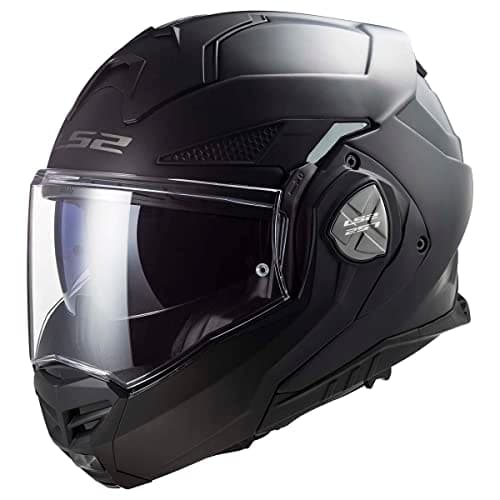
LS2 Advant X - the only 22.06 P/J sun-visor helmet we cover
Genuine DOT + ECE 22.06 with P/J homologation - approved to ride with the chin bar up or down - in a forged-carbon shell at about 1,550 g, with a drop-down sun visor and Cardo-ready comms channels, offered XS-3XL across two shells. Who it is for: the rider who wants a current-standard flip-up with a sun visor and refuses to carry flip-up weight. The honest con is wind noise, which is louder than a premium touring modular - see the Advant X review.
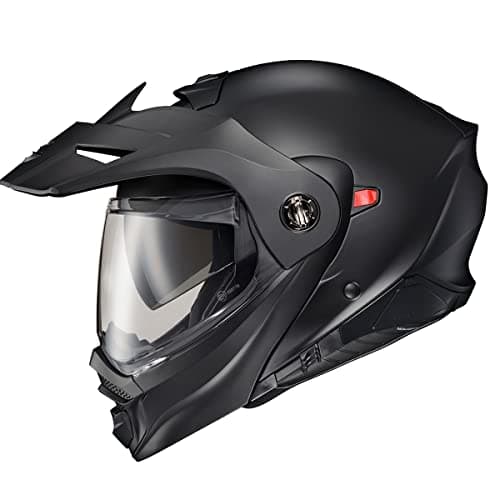
Scorpion EXO-AT960 - the adventure helmet that kept the sun visor
Most adventure helmets omit an internal sun visor. The EXO-AT960 keeps one, and adds genuine DOT + ECE 22.06, a three-way convertible configuration (peak and visor, visor only, or peak and goggles), a flip-up chin bar and a size range that runs to 3XL. Who it is for: adventure and dual-sport riders who want shade without goggles or a second shield. The honest con is weight - roughly 1,860 g of polycarbonate - which is the price of all that versatility. Detail in the EXO-AT960 review.
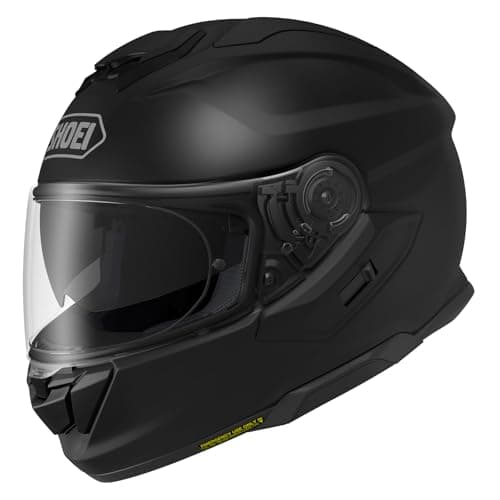
Shoei GT-Air 3 - the best sun visor, on a DOT shell
If the sun visor itself is what you are buying, this is the benchmark: a deep, well-shaped QSV-2 internal visor in a quiet, refined AIM-composite touring full-face with purpose-built Sena SRL comms channels. Who it is for: the touring rider or commuter who wants a premium, quiet helmet and uses the sun visor daily. The honest cons are the two we repeat about Shoei: the US GT-Air 3 is a DOT build (the European GT-Air 3 is ECE 22.06 and scored 5/5 with SHARP - a different homologation from the US unit), and at about 1,774 g it is no featherweight. Full detail in the GT-Air 3 review.
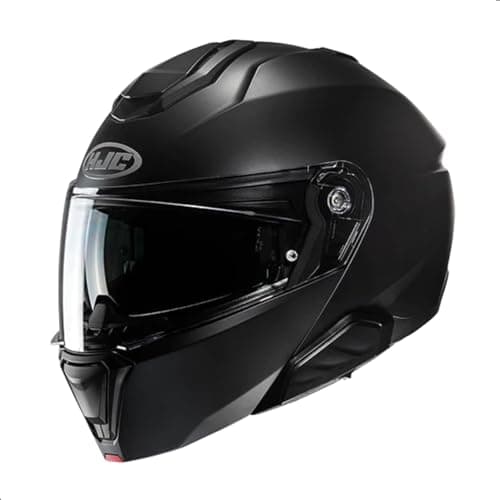
HJC i91 - the cheapest sun-visor helmet worth owning
The i91 is the budget answer: a comfortable polycarbonate-composite flip-up at about 1,720 g with a drop-down HJ-V12 sun visor, an HJ-33 Pinlock-prepared shield in the box, and a size range that stretches XS-5XL across four shells - genuinely useful if you are at the large end. Who it is for:the commuter who wants the feature set without the price. The honest cons: the US i91 is marketed DOT-approved and we do not assert ECE on it (HJC's European i91 exists in both 22.05 and 22.06 variants depending on production run, so check the label), and it is louder and heavier than the carbon picks. See the i91 review.
So which sun-visor helmet?
Want the current standard with the P/J open-face option? The LS2 Advant X. Riding dirt and pavement in the sun? The Scorpion EXO-AT960. Want the best visor in the quietest helmet, and DOT satisfies you? The Shoei GT-Air 3. Spending as little as possible? The HJC i91. For the flip-up field in full, start at the modular hub.
What to check on a drop-down sun visor
How far down does it actually come? A sun visor that stops above your line of sight leaves a bright band at the bottom of your vision, which is worse than no visor on a low sun. The good ones drop far enough to meet the bottom of the eye port.
Where is the slider, and can you work it with gloves? It should fall under a gloved left hand without hunting. A slider you have to look for is a slider you will not use.
Does it clear your glasses? The internal visor and eyewear share the same few millimetres. If you ride in prescription glasses, check this specifically - our helmets for glasses guide covers which models document eyewear-friendly interiors.
Keep the main shield clear and Pinlock it. The whole point of an internal sun visor is that the outer shield stays clear, so fog management moves to the outer shield - which is what a Pinlock insert is for. A clear outer shield plus a Pinlock plus an internal sun visor is the setup that handles every condition without a parking-lot shield swap.