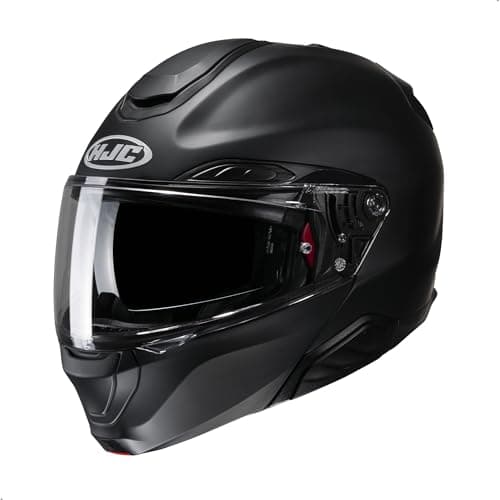
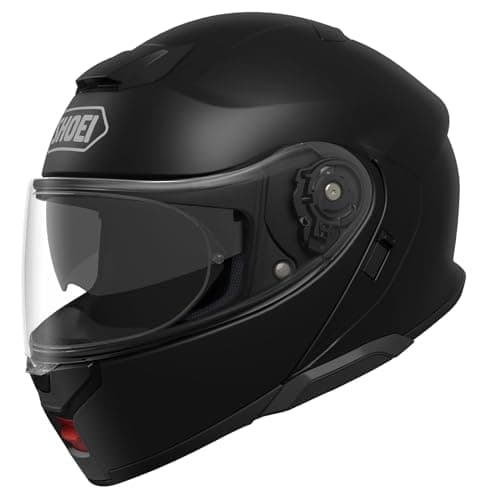
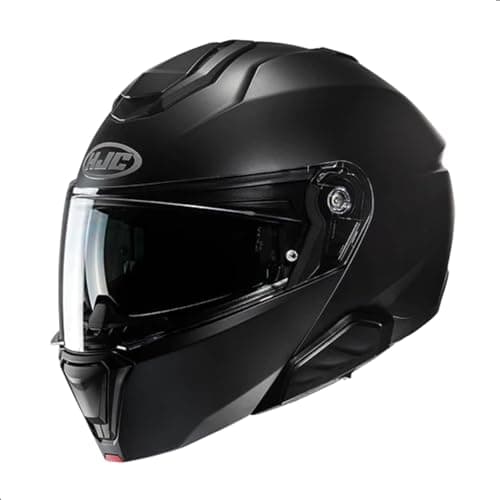
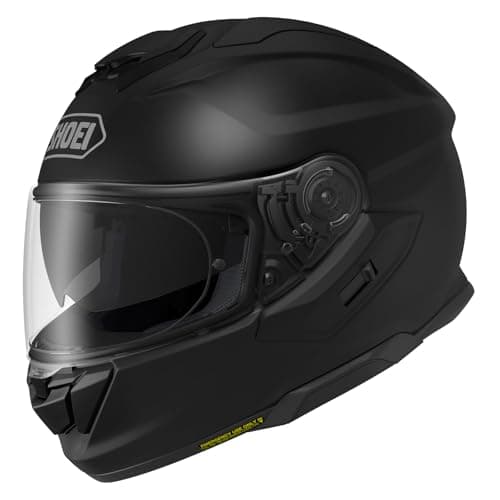
For cold-weather riding the pick is the Shoei GT-Air 3: a touring full-face in AIM composite at about 1,774 g whose entire character is the thing winter rewards - a shield that seals, a quiet, refined shell, and a drop-down internal sun visor for the low sun that sits in your eyes all afternoon in January. Who it is for: the rider who commutes or tours through winter on pavement. If you want a chin bar that opens at a cold traffic light and the current safety standard with it, the HJC RPHA 91 is the better buy - ECE 22.06 with P/J approval and a 4/5 SHARP score - and if money is no object the Shoei Neotec 3 is the most sealed, quietest helmet here.
The honest framing first: no motorcycle helmet is a cold-weather product. None of these is insulated, none is heated, and no maker publishes a thermal rating you could rank on. What ends a winter ride is almost never the temperature of your head - it is a fogged visor, followed by cold air leaking down your neck and glare off wet tarmac. So this page ranks the three things a helmet genuinely controls: how well the shield and the lower edge seal, whether the vents actually shut, and what fog provision the helmet has. We have not thermally tested anything, and we do not have a cold chamber.
Fogging is the problem, and there is one real fix
A visor fogs because warm, damp breath meets a shield chilled from the outside and condenses on it. The permanent solution is a Pinlock insert: a second, moisture-absorbing inner lens that snaps onto pins in the shield and creates a sealed air gap, so the inner surface never reaches the temperature the moisture needs. Pinlock's own documentation describes the mechanism that way, and it is the one thing on this whole page that changes winter riding outright. That is why "Pinlock-ready" is a hard requirement here rather than a nice extra - our fogging guide and Pinlock shield picks go further, and the install guide takes about two minutes.
Two other things help and neither is a gadget. A chin curtain and breath deflector, where the helmet provides them, redirect your breath down and out instead of up the inside of the shield - fit them in autumn and leave them in. And cracking the chin vent open a notch moves enough air across the shield to clear mist at a standstill, which is where fog actually gets dangerous.
Vents that close, and why that is a winter spec
The best-ventilated helmet on the shelf is the worst cold-weather helmet on the shelf, and the difference between the two is often just whether the vents shut. A helmet with positive, closable intakes and exhausts gives you a usable summer helmet and a usable winter helmet; one with permanently-open ports gives you a single season and a cold head. This is the mirror image of our hot-weather picks, and the ventilation explainer covers how the whole intake-channel-exhaust path works. The peak on an adventure helmet is the other winter penalty: it catches wind and drags cold air past your head, which is why none of the ADV lids we rate make this list.
Shoei GT-Air 3 - the winter commuter's full-face
The GT-Air 3 is the helmet to buy if your winter is spent on sealed roads. It is a touring full-face in AIM composite at about 1,774 g, quiet and well-sealed, with the feature that matters most between November and February: an excellent drop-down internal sun visor, so when the sun sits two feet above the horizon you flick a lever instead of carrying a second shield. It is also purpose-built for Shoei's SRL comms with no external bolt-on, which is worth something when you do not want to be fiddling with a unit in gloves. Who it is for: the pavement commuter and tourer who rides year-round. The honest cons: the US build carries DOT only - no ECE 22.06 on the box you buy here - and it is heavier than a sport lid. Full detail in the GT-Air 3 review.
HJC RPHA 91 - the one to buy if you want the chin bar to open
Winter is when a modular earns its keep: you flip it up at a fuel stop with gloves on, and you clear a misted visor without taking the helmet off. The RPHA 91 is the one we recommend because it does that and carries the best safety documentation of any flip-up we cover - genuine ECE 22.06 with P/J dual homologation (approved to ride open as well as closed) and an independent 4/5 SHARP score - in a PIM EVO composite shell at about 1,740 g. Who it is for: the cold-weather commuter who stops often, and anyone who wears glasses in winter. The honest cons: louder than a Neotec 3, and the interior is less plush than the premium Japanese brands. See the RPHA 91 review and our commuter modular picks.
Shoei Neotec 3 - the most sealed helmet we rate
If the budget stretches, the Neotec 3 is the cold-weather flagship: among the quietest modulars you can buy, with an excellent shield seal and sun visor, and a purpose-built channel for the Sena SRL3 so the comms disappear into the shell. Seal quality is not a comfort feature in winter - it is what stops a cold draught finding the gap between your collar and the helmet for two hours. Who it is for: the long-distance winter tourer who wants silence and a flip-up. The honest cons: heavy at about 1,880 g, flagship money, and the US version is a DOT build with no ECE 22.06 - a point most reviews of this helmet leave out. See the Neotec 3 review and Neotec 3 vs RPHA 91 for the certification-versus-silence trade in full.
HJC i91 - the cheap winter helmet that still has the right parts
The i91 is on this page because the two features that matter most in winter are both on it at a genuinely low price: a drop-down HJ-V12 internal sun visor, and a Pinlock-ready HJ-33 shield in the box - so the real anti-fog fix is a cheap insert away rather than a shield purchase away. It is a polycarbonate composite flip-up at about 1,720 g, and it is ready for Smart HJC and Sena comms without a bolt-on. Who it is for: the rider who needs a winter helmet without spending winter-flagship money, or a second lid for salted roads you would rather not put a flagship through. The honest cons: the US Amazon listing is marketed DOT only and we do not assert ECE 22.06 on it, and the shell is heavy and less refined than a composite. See the i91 review and budget modular picks.
So which cold-weather helmet?
Commuting on pavement through winter? The Shoei GT-Air 3. Want the chin bar to open and the current safety standard? The HJC RPHA 91. Touring long cold days and buying the quietest, best-sealed option? The Shoei Neotec 3. On a budget, or buying a dedicated salt-season lid? The HJC i91. Whichever you pick, buy the Pinlock insert cut for its exact shield at the same time - it is the cheapest thing on this page and the only one that changes the ride.
How to set a helmet up for winter
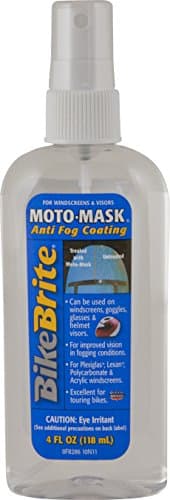
Buy the Pinlock insert for your exact shield, not a universal one. Pinlock lenses are cut per shield model and seal on a silicone bead; the wrong lens does not seal and therefore does not work. Check your shield code first - our shield guide lists the common ones. If your shield has no pins at all, a spray-on treatment is the honest second-best and we say so on the fogging guide.
Fit the chin curtain and breath deflector if your helmet came with them. They are usually in the box and thrown away on day one. They cut the draught up the bottom of the helmet and send your breath away from the shield - the two cheapest winter improvements available, and they cost nothing because you already own them.
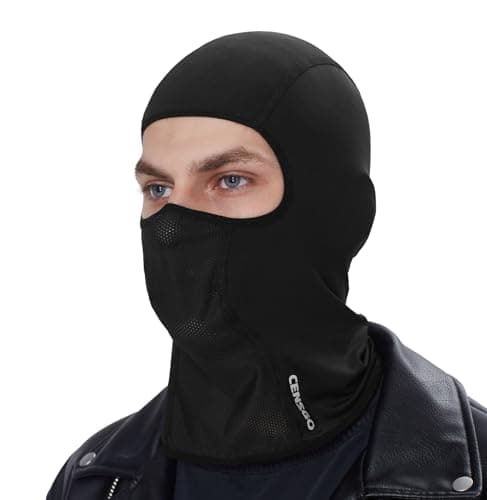
Add a thin balaclava, then re-check the fit. A thin under-helmet layer keeps cold air off your neck and keeps sweat and hair oil out of a liner you cannot easily wash. It also takes up room: good if your helmet sits a shade loose, bad if it is already at the tight end of correct. Size the helmet bare-headed first - our sizing guide explains why a snug helmet is a safety requirement, not a preference.
Do not ride with the shield cracked open to clear fog. It is loud, it puts cold air and grit straight into your eyes, and it fails exactly when you slow down and need vision most. Use the chin vent, and solve the cause with a Pinlock lens. And clean the shield properly - a smeared visor in low winter sun is its own hazard; our cleaning guide is blunt about what not to use.