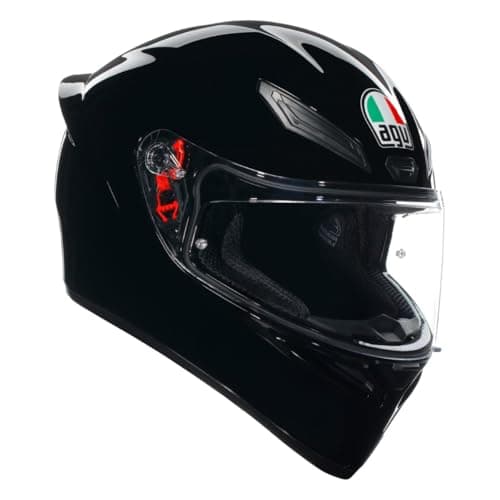
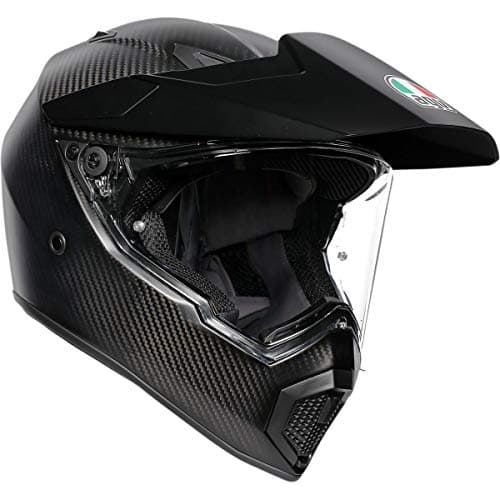
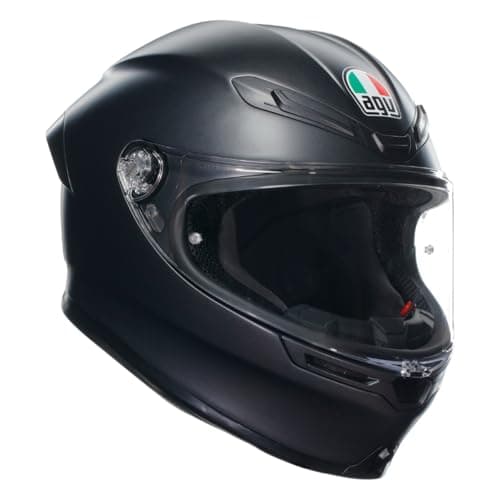
Yes - and unusually, the case is the same across the range: every AGV in our catalog publishes genuine US DOT + ECE 22.06, the current standard with the rotational impact test, rather than the DOT-only build several rivals ship in the States. The pick is the AGV K6 S, which adds a perfect 5/5 SHARP score and weighs about 1,255 g - the strongest safety paper of any full-face we rate, in one of the lightest shells on the market. Who it is for: the sport or sport-touring rider buying on published data. On a budget the AGV K1 S is the cheapest way into genuine 22.06 from the brand, and for dirt and gravel the AGV AX9 is adventure airflow at close to road-helmet weight.
The caveat is not the certification - it is the shape of the inside. AGV's interiors suit intermediate-oval heads and run snug for round-oval riders, which is the single most common complaint about the brand and the reason a rider who loves an Arai often cannot wear an AGV. That is a fit problem, not a quality problem, and it is fixable only by trying one on. We have no lab and do not crash-test; everything below is AGV's published homologation, the SHARP database and the retail listings, sourced at the foot of the page.
What AGV stands for, and why the racing matters
AGV is short for Amisano Gino Valenza- the founder's name and the Italian town the company started in. Gino Amisano founded it in 1947 in Valenza, Piedmont; AGV built the first fiberglass helmet in 1954, and has been a subsidiary of Dainese since 2007. Its designs have been developed with World Championship riders from Giacomo Agostini to Valentino Rossi.
That history is not just marketing, because it shows up in one measurable place: the field of view. AGV derives its road helmets' apertures from its racing shells, where a rider needs peripheral vision at full lean, and the result is among the widest view in each class - including, on the AX9, one of the widest of any adventure helmet. Field of view is an underrated safety feature, because the hazard you see early is the one you avoid.
Where AGV is genuinely strong
ECE 22.06 across the range, on the US helmet. This is the headline. The K6 S, K1 S and AX9 are all homologated DOT + ECE 22.06 on the units sold here, which means the oblique-impact test is on the box you actually buy. Compare that with the Shoei Neotec 3 or GT-Air 3, both excellent and both DOT builds in the US - the certifications explainer covers why that gap exists.
Independent test data on the flagship. The K6 S's 5/5 SHARP score is the top result from the UK program that buys helmets off the shelf and impact-tests them - the closest thing to a consumer crash-test score, and rare. See the safest helmets for how it stacks against the Snell route, and the K6 S safety rating page for what the score does and does not cover.
Weight. About 1,255 g for the carbon-aramid K6 S and 1,510 g for the carbon-blend AX9 are class-leading figures. The budget K1 S is heavier at around 1,600 g because it is thermoplastic - a fair trade at the price, and the reason shell material is worth understanding before you shop.
Where AGV is weaker than its reputation
Fit range.AGV's shape is the brand's real limiting factor. If you have a rounder head, an Arai will be more comfortable over a full day and no amount of certification changes that - work out your head shapebefore you commit. On whether AGVs "run small": we have no sourced, model-by-model size-scale data and we are not going to invent one. The issue riders report is interior shape more than nominal size.
No sun visor, anywhere in the road range. Neither the K6 S nor the K1 S has a drop-down internal sun visor, so you commit to a tinted shield, sunglasses or a photochromic option - see photochromic vs tinted vs clear. If a sun visor is non-negotiable, our sun-visor picks go elsewhere.
Quiet is not the design brief.AGV's road helmets are aero-led rather than hush-led, and the AX9's peak adds noise and buffeting at high speed like every adventure lid. We have no measured decibel figures for any of them and will not print one - if silence is what you are shopping for, read the quietest helmets and budget for earplugs regardless of what you buy.
AGV K6 S - the one to buy
The K6 S is the best AGV and arguably the best-documented full-face we cover: genuine DOT + ECE 22.06, a perfect 5/5 SHARP score, and about 1,255 g of carbon-aramid, with a racing-derived field of view. Who it is for: the rider who wants the strongest published safety evidence and the lightest helmet to carry it. The honest cons: no internal sun visor, and the sport fit runs snug for round heads. See the K6 S review and K6 S vs RF-1400 for the ECE-versus- Snell decision in one page.
AGV K1 S - the cheapest genuine 22.06 in the range
The K1 S exists to answer one question: what is the least you can spend and still get the current standard from a brand with this pedigree? Genuine DOT + ECE 22.06 in a high-resistance thermoplastic shell at about 1,600 g, with race-derived aero and a wide field of view. Who it is for: the new or budget-conscious sport rider, and the second-helmet buyer. The honest cons: heavier and less premium than a composite lid, no sun visor, and a snug sporty fit. See the K1 S review and K1 S vs K6 S for what the step up actually buys.
AGV AX9 - the adventure helmet that stays light
The AX9 is the AGV for riders who leave the pavement: an ADV shell with a removable peak and a goggle-compatible aperture, in carbon/aramid/glass at about 1,510 g, carrying genuine DOT + ECE 22.06 - adventure airflow at a weight most ADV helmets cannot touch, and three configurations in one helmet. Who it is for: dual-sport and adventure riders, especially in heat. The honest cons: the intermediate-oval shape runs snug for round-oval heads, and the peak buffets at very high speed. See the AX9 review and AX9 vs Arai XD-5, which is the head-shape decision in product form.
So: are AGV helmets good?
Yes, and on the one axis this site cares about most - what the US-market shell is homologated to - AGV is one of the most consistent brands there is. Buy the K6 S if you want the best safety paper and the lowest weight, the K1 S if you want genuine ECE 22.06 at a budget price, and the AX9 if your riding involves dirt. Then try it on before you commit, because the only thing that will stop you loving an AGV is the shape of your own head.
Buying an AGV without regretting the fit
Decide on head shape before model.AGV's interiors suit intermediate-oval heads. If you know you are round-oval, start with Arai instead and come back to AGV only if you can try one on - our head-shape guide explains how to tell, and Shoei vs Arai covers the two shapes at the other end of the market.
Check the ECE revision anyway. AGV is consistent about 22.06 on current US models, but the habit is still worth keeping: a genuine 22.06 approval tag inside the helmet carries a number beginning 06. Gray-market and older stock exists for every brand.
Budget for the sun. No AGV road helmet has a drop-down sun visor, so price in a tinted or photochromic shield when you compare an AGV against a helmet that includes one. It is the single most common hidden cost of buying into this range.
Use the cheek pads. A helmet that is correct on the crown but loose at the jaw is a cheek-pad swap, not a size change - cheek pads and liners explained covers how to work out which way to go, and our sizing guide is the starting measurement.