Skip to content
VISOR & VENT

PILLAR · Helmet Safety & Certification

Helmet Shell Materials Explained

Carbon, composite, thermoplastic, polycarbonate. The material does not decide whether a helmet is safe - the certification does that. What it decides is how much the helmet weighs and what it costs.

By Stephen V.Updated How we rate
#ad

We earn a commission when you buy through our Amazon links, at no extra cost to you. It never changes a ranking, and we tell you when the cheaper helmet is the better buy. How this works.

The short answer: shell material buys you weight, not safety. The cheapest helmet on this page and the most expensive both hold the same independently lab-verified ECE 22.06 approval - and the AGV K6 S in carbon-aramid weighs about 1,255 g while the polycarbonate Bell Qualifier DLX weighs about 1,626 g, a difference of roughly 370 g for a very large difference in price. Who should care most: riders doing long days, riders who stand on the pegs, and anyone whose neck complains after two hours. If your riding is a 20-minute commute, the material is close to irrelevant and you should spend the money on fit and certification instead.

We do not crash-test helmets and we have no lab, so nothing below is a measurement we took. The material descriptions are what the manufacturers publish about their own shells, the weights are their published figures, and the certification claims are cited to the maker or the standards body in Sources. There is a genuine engineering story here, and there is also a lot of marketing - this page tries to separate them.

What the shell actually does in a crash

A helmet manages an impact in two stages, and people routinely credit the wrong one. The shell does two jobs: it resists penetration by a sharp object, and it spreads a point load across a wider area of the liner beneath it. The EPS liner - the dense polystyrene inside - is what absorbs the energy, by crushing. It is the liner that decelerates your head, which is why a helmet is single-use after a real impact even if the shell looks fine.

That split is why material is not the safety variable. All four shell types here can pass DOT, and three of the four helmets on this page hold ECE 22.06 - a type approval an independent lab verified, including the oblique rotational-impact test. A certification does not care what the shell is made of; it cares what the whole helmet does on the rig. What the material changes is how little mass the shell needs to do its job, and how it behaves over years of sunlight and sweat. The standards themselves are compared in DOT vs ECE vs Snell vs SHARP, and 22.06 in detail at ECE 22.06 explained.

The four materials, in order of cost

MaterialWhat it isTypical weightWhy makers use itThe catch
Carbon fiber / carbon-aramidWoven carbon cloth in resin, often blended with aramidLightest - the K6 S is ~1,255 g; the Klim Krios Pro ~1,450 gHighest stiffness per gram, so the shell can be thin and lightExpensive, labour-intensive, and a hard shell transmits more noise
Fiberglass compositeFiberglass with carbon and/or aramid layers - HJC's PIM EVO, Shoei's AIM+Light - RPHA 12 ~1,474 g, Shoei RF-1400 ~1,385 gMost of the carbon weight benefit at a fraction of the price; tunable layer by layerStill a hand-laid process, so still not cheap
Thermoplastic (high-resistance)Injection-moulded engineering plastic, denser formulation than basic polycarbonateMiddle - AGV K1 S ~1,600 gCheap to mould at volume while holding a current approvalHeavier, and feels like the cheaper construction it is
Polycarbonate / ABSSingle-material injection mouldingHeaviest - Qualifier DLX ~1,626 g, Biltwell Gringo SV ~1,674 gLowest cost per unit by a wide marginMost weight; more sensitive to solvents and UV over years

Carbon fiber: real, and oversold

Carbon is genuinely the best stiffness-per-gram material in production helmets, and the weight saving is not marketing - a ~1,255 g full-face is a different object on your neck from a ~1,626 g one. Two honest caveats, though. First, carbon does not make a helmet quieter; if anything a stiff thin shell transmits more noise, which is why the quietest helmets we cover are composites with engineered sealing rather than the lightest carbon ones. Second, "carbon" on a helmet box is sometimes a cosmetic weave over a different structural material - check the published weight, which is the honest tell. A real carbon shell shows up in grams.

Where carbon earns its money outright is adventure and modular helmets, because both formats are structurally heavy: the Klim Krios Pro holds DOT + ECE 22.06 at about 1,450 g in full carbon with a peak, and the LS2 Advant X holds 22.06 P/J at about 1,550 g in forged carbon with a flip-up chin bar. Those are weights plastic cannot reach in those formats.

Composite: where most of the value is

Fiberglass composites blended with carbon and aramid are the sweet spot of this ladder, and it is not a close call. HJC's PIM EVO shell in the RPHA 12 is fiberglass, carbon and aramid at a published ~1,474 gwith genuine DOT + ECE 22.06 - within about 220 g of the carbon K6 S at a far lower price. Shoei's multi-ply AIM+ gets the RF-1400 to about 1,385 g. The reason composites work so well is that a layered shell can be tuned ply by ply - stiff where it needs to spread load, more compliant where it needs to flex.

Thermoplastic and polycarbonate: honest, and heavier

Injection moulding is how a helmet gets cheap, and there is nothing shameful about it. The AGV K1 S is a high-resistance thermoplastic shell holding genuine DOT + ECE 22.06 at about 1,600 g, and the Bell MX-9 Adventure is polycarbonate carrying 22.06, MIPS and an independent SHARP 4/5 - which should end any argument that moulded shells cannot be safe. What they cannot be is light: expect 1,600-1,900 g, and in a modular or peaked ADV helmet the upper end of that is genuinely tiring.

The one practical durability point worth knowing: polycarbonate and ABS are more sensitive to solvents than a composite, which matters for how you clean a helmet and why repainting one is a bad idea - cleaning method is in how to clean your motorcycle helmet, and shells of every material age regardless, which is the subject of when to replace a helmet.

What the ladder costs: four helmets, same question

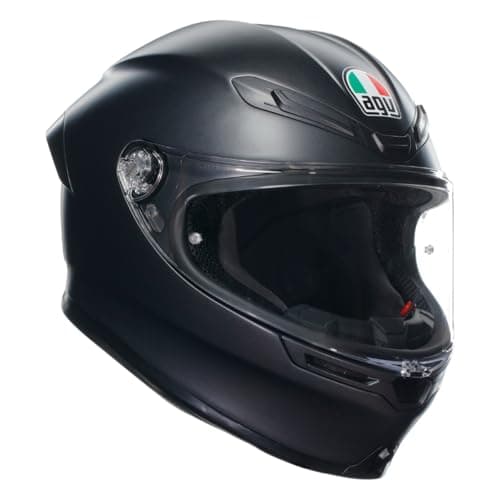
AGV K6 S (carbon-aramid, ~1,255 g) - DOT + ECE 22.06 and a full 5/5 SHARP score. Who it is for: the rider who wants the lightest well-documented full-face there is. Honest cons: no internal sun visor, sport-snug fit, and it is the most expensive helmet here.

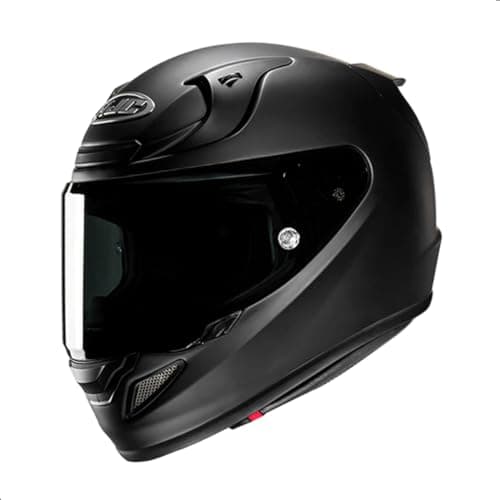
HJC RPHA 12 (PIM EVO composite, ~1,474 g) - genuine DOT + ECE 22.06 with a Pinlock-ready HJ-42 shield. Who it is for: the rider who wants most of the carbon weight benefit for a fraction of the money. Honest cons: no SHARP result exists for it, and no drop-down sun visor.

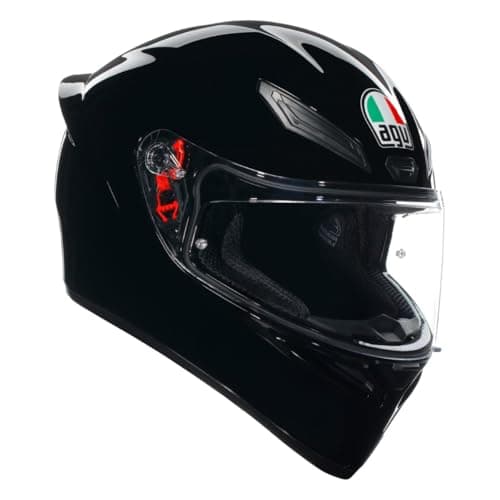
AGV K1 S (thermoplastic, ~1,600 g) - the same brand and the same ECE 22.06 approval as the K6 S, in a moulded shell, for far less. Who it is for: the rider who wants to see exactly what the material premium buys - about 345 g. Honest cons: heavier, feels less premium, no sun visor, no SHARP result.

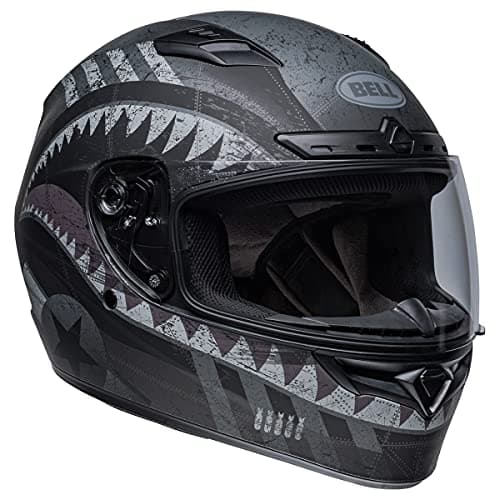
Bell Qualifier DLX MIPS (polycarbonate, ~1,626 g) - DOT plus a MIPS rotational-management layer and a photochromic shield in the box. Who it is for: the rider who wants features and a rotational-management layer at the bottom of the price ladder. Honest cons: Bell lists ECE for the model but does not publish the 22.05-versus-22.06 revision for the US unit, so we do not assert the current standard on it - and it is the second-heaviest helmet here.

So what should you actually buy on?

In order: certification (can the maker name the standard?), then fit (does the shell suit your head shape?), then weight - which is where material finally enters the decision. Nobody should buy a carbon helmet that fits badly over a composite one that fits well. And if your complaint about your current helmet is noise rather than weight, material will not fix it: sealing and earplugs will, per how to make your helmet quieter. Start with measuring your head, then helmet weight explained for how much the grams are worth to you, then best motorcycle helmets of 2026 for the ranked models.
The short answer

Quick picks, by the mark on the shell

#HelmetCertificationScorePrice
01
AGV AGV K6 S
AGV K6 S

Featherweight carbon-aramid, genuine ECE 22.06, and a perfect 5/5 SHARP score — the safety data leader of this list.

DOT certifiedECE 22.06 certifiedSHARP ★★★★★
9.1
$599.00Amazon
02
HJC HJC RPHA 12
HJC RPHA 12

HJC's value sport-touring flagship: a genuinely light PIM EVO composite shell with ECE 22.06, a Pinlock-ready HJ-42 shield and wind-tunnel aero, for well under premium money.

DOT certifiedECE 22.06 certified
8.6
$219.98Amazon
03
AGV AGV K1 S
AGV K1 S

The cheapest way into a genuine ECE 22.06 AGV full-face — race-derived aero and a wide field of view in a thermoplastic shell, at a budget price.

DOT certifiedECE 22.06 certified
8.1
$212.44Amazon
04
Bell Bell Qualifier DLX MIPS
Bell Qualifier DLX MIPS

The budget full-face with two features you rarely see at the price: a MIPS rotational-management layer and a photochromic (self-tinting) shield in the box.

DOT certifiedECE 22.06 unverified
7.5
$199.95Amazon

#ad · Live prices from the Amazon Product API, as of October 21, 2026. Certifications reflect the US-market build and are cited in Sources. Where a live price has rotted, we show none.

In detail

The picks, in full

01
AGV AGV K6 S

Lightest full-face with top safety data

AGV K6 S

DOT certifiedECE 22.06 certifiedSHARP ★★★★★
Carbon-aramid~1,255 gDOT + ECE 22.06SHARP 5/5
9.1/10

Featherweight carbon-aramid, genuine ECE 22.06, and a perfect 5/5 SHARP score — the safety data leader of this list.

Certification
9.5
Safety data
9.5
Weight
9.5
Field of view
9
Value
8

Pros

  • ~1,255 g — one of the lightest full-face helmets on the market
  • Genuine DOT + ECE 22.06 and a perfect 5/5 SHARP score
  • Huge field of view derived from AGV's racing helmets

Cons

  • No internal sun visor
  • Sport-oriented fit is snug for round heads

Don't buy this if…

…you tour long days and want a sun visor and maximum quiet — a touring full-face or modular fits better.

$599.00View on Amazon

$639.006% off

Price as of October 21, 2026. Prices change — Amazon's at checkout is the one that counts.

#ad · we may earn a commission from this link to AGV K6 S

02
HJC HJC RPHA 12

Lightweight ECE 22.06 sport-touring value

HJC RPHA 12

DOT certifiedECE 22.06 certified
PIM EVO composite~1,474 gDOT + ECE 22.06HJ-42 Pinlock-ready
8.6/10

HJC's value sport-touring flagship: a genuinely light PIM EVO composite shell with ECE 22.06, a Pinlock-ready HJ-42 shield and wind-tunnel aero, for well under premium money.

Certification
9
Weight
9
Value
9
Aero / quiet
8
Finish
8

Pros

  • Genuinely light at ~1,474 g in a PIM EVO composite shell — lighter than most sport lids
  • Genuine ECE 22.06 with a Pinlock-ready HJ-42 shield for anti-fog
  • Wind-tunnel shell and rear spoiler cut lift, drag and noise at speed

Cons

  • Not SHARP-tested, so no independent star score like an AGV K6 S
  • No sun visor — a sport lid, so you run a tinted shield or sunglasses

Don't buy this if…

…you want independent SHARP data or a sun visor — the K6 S has the SHARP score, the GT-Air 3 has the sun visor.

$219.98View on Amazon

Price as of October 21, 2026. Prices change — Amazon's at checkout is the one that counts.

#ad · we may earn a commission from this link to HJC RPHA 12

03
AGV AGV K1 S

Budget sport full-face with genuine ECE 22.06

AGV K1 S

DOT certifiedECE 22.06 certified
Thermoplastic shell~1,600 gDOT + ECE 22.06Race-derived aero
8.1/10

The cheapest way into a genuine ECE 22.06 AGV full-face — race-derived aero and a wide field of view in a thermoplastic shell, at a budget price.

Certification
9
Value
9
Field of view
8.5
Weight
7
Finish
7

Pros

  • Genuine DOT + ECE 22.06 at a genuinely budget price — the current standard without spending up
  • A wide field of view and aero shell derived from AGV's racing helmets
  • The affordable way into AGV's sporty fit and styling

Cons

  • Thermoplastic shell is heavier (~1,600 g) and less premium than a composite or carbon lid
  • No sun visor, and the sporty fit runs snug for round heads

Don't buy this if…

…you want low weight, a plush finish or independent SHARP data — the carbon-aramid K6 S delivers all three for more money.

$212.44View on Amazon

$249.0015% off

Price as of October 21, 2026. Prices change — Amazon's at checkout is the one that counts.

#ad · we may earn a commission from this link to AGV K1 S

04
Bell Bell Qualifier DLX MIPS

Budget full-face with MIPS and a photochromic shield

Bell Qualifier DLX MIPS

DOT certifiedECE 22.06 unverified
Polycarbonate~1,626 gDOT + MIPSPhotochromic shield included
7.5/10

The budget full-face with two features you rarely see at the price: a MIPS rotational-management layer and a photochromic (self-tinting) shield in the box.

Value
9
Features
9
Certification
6.5
Weight
6.5
Finish
6.5

Pros

  • MIPS rotational-management layer at a genuine budget price
  • Ships with a ProTint photochromic (self-tinting) shield — a feature usually reserved for pricier helmets
  • Comfortable, well-vented (Velocity Flow), with a removable, washable liner

Cons

  • Polycarbonate and heavy (~1,626 g), and not a premium finish
  • The US unit's ECE revision isn't published, so we can't confirm 22.06 — buy it as a DOT + MIPS helmet

Don't buy this if…

…you specifically want confirmed ECE 22.06 or a light composite shell — the AGV K1 S carries genuine 22.06 at a similar price.

$199.95View on Amazon

Price as of October 21, 2026. Prices change — Amazon's at checkout is the one that counts.

#ad · we may earn a commission from this link to Bell Qualifier DLX MIPS

How we picked

We do not crash-test helmets

We compiled published specifications, cited each helmet's certification (DOT, ECE 22.06, Snell, SHARP) from the standards body or manufacturer homologation, and aggregated owner reports, then scored against a published method. The scores are judgments from documented research — not measurements we took. We do not run a crash lab. Certifications reflect the US-market build; where it differs from the European version, we say so and cite it.

Questions

Frequently asked

Are carbon fiber helmets safer than polycarbonate ones?
No - not inherently. The certification sets the protection floor, and material is not part of it: the polycarbonate Bell MX-9 Adventure holds DOT + ECE 22.06 with MIPS and an independent SHARP 4/5, while plenty of carbon helmets have no SHARP result at all. What carbon reliably buys is weight. The AGV K6 S is about 1,255 g in carbon-aramid against roughly 1,626 g for a polycarbonate Bell Qualifier DLX.
What is the best motorcycle helmet shell material?
Fiberglass composite, for most riders. It captures most of carbon's weight saving at a far lower price - HJC's PIM EVO shell in the RPHA 12 is fiberglass, carbon and aramid at a published ~1,474 g with genuine ECE 22.06, and Shoei's AIM+ gets the RF-1400 to about 1,385 g. Carbon is worth the premium mainly in structurally heavy formats: adventure helmets with peaks and modulars with flip-up chin bars.
Does the shell or the liner absorb the impact?
The liner. The EPS liner inside the helmet absorbs energy by crushing, which is what decelerates your head - and it is why a helmet is single-use after a real impact even when the shell looks undamaged. The shell's jobs are to resist penetration and to spread a point load over a wider area of the liner beneath it.
Are carbon fiber helmets quieter?
No, and often slightly the opposite - a thin, stiff shell transmits sound rather than damping it. The quietest helmets we cover are composites with engineered shield sealing and neck rolls, not the lightest carbon shells. If noise is your complaint, sealing and earplugs do far more than shell material.
Is a 'carbon look' helmet really carbon?
Not always. A cosmetic carbon weave can be laid over a different structural material, and the box will still say carbon. The honest tell is the published weight: a genuine carbon shell shows up in grams, so a 'carbon' full-face at 1,700 g is telling you something about what is underneath the weave.

Keep reading

Receipts

Sources

We do not run a crash lab, and we do not pretend to. Certifications are cited to the standards body or the manufacturer's stated homologation; where a US model's certification differs from its European namesake, we say so. Where we could not verify something, we say so on the page rather than quietly leaving it out. Read our full method.