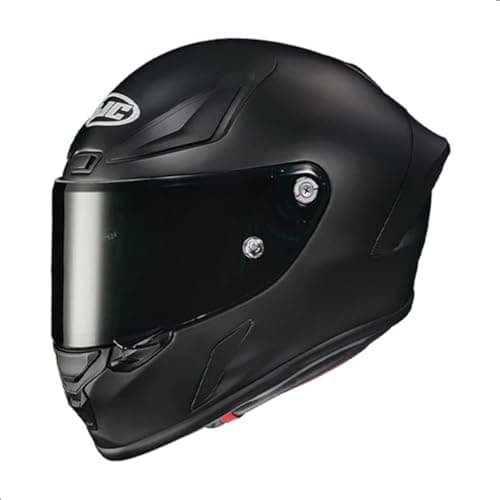
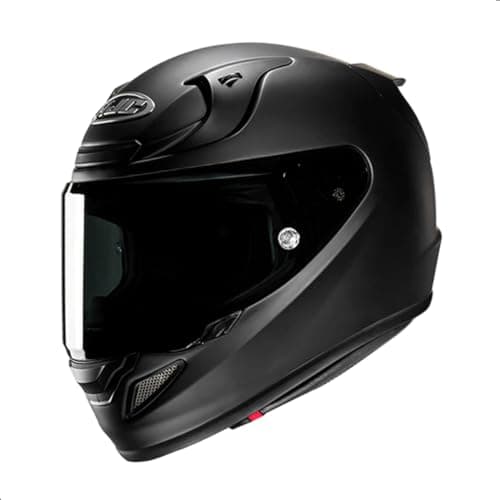
Short answer: the HJC RPHA 12 carries genuine DOT + ECE 22.06- the current global standard, including the oblique rotational-impact test - in HJC's PIM EVO composite shell (fiberglass, carbon and aramid) at about 1,474 g. It has not been SHARP-tested, so there is no independent star score to quote, and we have not sourced any Snell certification for it. That is the whole rating, and the rest of this page is about how to read it.
We do not crash-test helmets - nobody at consumer scale does, and we have no lab. What we do is read published homologations and independent test results and explain them honestly. Every claim here is sourced at the foot of the page. For the full buyer's picture, see our HJC RPHA 12 review.
The certification on the shell: DOT + ECE 22.06
The RPHA 12 is homologated DOT (FMVSS 218, the self-certified US legal minimum) and ECE 22.06. The second one is what matters. ECE 22.06 is independently administered rather than self-declared, and it was the first standard to add an oblique impact test aimed at rotational forces to the straight-line impact test that preceded it - the mechanism our 22.06 explainer walks through.
The reason this is a genuine selling point rather than a box-tick is the US market gap. As our certifications explainer sets out, several flagship helmets sold in the States are DOT or Snell builds, not the ECE 22.06 versions their European reviews describe - the Shoei GT-Air 3 and Neotec 3 among them. The RPHA 12 is one where the US unit genuinely holds 22.06, at a price well under those helmets. That combination is the single strongest argument for the helmet.
No SHARP score: missing data, not a bad result
SHARPis the UK government's independent program: it buys helmets off the shelf - so a maker cannot submit a cherry-picked sample - impact-tests them at multiple speeds and points, and publishes a graded 1-to-5-star rating. It is the closest thing to a consumer crash-test score that exists, and it does something no homologation can: a pass/fail mark tells you a helmet cleared a bar, while a star score tells you how far clear it was.
SHARP has not tested the RPHA 12. That is not a negative finding - it is the absence of a finding. SHARP only rates models it has bought, and plenty of excellent helmets have never been through it, including HJC's own flagship RPHA 1N. Compare like with like: a 4/5 against a 5/5 is a meaningful comparison; a 4/5 against silence is not. If a published independent score is specifically what you want to buy on, the AGV K6 S holds genuine 22.06 and a 5/5 SHARP result, and the HJC RPHA 91 - a modular - holds 22.06 P/J and 4/5.
Is the RPHA 12 Snell approved?
We have not sourced a Snellcertification for the RPHA 12 and therefore do not claim one either way. HJC's route on this line is DOT plus ECE 22.06, with FIM racing homologation reserved for the race-derived RPHA 1N above it. Snell M2025 is a voluntary, re-tested standard with impact energies above the legal floor, and it is the route most US-market Japanese flagships take instead of ECE - the Shoei RF-1400 and Arai Contour-X are the Snell builds we rate. Neither route is categorically better; they ask different questions, and our safest helmets page compares them head on.
What else on this helmet bears on safety
Weight. About 1,474 g is genuinely light for a composite full-face, and lighter than the race-homologated RPHA 1N. Mass belongs in a safety discussion because rotational forces act on it, and because fatigue is what ends concentration on a long day - see helmet weight explained.
Vision. The RPHA 12 ships a Pinlock-ready HJ-42 shield, which means the real anti-fog fix is available to it rather than a spray-on compromise. A fogged visor is a vision problem and therefore a safety problem; our fogging guide explains the mechanism.
Aero. HJC publishes a wind-tunnel-developed shell with a rear spoiler to cut lift, drag and noise at speed. Lift and buffeting are fatigue inputs on a long ride rather than impact-protection features - worth having, not worth confusing with a certification.
Confirming it on the helmet you buy
Certification can differ by market and by production run, so check the marks on the actual helmet rather than trusting a listing. Inside a genuine US RPHA 12 you will find the DOT label and the ECE 22.06 approval label - a white tag showing the E-mark and an approval number beginning 06, with the "06" denoting the revision. An older 22.05 helmet begins 05. Checking that two-digit prefix is the single most useful habit this site tries to teach, and it takes five seconds.
The bottom line
The RPHA 12's safety rating is straightforward and good: genuine DOT + ECE 22.06 on the US shell, in a light composite helmet, with a Pinlock-ready shield. What it does not have is independent graded data - no SHARP stars, no Snell - so you are buying a current, independently administered homologation rather than a test score. For most riders that is the right trade at this price, and it is more than several helmets costing twice as much offer in the US market. Then fit it properly, because no certification survives a helmet that can roll off your head: our sizing guideis the companion to this page. The full buyer's review is here.