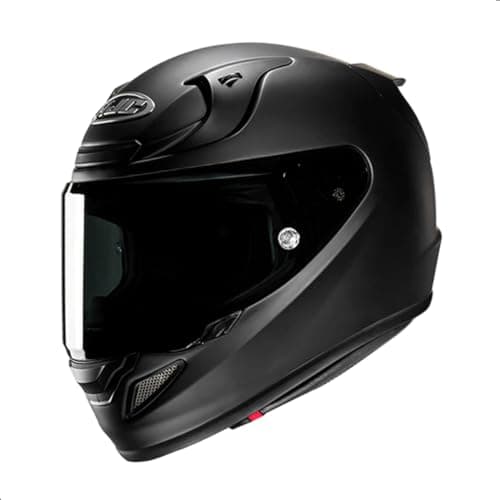
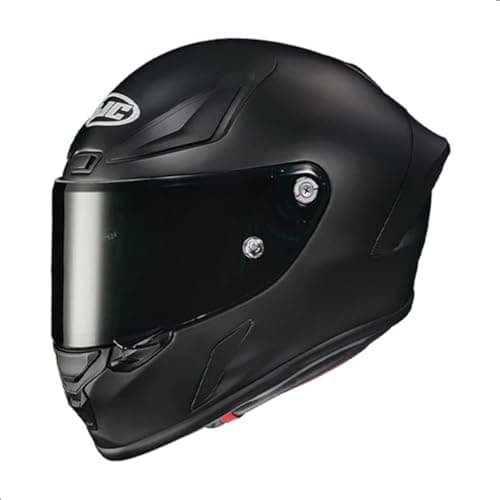
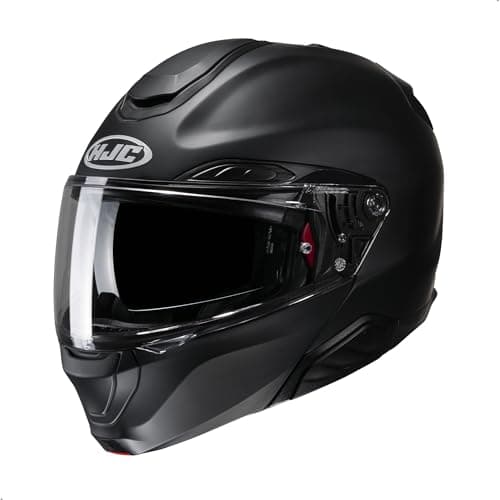
Yes - and the reason is specific rather than vague. HJC's composite RPHA line publishes genuine ECE 22.06 on US-market helmets at prices where the Japanese flagships typically ship DOT or Snell builds instead. The pick of the range is the HJC RPHA 91: ECE 22.06 with P/J dual homologation plus an independent 4/5 SHARP score, which makes it the best-documented modular we cover at any price. Who it is for: the touring or commuting rider who wants a flip-up without dropping to the legal minimum. If you want a one-piece full-face, the HJC RPHA 12 is the value answer - genuine 22.06 in a light ~1,474 g composite shell.
The caveat matters as much as the verdict: HJC is not one thing. The composite RPHA helmets and the cheaper polycarbonate models are certified differently on the US market, and the brand name tells you nothing about which you are holding. That split is the whole point of this page - and it is a split HJC at least publishes, unlike the brand in are Simpson helmets good?, where the ECE revision mostly goes unstated. The DOT-only end of HJC's range is covered in the HJC DS-X1 review. We have no lab and do not crash-test - everything below comes from HJC's own published homologations, the SHARP database and the retail listings, all sourced at the foot of the page.
What HJC is actually good at
Certification per dollar. This is the real argument for the brand. The RPHA 91 carries the current ECE 22.06 standard and an independent SHARP score, where premium rivals at twice the price often carry neither on their US units - the Shoei Neotec 3, excellent as it is, is a DOT build in the States. Our Neotec 3 vs RPHA 91 comparison is that trade in full, and the certifications explainer covers why the US-versus-EU homologation gap exists at all.
Weight, on the composite models. The RPHA 12 is about 1,474 g in PIM EVO composite and the race-derived RPHA 1N about 1,510 g in PIM+ carbon - genuinely light figures that undercut plenty of pricier helmets. HJC gets there with composite shells rather than marketing, which is why the weight claim survives contact with the spec sheet. See helmet weight explained for what shell material buys.
Racing provenance that shows up on the label. HJC races in MotoGP, and the RPHA 1N carries FIM racing homologation on top of DOT and ECE 22.06 - a track-grade certification most street helmets cannot show, in a helmet that costs a fraction of an Arai or Shoei race lid.
Where HJC is weaker than its reputation
Independent test data is thin. Only the RPHA 91 of the four below has a SHARP score. The RPHA 1N and RPHA 12 have not been SHARP-tested, so you are reading homologation rather than a graded result. That is not a bad score - it is missing data - but if independent stars are what you want to buy on, the AGV K6 S (5/5) is the stronger paper.
No Snell on anything we cover.HJC's route is DOT plus ECE 22.06, with FIM on the race lid. We have not sourced a Snell certification for any HJC model in this catalog, so we do not claim one either way. If Snell M2025 specifically is your requirement, the Shoei RF-1400 and Arai Contour-X are the Snell builds we rate - see the safest helmets for how the two routes compare.
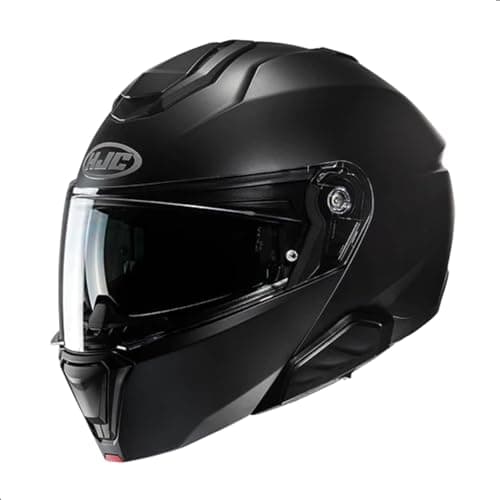
The budget helmets are DOT-marketed. The polycarbonate i91flip-up is sold on US Amazon as DOT-approved, and HJC's European i91 exists in both 22.05 and 22.06 variants depending on production date - so we do not assert 22.06 on the US unit. The dual-sport DS-X1, which we rate in our dual-sport picks, is DOT only. Both are honest helmets at honest prices; neither is an RPHA, and the listing will not make that clear to you.
HJC RPHA 91 - the best HJC, and the best-documented modular we cover
A flip-up has a joint a full-face does not, so its certification carries more weight rather than less. The RPHA 91 is the one modular that answers the question properly: ECE 22.06 with P/J dual homologation - legally approved to ride open as well as closed, not just mechanically able to - plus an independent 4/5 SHARP score, in a PIM EVO composite shell at about 1,740 g. Who it is for: commuters and tourers who want the chin bar to open and refuse to give up the current standard to get it. The honest cons: not as whisper-quiet as a Neotec 3, and the interior is a notch below the premium Japanese brands. See the RPHA 91 review and its safety rating page.
HJC RPHA 12 - the value full-face most riders should buy
If you want one HJC and you ride on the road, this is it. Genuine DOT + ECE 22.06 in a PIM EVO composite shell at roughly 1,474 g - lighter than the race-homologated 1N - with a Pinlock-ready HJ-42 shield for anti-fog and a wind-tunnel shell and rear spoiler that cut lift, drag and noise at speed. Who it is for: the sport-touring rider who wants the current standard and low weight without flagship money. The honest cons: not SHARP-tested, and no sun visor. See the RPHA 12 review and its safety rating page.
HJC RPHA 1N - the track-grade one
The RPHA 1N is the helmet that makes the brand's case loudest: the PIM+ carbon shell HJC races, carrying DOT, ECE 22.06 and FIM racing homologation, with ACS ventilation published as five intakes and four exhausts, at about 1,510 g. Who it is for: fast road and track riders. The honest cons: a hard, race-focused shell and fit, no sun visor, and premium money for an HJC - though far under a comparable Arai or Shoei. See the RPHA 1N review and track-day picks.
HJC i91 - the honest budget flip-up, caveat included
The i91 is one of the cheapest flip-ups from a major brand that still arrives DOT-approved with a Pinlock-ready HJ-33 shield and a drop-down HJ-V12 sun visor - two features budget modulars usually delete - and it is ready for Smart HJC and Sena comms without a bolt-on. Who it is for: the commuter on a budget, or anyone wanting a second helmet for bad-weather months. The honest cons: marketed DOT only on the US listing with no confirmed ECE 22.06, and a heavy polycarbonate shell at about 1,720 g. See the i91 review and i91 vs RPHA 91 for exactly what the step up buys.
So: are HJC helmets good?
Good enough that the RPHA line is our default recommendation whenever certification per dollar is the question. Buy the RPHA 91 if you want a modular with the best safety paper in its class, the RPHA 12 if you want a light, current-standard full-face at a sane price, and the RPHA 1N if you ride fast enough to want FIM on the label. Buy the i91 with your eyes open: it is a good budget helmet and a DOT one. The brand is not the product - the model is.
For how HJC sits against the other makers on exactly this question - who publishes their homologation and who does not - see motorcycle helmet brands compared.
Buying an HJC without getting the wrong one
Learn the two families. RPHA means a composite shell and, on current models, published ECE 22.06. The letter-and-number helmets (i91, DS-X1) are the polycarbonate budget line, sold in the US as DOT. Both have their place; they are not interchangeable, and price alone will not tell you which is which.
Read the ECE label, not the listing. A genuine 22.06 helmet has a white approval tag inside whose number begins 06. Because HJC sells 22.05 and 22.06 variants of some models in different markets and production runs, this check is the only reliable one - and it takes five seconds on a helmet you already have in your hands.
Match the shield code before you buy accessories. HJC uses a different shield per model - the i91 and i90 take the HJ-33, the RPHA 91 takes the HJ-37, the RPHA 12 the HJ-42. Pinlock inserts and replacement shields are cut per shield, so the code is what you shop by, never the brand. Our Pinlock guide lists the pairings.
Try it on, because we cannot tell you how it will fit."Do HJC helmets run true to size" is a common question and we have no sourced, model-by-model fit-scale data to answer it with, so we are not going to invent one. Measure your head, work out your shape, and treat any brand's chart as a starting point - our sizing guide and head-shape guide are the method.