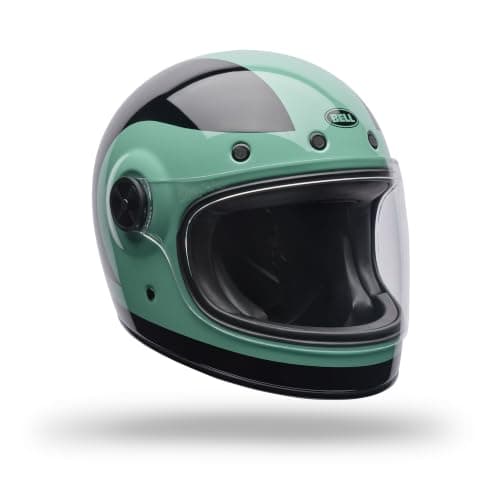
The retro helmet with the strongest combination of certification and construction is the Bell Bullitt GT - but the one most people should buy is the Biltwell Lane Splitter, because it states the same DOT and ECE 22.06 pair for substantially less money. That is the whole page in two sentences, and we will spend the rest of it explaining why those two are not the same recommendation. Who this is for: the cruiser, cafe, scrambler or bobber rider who wants the period silhouette and refuses to drop to the US legal minimum to get it.
Retro is the category where this site's whole method earns its keep. In touring or sport helmets, nearly everything at a real price carries ECE 22.06 and the arguments are about noise and weight. In retro helmets, styling is the product, and a large share of what is sold carries a DOT sticker and nothing else. Three of the five helmets below state ECE 22.06. Two do not. We have not tested any of them - we have read what each maker and its US retail spec sheet will commit to in writing, which is a different and more honest job.
How we ranked these five
In this order, every time:
- A named certification, and the revision.ECE 22.06 adds an oblique rotational-impact test that ECE 22.05 never had, plus far more impact points. "DOT and ECE" with no revision named is not the same claim as "ECE 22.06", and we treat it as unnamed rather than assuming the newer one. Background in ECE 22.06 explained.
- Coverage. A chin bar covers the most frequently struck region of a helmet. An open-face cannot fix that, which is why the one open-face here ranks last despite being a genuinely good helmet - the reasoning is in full-face vs open-face helmets.
- Shell and EPS sizing. How many shell sizes the maker actually tools, and how many EPS densities sit inside them. Two shell sizes across a six-size run means the extreme sizes are padding out a shell rather than wearing one built for them.
- Construction and published weight. Fiberglass composite over injection-molded ABS, and a published figure in a stated unit or nothing at all. We do not carry a weight over from a superseded model.
- What is in the box. Retro helmets are notorious for selling you the shield you actually wanted separately. We say so each time.
Price is not a ranking criterion and we do not put numbers in prose - the buy modules carry the live figure. In rough brackets: this class runs from the low-$100s for a certified open-face to the high-$400s for the fully certified icon, with the sweet spot for a certified full-face in the high-$200s to low-$300s.
1. Bell Bullitt GT - the icon, finally with a current certificate
The Bullitt is the helmet most people picture when they picture a retro full-face: the ultra-low-profile 1960s shell, the wide flat eyeport, the metal mesh vents. For years the catch was the paperwork - the original Bullitt was listed as "DOT and ECE" with no revision named, which on this site means we could not assert 22.06.
The GT replaced it, and the GT's spec sheet states the helmet "meets modern DOT and ECE 22.06 safety requirements" and lists "DOT and ECE 22.06 certification" as a feature outright. That changes the recommendation. You now get the period silhouette on a fiberglass composite shell in three shell sizes over a multi-density EPS liner, with five closeable forehead vents on a single slider, a large rear exhaust, and the Magnefusion closure with toolless shield swaps.
The honest cons. It is comfortably the most expensive helmet on this page, and the Biltwell below it states the same certification pair for a lot less. Bell does not publish a weight for the GT - the superseded Bullitt was listed at 3.24 lb and that figure does not transfer to a different helmet, so we are not going to hand it to you as if it did. And it ships with a clear flat shield only: the vintage bubble shield that half the appeal rests on is a separate purchase.
Who should skip it: anyone doing real highway mileage. This is a low-profile classic shell with 1960s aerodynamics and no drop-down sun visor. A touring full-face from our premium touring roundup will be quieter, cooler and better sealed - it just will not look like this.
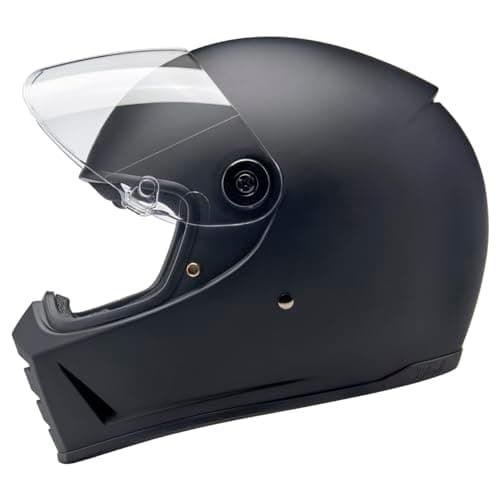
2. Biltwell Lane Splitter - the same certification, far less money
This is the pick we would actually hand most people, and the reason it sits second rather than first is construction, not paperwork. The Lane Splitter states DOT and ECE 22.06 - the identical pair the Bullitt GT claims - on a 1970s-moto silhouette with a full shield, in a size run from XS to 2XL with published head-circumference ranges for every size. Retailers note the 2024 update is what brought the 22.06 certification and a revised shield lock.
You also get a plated steel double D-ring strap, a hand-sewn brushed Lycra liner with removable cheek pads, a UV-rated anti-fog clear shield, large chin vents and a rear outlet. For the money, the certification-per-dollar here is the best in the class and it is not close.
The honest cons. The shell is injection-molded ABS over EPS, which is the cheapest full-face construction there is - the certificate is current, the shell is not exotic. It has only two shell sizes across six helmet sizes, which is the real compromise: if you are an XS or a 2XL you are padding out a shell rather than wearing one tooled for you. And at a published 3.45 lb it is the heaviest helmet on this page.
Who should skip it:riders who notice weight on a long day, and riders at either end of the size chart who would be better served by the Eliminator's five EPS sizes - with the certification trade that implies.
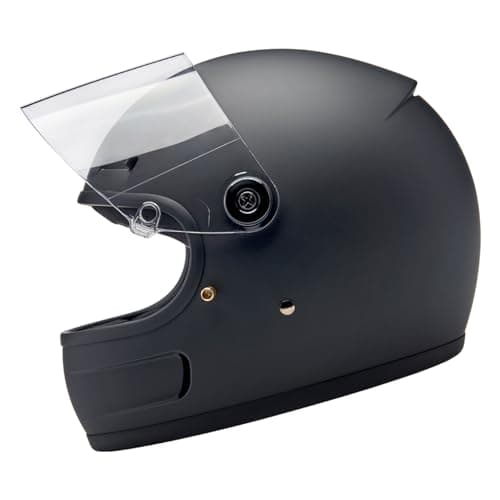
3. Biltwell Gringo SV - the bubble-visor classic, properly certified
The Gringo SV is the other end of the Biltwell range and the helmet for anyone who wants the round, bug-eyed classic shape rather than the moto one. Biltwell states "US DOT FMVSS No. 218 compliant / ECE R22.06 certified" on its own product page, and the US listing carries R22.06 in its title - so this is the third genuinely 22.06-certified retro helmet here.
It also beats the Lane Splitter on fit scaling, with three shell sizes and five EPS options, plus molded EPS ear pockets and a removable, washable liner, so it takes a comms unit and a wash. Full detail in our Biltwell Gringo SV review, and the certification case on its own in the Gringo SV safety rating.
The honest cons. It is heavy, at a published 3.69 lb - the heaviest figure we have for any helmet in this group - and it is ABS rather than composite. There is no drop-down sun visor and no published Pinlock provision, so sun and fog are managed with the shield you have. Ventilation is a classic shell with vent ports added rather than an aero project.
Who should skip it: long sunny highway riders, for the sun-visor reason, and anyone counting grams.
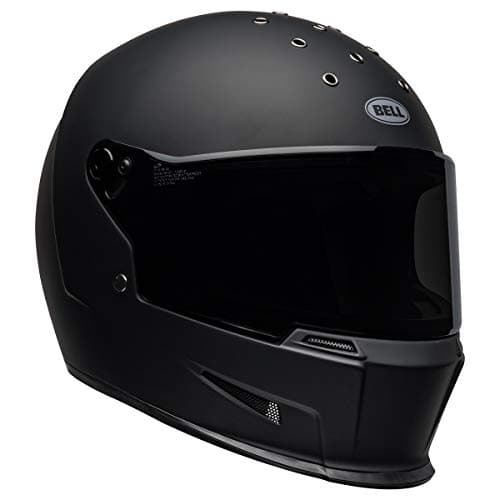
4. Bell Eliminator - the best-equipped retro shell, and the weakest paper
This is the most interesting entry on the page, because by every measure except the one that matters most here it is excellent. The Eliminator is the lightest helmet in this group at a published 3.09 lb, in a fiberglass composite shell, with three shell sizes across five EPS sizes - the best fit scaling of any retro helmet here - in an intermediate-oval shape that suits the most common head shape.
The feature set is genuinely modern under the retro bodywork: a ProVision dual-pane anti-fog shield with Class 1 optics, eyeglass compatibility, recessed speaker pockets and a Magnefusion strap keeper. A dual-pane shield is the fog answer the other helmets on this page do not have.
The honest cons, and this is the decisive one. Its spec sheet names DOT only and does not mention ECE or Snell at all - so we assert neither. DOT is self-certified by the manufacturer rather than independently lab-tested, which makes it the weakest paper trail on this page. On a ranking that puts a named certification first, a DOT-only helmet cannot outrank three that state ECE 22.06, however good the rest of it is. The peak visor people associate with the look is also an optional extra, and the dark smoke shield is sold separately.
Who should buy it anyway: a rider at the extreme ends of the size chart, or one who fogs up badly and wants the dual-pane shield, who has read the certification paragraph above and decided consciously. That is a legitimate choice. It is just not the one this page ranks first.
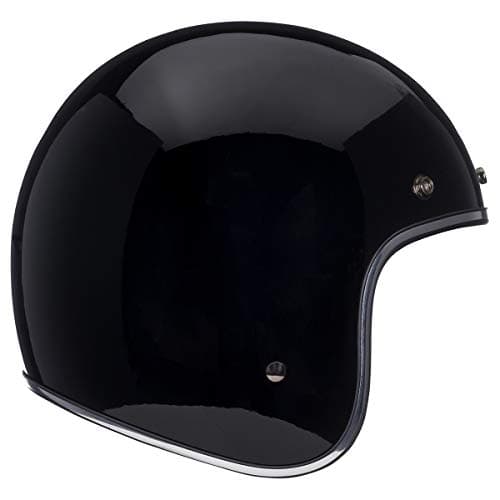
5. Bell Custom 500 - the open-face classic, with the trade stated plainly
The Custom 500 is the default three-quarter lid and a genuinely well-built one: five separate shell and EPS sizes, which is rare at any price, a thin-profile shell that sits low rather than ballooning, and an integrated 5-snap pattern that accepts the entire aftermarket of bubble shields, flat shields and peaks. It is also by far the cheapest helmet here. Our Bell Custom 500 review has the full breakdown.
The honest cons. There is no chin bar, so the most frequently struck part of a helmet is simply not covered, and no open-face can engineer around that. On certification: it is sold in the US as a DOT helmet, and retail listings disagree with each other about ECE - some say 22.05, some say 22.06 - so we assert no ECE and tell you to read the label on the helmet you receive. No shield, no seal and no sun visor in the box either.
Who should skip it:anyone riding highway miles, and anyone who wants the certification a chin bar makes possible. If you like the classic look but hearing "the chin bar is not covered" made you hesitate, that hesitation is correct - buy the Gringo SV, which keeps the look and keeps the chin bar.
What the retro class costs you, honestly
Three things are true of nearly every helmet in this category, and a page that does not say them is selling you a vibe:
- No drop-down sun visor. Not one helmet here has one. It is a modern feature and it ruins the silhouette, so retro helmets go without. You will be swapping shields or wearing sunglasses - the options are in photochromic vs tinted vs clear.
- More noise than a touring shell. Low-profile classic shells and retro eyeport seals are not aerodynamic projects. Budget for earplugs - genuinely the highest-value purchase on this page - and read how to make your helmet quieter.
- Weight. Three of these five are published at 3.45 lb or heavier. A modern composite sport-touring full-face can be a pound lighter, which you feel after two hours. Only the Eliminator, at 3.09 lb, is competitive on this measure, and it is the one with the DOT-only spec sheet.
None of that makes retro a bad choice. It makes it an informed one. If those three trade-offs sound unacceptable rather than tolerable, you want a modern full-face that happens to look good, and the coolest-looking certified helmets is the page for that - it ranges wider than retro and includes modern carbon.
The verdict
Buy the Biltwell Lane Splitter unless you have a specific reason not to. It states the same DOT and ECE 22.06 as the most expensive helmet here, for far less, and the compromises - ABS construction, two shell sizes, 3.45 lb - are things you can read and accept rather than things hidden from you.
Buy the Bell Bullitt GT if you want the icon and the better shell, and the price difference is not the deciding factor. It is the strongest combination of certification and construction in the retro class, and it is the only helmet here where the silhouette is the point and the paperwork still holds up.
Buy the Gringo SV for the bubble-visor shape with three shells and five EPS sizes; the Eliminator if fit scaling and a dual-pane shield outweigh a DOT-only spec sheet for you; and the Custom 500 only if you have genuinely accepted riding without a chin bar.