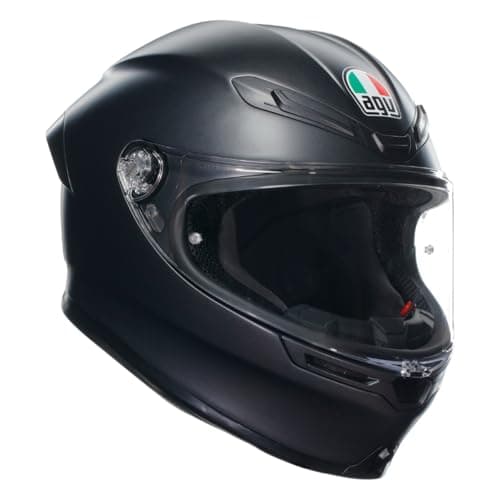
The best carbon fiber motorcycle helmet here is the AGV K6 S - a carbon-aramid shell at a published 1,255 g, with DOT, ECE 22.06 and the only SHARP 5-out-of-5 rating in our whole catalog. It is also one of the cheaper helmets on this page, which tells you something useful about how carbon gets priced. Who this page is for: a rider who has done a few long days in a heavy lid, worked out that neck fatigue is the thing that ends the ride, and wants to know which carbon shells are worth it.
One thing to get straight first, because the word does a lot of unearned work in helmet marketing. Carbon is a construction, not a safety rating. A carbon shell can be exceptionally light and still carry a weaker certification than a polycarbonate helmet costing a fifth as much - and one helmet on this page demonstrates exactly that trade. So every pick below is ranked on its published weight and its homologationtogether, never on the material alone. We have no lab and have tested none of these; the weights and certifications are the makers' published figures, cited at the bottom.
How we ranked these five
- A genuine carbon shell, stated by the maker."Carbon look" graphics and carbon-print decals are not carbon. Every helmet here has carbon named in its shell construction by the manufacturer - full carbon, carbon-aramid, or a carbon laminate. Helmets we rate with premium non-carbon composites, like the Arai Contour-X (PB e-cLc laminate) and the Shoei RF-1400 (Multi-Ply Matrix AIM+), are deliberately not on this page even though they are light and excellent.
- Certification and revision. ECE 22.06 adds an oblique rotational-impact test that 22.05 never had. FIM homologation on top of that is the racing standard and a stricter gate again. See ECE 22.06 explained.
- Published weight in a named size. An unqualified helmet weight is marketing. Every figure below is size-stated or published as a nominal shell weight by the maker.
- Independent test data where it exists. A SHARP star rating is a fourth opinion from a body with no commercial interest. Only one helmet here has one, and it is the one that wins.
- Whether the format matches real riding. Two of these five are excellent helmets that cannot be your only helmet, and we say which and why.
Prices stay out of the prose - the buy module on each pick carries the live figure. In brackets: real carbon starts in the low-$400s here and runs past $1,200, and the price order on this page is emphatically not the ranking order.
1. AGV K6 S - the lightest helmet we rate, and the only SHARP 5/5
The K6 S is the answer to this question and it is not close. A carbon-aramid shell at a published 1,255 g makes it the lightest helmet in our entire catalog - roughly 200 g under the full-carbon ADV helmet below it and over 600 g lighter than a flagship modular. It carries DOT and ECE 22.06, and it is the only helmet we rank with a SHARP rating of 5 out of 5: an independent government program that buys helmets off the shelf and crash-tests them.
Lightest, independently top-rated, currently certified, and sitting at the bottom of this page's price range. When the cheapest-but-one option is also the best on the two criteria that matter, the honest thing to do is say so loudly. Detail in the AGV K6 S review.
The honest cons. AGV interiors suit intermediate-oval heads and run snug- this is the brand's standing caveat and it is a real one, so size up and read head shapes explained before you commit. There is no drop-down sun visor and no internal sunshade, as with most sport-focused shells. And a light shell transmits more noise than a heavy one, so this is not the quietest route to a long day.
Who should skip it: round-oval heads, who should look at the Arai options on our safest helmets page instead, and anyone whose priority is quiet rather than light.
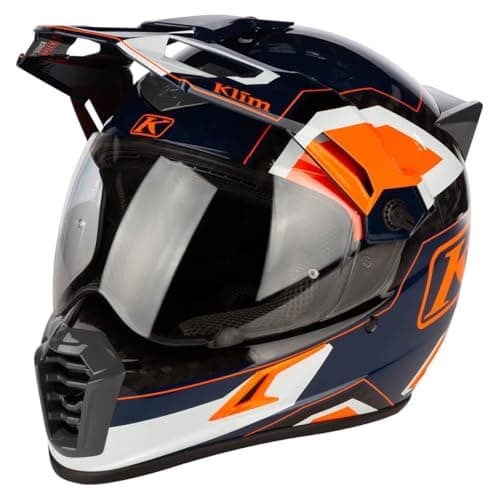
2. Klim Krios Pro - full carbon, and the ADV benchmark
If your riding involves a peak, this is the carbon helmet to want. The Krios Pro is a full carbon shell at a published 1,450 g (size L) with DOT and ECE 22.06 - Klim publishes the homologation itself, which is more than most ADV makers do. For a convertible adventure helmet that takes a peak, a shield and goggles, that weight is remarkable; comparable ADV lids run 1,700-1,900 g.
That weight advantage is the entire point of the helmet. On a long dual-sport day the peak is already working against your neck; taking 300 grams out of the shell is the difference between finishing the ride comfortable and finishing it sore. Full write-up in the Klim Krios Pro review.
The honest cons. It is expensive for an ADV helmet and has never been SHARP-tested, so the certification is all the independent data there is. The peak still generates lift at highway speed - carbon does not fix aerodynamics, it fixes mass. And a convertible helmet is a compromise at both ends: not as quiet as a road full-face, not as airy as a true motocross lid.
Who should skip it: riders who never leave pavement, who are paying for a peak and a goggle channel they will not use. A road-focused carbon shell like the K6 S is lighter, quieter and cheaper.
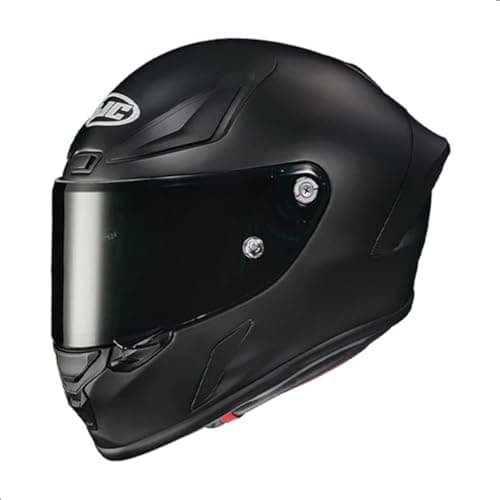
3. HJC RPHA 1N - the cheapest genuine carbon here, and it has FIM
This is the value pick, and it is a strong one. The RPHA 1N uses HJC's PIM+ carbon shell at a published ~1,510 g, and it carries DOT, ECE 22.06 and FIM homologation - the racing standard, which very few helmets at any price hold. Ventilation is a serious 5-intake / 4-exhaust ACS system.
Read that certification list against the price on the card. FIM homologation normally lives on helmets costing two or three times this, and it is a genuinely stricter gate than ECE alone. For a rider who wants carbon and the strongest paper they can get for the money, this is the pick. More in the HJC RPHA 1N review.
The honest cons. At ~1,510 g it is 255 g heavier than the K6 S - this is carbon, but it is not the lightest carbon, and if grams are your reason for being on this page the K6 S beats it for similar money. No SHARP rating. And the aggressive race-derived ventilation that makes it good on track makes it cold and loud on a winter commute.
Who should skip it: anyone chasing minimum weight, and riders who mostly commute in cool weather - a touring shell with closable vents will treat you better.
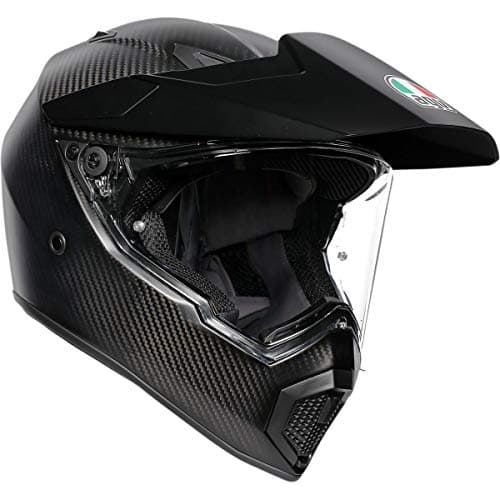
4. AGV AX9 - the convertible carbon, for riders who want one helmet for everything
The AX9 is the most versatile helmet on this page. A carbon/aramid/fiberglass shell at a published ~1,510 g with DOT and ECE 22.06, and it genuinely converts: peak on or off, shield on or off, goggles or not. That makes it a road helmet, an adventure helmet and an off-road helmet depending on how you assemble it, at a weight that embarrasses most single-purpose ADV lids.
If you own one bike and ride it everywhere, the flexibility is worth more than a specialist shell's last few grams. Detail in the AGV AX9 review.
The honest cons. Convertibility costs money - it is the second most expensive helmet here and the same weight as the much cheaper RPHA 1N. Never SHARP-tested. The AGV fit caveat applies again: snug, intermediate-oval. And in practice most riders pick one configuration and leave it that way, which means paying for parts that live in a drawer.
Who should skip it: anyone who already knows what kind of riding they do. Buy the specialist - the Krios Pro for ADV, the K6 S for road - and spend the difference on a second shield.
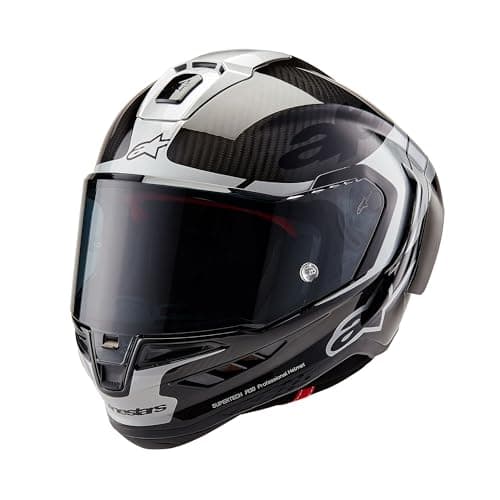
5. Alpinestars Supertech R10 - the halo pick, with published margins
The R10 is the most heavily documented helmet in our catalog and the most expensive. A multi-layer carbon shell over an eight-piece multi-density EPS liner, at a published ~1,540 g in size M, with ECE 22.06 and FIM homologation. What sets it apart is that Alpinestars publishes how far past the standard it tested: it states the helmet exceeds the ECE 22.06 linear impact limit by 37% and the rotational limit by 65%, figures developed through its MotoGP program. Almost no helmet maker quantifies that.
Context on the brand's full range is in are Alpinestars helmets good?
The honest cons. It is a race helmet - no drop-down sun visor, no touring comfort agenda - and it costs more than twice the K6 S while being 285 g heavier. For a US buyer there is a specific trap: Alpinestars sells the R10 in both ECE06/DOT and ECE06/FIM builds depending on the SKU, and a marketplace listing does not always say which is in the box, so we mark DOT unverified on it - confirm the label if you need DOT for road legality. Never SHARP-tested.
Who should skip it: anyone buying one helmet for commuting and touring. The R10 earns its place on a track day and in a race paddock; on the road it is a lot of money for a helmet that is heavier than the thing winning this page.
Is carbon actually worth it?
Honestly: sometimes, and less often than the price difference suggests. What carbon reliably buys is mass, and mass matters in two places - neck fatigue over a long day, and the rotational energy a crash has to work with. The spread on this page is 1,255 g to ~1,540 g, which is real but narrower than the price spread by a long way.
What carbon does not buy:
- Quiet. A light stiff shell transmits more noise, not less. The quietest helmets we rate are heavier touring shells - see quietest motorcycle helmets.
- A certification. Two helmets on this page have no SHARP data at all and one has DOT marked unverified. Meanwhile a $200 composite can carry ECE 22.06 - which is exactly what the winner of our helmets under $200 page does.
- Fit. The most protective helmet is the one shaped like your head. No shell material compensates for the wrong shape, and the brand with the lightest shell here is also the one with the narrowest fit.
If you want the full material comparison rather than a shopping list, helmet shell materials explained sets carbon against composite and thermoplastic directly.
The verdict
Buy the AGV K6 S.It is the lightest helmet we rate at 1,255 g, it carries DOT and ECE 22.06, it holds the only SHARP 5/5 in our catalog, and it is near the bottom of this page's price range. If your head is intermediate-oval, stop here.
Buy the Klim Krios Pro if your riding involves a peak - full carbon at 1,450 g is the ADV benchmark. Buy the HJC RPHA 1N if you want the cheapest real carbon and the strongest certification list for the money, FIM included. Buy the AGV AX9 if one helmet genuinely has to do road, adventure and dirt. And the Supertech R10 if you are kitting out for track days and want the most documented shell on the market.