The best motorcycle helmet under $200 is the HJC RPHA 12, because it is the only helmet at this price that carries genuine DOT and ECE 22.06 - and it is the lightest shell on this page while doing it. That is unusual. Most of what sells under $200 carries the US legal minimum and nothing else, so finding the current independently-tested standard down here is the whole reason this page exists. Who this is for: a first helmet, a spare, a beater for commuting, or anyone who refuses to accept that a real certification requires $500.
A note on how to read the prices. We do not put dollar figures in prose, because they go stale and a stale number is worse than no number - the buy module on each pick carries the live price pulled from Amazon. These four were all under $200 when this page was built, but one of them sits within a few dollars of the line, so treat the card as authoritative and the headline as the bracket we shopped in. We have not worn or crash-tested any of them; what we have done is read what each maker will commit to in writing.
How we ranked four helmets under $200
The criteria, in this order:
- A named certification, and the revision. This is the whole ballgame under $200. DOT is self-certified by the manufacturer - nobody independent tests it before sale. ECE 22.06 is an independently lab-tested type approval that added an oblique rotational-impact test and far more impact points. A helmet with both is in a different class from one with DOT alone, and at this price only one of these four has both. Detail in DOT vs ECE vs Snell vs SHARP.
- Coverage for the money. A chin bar covers the most frequently struck part of a helmet. Under $200 you can have a full-face, so a full-face is the default answer unless you have decided otherwise on purpose.
- Published weight, in a stated size. Cheap helmets are usually heavy helmets, because polycarbonate is cheap and composite is not. The spread here is over 200 grams, which you feel on hour three.
- What is actually in the box. At this price a Pinlock-ready shield or an included photochromic visor is worth real money, because buying those separately can cost a third of the helmet.
- Shell and EPS sizing. How many shells the maker tools, rather than how many sizes it sells. One shell padded out across six sizes fits the middle well and the ends badly.
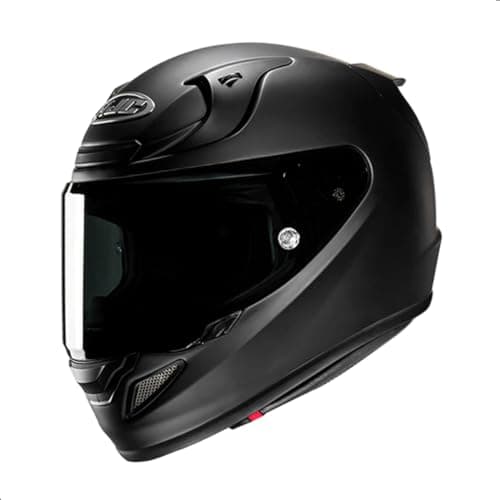
1. HJC RPHA 12 - the only genuine ECE 22.06 helmet here
The RPHA 12 is the reason this page has a clear winner instead of a shrug. It carries DOT and ECE 22.06, which means it has been through the oblique rotational test on an independent lab's rig - at a price where that essentially does not happen. The shell is HJC's PIM EVO composite at a published ~1,474 g, making it the lightest helmet on this page by roughly 150 grams, and it ships Pinlock-ready for the HJ-42 insert.
Put plainly: this is a helmet with a flagship-brand certification and a mid-weight composite shell, sitting at the price of a polycarbonate beater. We go deeper in the HJC RPHA 12 review.
The honest cons. It is the most expensive helmet on this page and the one closest to the $200 line, so a modest price move puts it over - check the card. There is no drop-down sun visor, which is the feature budget buyers most often assume they are getting; you manage sun with the shield. HJC has never submitted it to SHARP, so there is no independent star rating to go with the certification. And the Pinlock insert itself is a separate purchase - the shield is merely prepared for one.
Who should skip it: anyone who wants an internal sun visor at this price. That is a real want, and the Bell below has a photochromic shield in the box instead, which solves the same problem a different way.
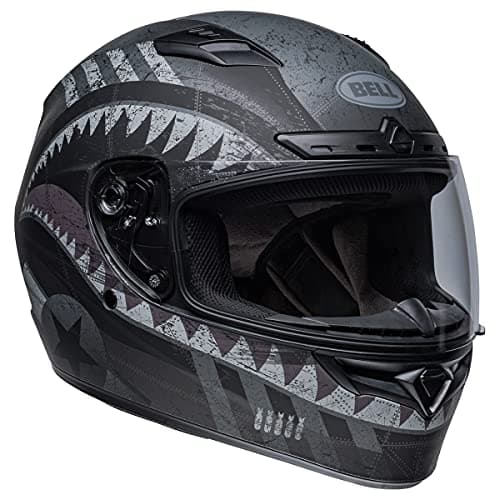
2. Bell Qualifier DLX MIPS - the budget pick, and the one with the shield included
This is the cheapest full-face on the page and the best-equipped for the money. It carries DOT plus a MIPS rotational-management layer, and it comes with a photochromic (transition) shield in the box- a shield that darkens in sunlight and clears at night. Bought separately, that shield is a serious fraction of this helmet's price, so its inclusion is the single best value item on this page.
MIPS is worth having and worth understanding: it is a low-friction layer that lets the shell rotate slightly on your head, and it is a component rather than a certification. It does not make this helmet ECE 22.06. We lay that distinction out in MIPS explained.
The honest cons. Bell lists ECE for this model but does not publish the 22.05-or-22.06 revision for the US unit, so we do not assert it - read the label on the helmet you receive. The shell is polycarbonate at a published ~1,626 g, which is 150 grams heavier than the RPHA 12 and the usual cost of a cheap shell. And DOT on its own is self-certified, so the MIPS layer is doing more for you here than the paperwork is.
Who should skip it: anyone buying on the certification code. The RPHA 12 above it is independently certified for a modest amount more, and on this site that upgrade beats a feature list.
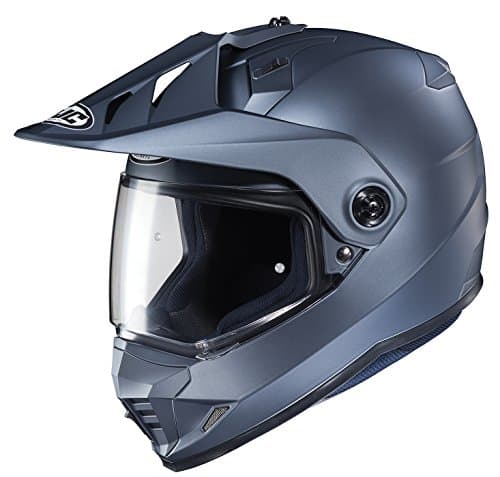
3. HJC DS-X1 - the dual-sport option, if your riding leaves pavement
If some of your miles are dirt, a road full-face is the wrong shape and this is the cheapest genuinely convertible dual-sport helmet we rate. The DS-X1 takes a peak and a face shield at the same time, runs goggles if you prefer, and ships with a Pinlock-prepared HJ-27 shield. Published weight is ~1,673 g (LG-2XL) in a polycarbonate composite shell. Full write-up in the HJC DS-X1 review.
The honest cons. It is DOT only - no ECE revision is published for it, so it has not been through an independent lab. It is the heaviest helmet on this page. And the peak that makes it useful off-road is also what makes it lift and roar at highway speed, which is the standing trade-off of the format - we go through it in dual-sport vs adventure helmets.
Who should skip it: riders who never leave pavement. You would be carrying the aerodynamic penalty of a peak for nothing, and the RPHA 12 is lighter, quieter, better certified and about the same money.
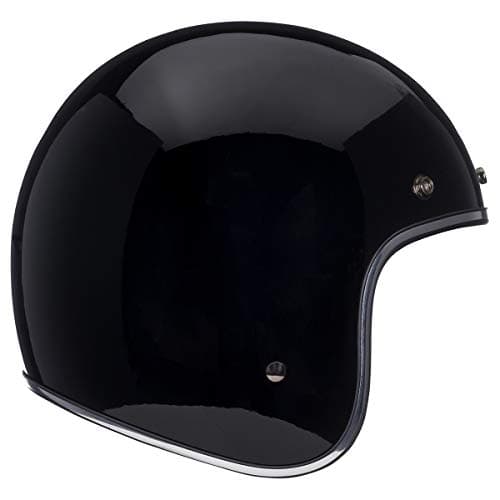
4. Bell Custom 500 - the open-face classic, with the trade stated plainly
The Custom 500 earns its place because it is genuinely well made rather than merely cheap: five separate shell and EPS sizes, which is better fit scaling than anything else on this page and rare at any price, a thin-profile composite shell that sits low rather than ballooning, and an integrated 5-snap pattern that accepts the whole aftermarket of bubble shields, flat shields and peaks. The Bell Custom 500 review has the detail.
The honest cons, and the first one is large. There is no chin bar, so the most frequently struck region of a helmet is simply not covered, and no open-face can engineer around that. On certification it is sold in the US as a DOT helmet, and retail listings disagree with each other about ECE - some say 22.05, some 22.06 - so we assert none. There is also no shield, no seal and no sun visor in the box, so eye protection and wind noise are on you. It is widely reported to run small.
Who should skip it: most people, honestly, and certainly anyone riding highway miles. It is here because a certified, well-sized open-face is a legitimate choice for slow urban riding and because people shopping this bracket are going to look at one anyway - better that they look at a good one. The reasoning is in full-face vs open-face helmets.
What $200 does not buy you
Three things are missing from this whole bracket, and a page that does not say so is selling you something:
- A drop-down internal sun visor. Not one of these four has one. It is the feature budget shoppers most consistently expect and it starts appearing a bracket or two up - the sun visor roundup is where that lives. The Bell's included photochromic shield is the workaround at this price.
- A light shell. Only the RPHA 12 is genuinely light here. Carbon and premium composites start well above this bracket, which is the gap our carbon fiber roundup covers.
- Independent test data. None of these four has a SHARP star rating. SHARP buys and tests helmets itself, and its coverage skews to models sold in volume in the UK. If a published star rating matters to you, the helmets that have one are in the safest helmets we can document.
What you can have under $200, and should insist on, is a real certification. The RPHA 12 proves it is available down here, which means accepting DOT-only is a choice rather than a constraint.
The verdict
Buy the HJC RPHA 12. Genuine DOT and ECE 22.06, the lightest shell on the page, Pinlock-ready, and a flagship-brand composite at a budget price. Under $200 it is the only pick here that has been independently tested, and that outweighs every feature on the other three.
Buy the Bell Qualifier DLX MIPS if the RPHA 12 has drifted over your ceiling, or if you want the photochromic shield included and the MIPS layer. It is the cheapest full-face here and the best-equipped. Buy the HJC DS-X1 only if you genuinely ride dirt, and the Custom 500 only if you have consciously accepted riding without a chin bar.
And whichever you pick, spend a little of what you saved on filtered earplugs. Every helmet in this bracket is louder than a touring shell, sustained wind noise is a hearing-damage issue rather than a comfort one, and a set costs a rounding error against the helmet.