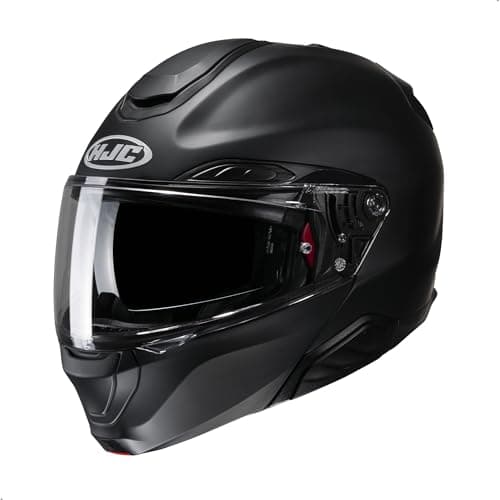
The best modular helmet for touring is the HJC RPHA 91: ECE 22.06 with a P/J dual homologation, a drop-down sun visor, and the only independent SHARP rating - 4 out of 5 - on any flip-front we rate. The budget pick is the Scorpion EXO-GT930 Transformer, which costs about half as much and still gives you P/J homologation and a sun visor. Who this page is for: a rider planning long days - 300 miles and up, with fuel stops, intercom conversations and low evening sun - who wants the flip-front chosen on touring criteria rather than on price or badge.
Touring asks different questions of a helmet than commuting does. A commuter wants the chin bar up at traffic lights and a shell that fits in a pannier. A tourer wants sealing (rain at 70 mph finds every seam), quiet (noise is fatigue, and fatigue is the actual risk on hour six), a sun visor (so a shield swap is not a roadside job), and comms that work without a mount that whistles. That is the order we have ranked on, with certification as the floor rather than a tiebreak.
On prices: we do not print dollar figures in prose, because they go stale and a stale number is worse than none. Each pick's buy module carries the live price pulled from the Amazon product API with the date it was checked, and that card is the authoritative figure. Qualitatively the spread below is wide - the cheapest pick is under a third of the most expensive - and the ranking does not follow the price. We have not worn or crash-tested any of these helmets. What we have done is read what each maker publishes and check the independent test data where any exists.
How this page differs from our other modular roundups
Worth being direct about, because we have three. Best commuter modular helmets ranks on ease of use in traffic and value. Best Bluetooth modular helmets ranks on comms integration, including helmets with the electronics built in. This page ranks on sealing, noise and all-day wear, which is why two helmets appear here that neither of those lists carries - the superseded Shoei Neotec II and the convertible Scorpion - and why the order differs. If you want the format judged purely on a hard price cap, that is best modular helmets under $500.
How we ranked five touring modulars
The criteria, in this order:
- Documented certification, with P/J where a maker publishes it. P/J means the helmet was tested and approved both closed and open - the only honest basis for riding with the chin bar up. ECE 22.06 is the independently lab-tested revision with the oblique rotational test; see ECE 22.06 explained.
- Independent test data, where any exists. SHARP buys helmets anonymously and runs 32 impacts across seven samples. Exactly one flip-front in our catalog has been through it.
- Sealing and noise. Shield seal, chin-curtain and the second seal around the chin bar. This is the spec no maker publishes a number for and every tourer feels.
- Sun visor and comms readiness, then published weight in a stated size - because a flip-front already carries 150 to 300 grams of mechanism before you add anything.
1. HJC RPHA 91 - the only flip-front with independent stars
The RPHA 91 is the touring modular we recommend most often, and the reason is evidence rather than feel. It holds ECE 22.06 with a P/J dual homologation and it is the only modular in our catalog with an independent SHARP rating - 4 out of 5. PIM EVO composite shell at a published ~1,740 g, a drop-down sun visor, a Pinlock-ready shield and a shell designed around HJC's own Smart comms units. It is also noticeably quieter than its price suggests, which is why it heads our quietest helmets list. Who it is for: a tourer who wants the best-documented flip-front and does not want to pay flagship money for the privilege.
Detail in the HJC RPHA 91 review, the certification breakdown in its safety rating, and the comparison most touring buyers actually need in Neotec 3 vs RPHA 91.
The honest cons.At ~1,740 g it is heavier than the LS2 below by nearly 200 grams. Our catalog records ECE 22.06 P/J but does not record a DOT claim alongside it on the same build, so check the strap label on the unit you receive if DOT matters to you legally. The sun visor eats internal space, which glasses wearers should check. And the chin-bar latch is firmer than Shoei's - secure, but less pleasant in thick winter gloves.
Who should skip it: riders who want the quietest possible helmet regardless of cost - that is the Shoei below - and weight-sensitive riders, who should read best lightweight helmets.
2. Shoei Neotec 3 - the quietest flip-front money can buy
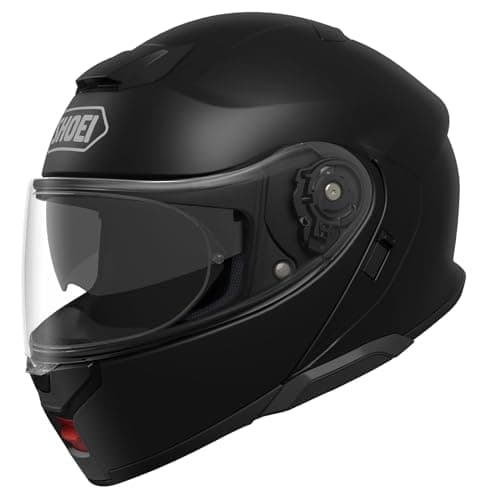
If your touring is measured in weeks rather than weekends, this is the helmet. The Neotec 3 is an AIM composite flip-front at a published ~1,880 gwith a redesigned chin-bar seal, a drop-down sun visor and native support for Shoei's SRL comms - and it is the quietest modular we rate, by a clear margin. On a 400-mile day that is not a luxury: noise is the thing that makes hour six feel like work, and Shoei has spent two generations engineering it out of this shell. Who it is for: a long-distance tourer who talks on an intercom all day and will pay for silence.
Full write-up in the Shoei Neotec 3 review, the certification picture in the Neotec 3 safety rating, and the brand context in the best Shoei helmets.
The honest cons. The US build is DOT only - no ECE 22.06, no Snell, and no P/J dual homologation recorded on our card - which means the cheaper HJC above beats it outright on paperwork and holds an independent SHARP rating the Shoei does not have. It is the heaviest helmet on this page at ~1,880 g and the most expensive by a wide margin. You are buying refinement, not certification, and we are not going to pretend otherwise.
Who should skip it: anyone whose priority is documented safety per dollar. The RPHA 91 is that helmet, at a fraction of the price.
3. LS2 Advant X - the light one, and the one that packs
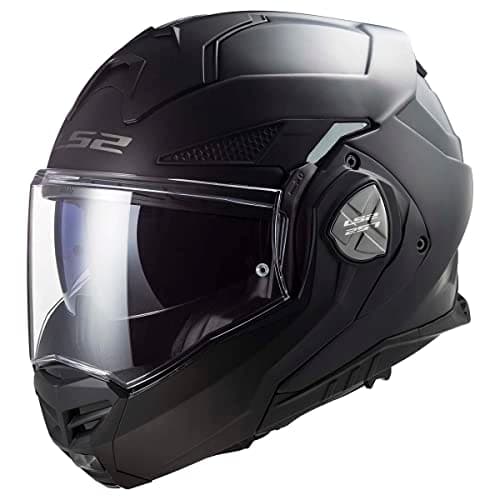
The Advant X is the pick for riders who notice weight by evening: a forged carbon shell at a published ~1,550 g, holding DOT plus ECE 22.06 with P/J, with a drop-down sun visor and a channel built around Cardo units. It is roughly 190 grams lighter than any other modular we rate, and on a touring helmet that difference compounds across a day of mirror checks and shoulder turns. Who it is for: a tourer who wants the current approval and the lowest weight in the format, and is happy to trade some refinement for both.
Detail in the LS2 Advant X review and the flagship question in Advant X vs Neotec 3.
The honest cons. Never SHARP-tested.It does not seal or quiet like the two helmets above it - carbon is stiff and light, not quiet, and the shield mechanism is the weakest part of the helmet. LS2's dealer network and parts availability are thinner than Shoei's or HJC's, which matters on a helmet with a mechanism you may need parts for in five years.
Who should skip it: riders for whom noise is the problem. The whole point of the two picks above is that they are better sealed.
4. Shoei Neotec II - the value route into Shoei touring refinement
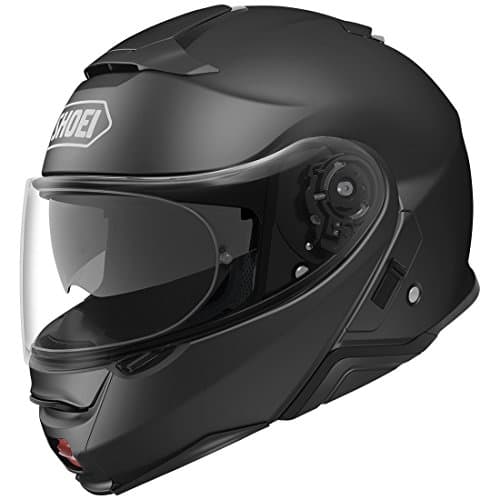
The Neotec II is the previous generation of the helmet at position two, and it earns a place here for one honest reason: it is substantially cheaper while doing most of the same job - AIM composite flip-front, published ~1,750 g(lighter than its own replacement), sun visor, and SRL2 comms support. If the Neotec 3's price is the only thing standing between you and Shoei sealing, this is the way in. Who it is for: a tourer who wants Shoei quiet and is content to be one generation behind on the chin-bar seal.
The generational differences are laid out in Neotec II vs Neotec 3.
The honest cons. It is a superseded model: stock, sizes and colours thin out, parts get harder to source over time, and the price can drift upward as supply dries up rather than down. The US build is DOT only, with no ECE 22.06 and no P/J on our card. And the Neotec 3 genuinely improved the chin-bar sealing and the comms integration - that is not marketing, it is the reason this helmet was replaced.
Who should skip it: anyone keeping a helmet five years, and anyone buying on certification. The RPHA 91 costs less and out-certifies it.
5. Scorpion EXO-GT930 Transformer - the budget pick with real homologation
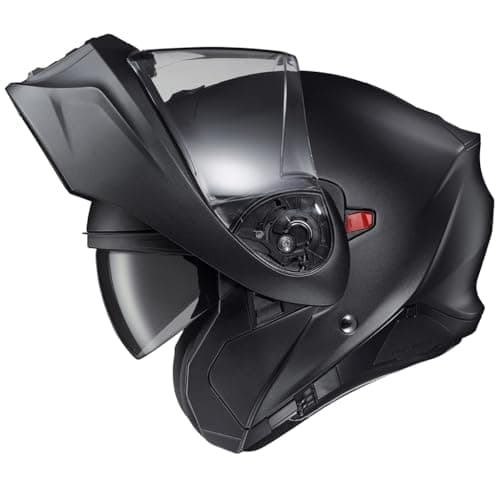
This is the budget pick: around half the price of the winner, and it still carries a P/J dual homologation - which is more than two of the pricier helmets above it can say. DOT plus ECE 22.05 with P/J, polycarbonate shell at a published ~1,890 g (XL), a drop-down sun visor, and a chin bar that comes off entirely so the helmet converts to a proper open-face for hot days. Who it is for: a tourer on a budget, or a rider whose trips run from cold mornings to very hot afternoons and wants one helmet for both.
Detail in the Scorpion EXO-GT930 review, and the in-house comparison in EXO-AT960 vs EXO-GT930.
The honest cons. It is ECE 22.05, not 22.06 - the older revision, without the oblique rotational test, and that is why it ranks last here despite the P/J. It is the heaviest published weight in our modular catalog at ~1,890 g in XL. Never SHARP-tested. Polycarbonate is the cheapest shell material on this page, and the convertible design adds seams - so it is the noisiest helmet here, which is the one thing a touring helmet most needs not to be.
Who should skip it: anyone doing genuinely long highway days. Noise is the whole argument of this page, and this is where the budget bites.
The one thing that decides a touring helmet, and no maker publishes it
Noise. There is no standardised figure for it - makers quote nothing, and the independent work that does exist measures specific helmets on specific bikes with specific screens, so it does not transfer. What is consistent is where the noise comes from: the shield seal, the chin curtain, the neck roll and the air coming up from your collar, not the shell shape people assume. A flip-front has one extra seal to get wrong, which is why the format runs noisier than a comparable full-face and why the two best-sealed picks here are the two we rank highest.
Two practical notes. Earplugs do more for fatigue than any helmet upgrade on this page, and they are the cheapest change you can make - and a screen that puts turbulent air at helmet height will make a quiet helmet loud. We go through both in how to make your helmet quieter.
The verdict
Buy the HJC RPHA 91. ECE 22.06 with P/J, an independent SHARP 4 out of 5, a sun visor and genuinely good sealing, at a price well below the flagships - it is the best touring modular on documented evidence, and it is not close.
Buy the Shoei Neotec 3 if silence is worth the money and you have accepted that the US build is a DOT one. Buy the LS2 Advant X if weight is what you notice. Buy the Shoei Neotec II if you want Shoei sealing for less. Buy the Scorpion EXO-GT930 if the budget is fixed and you want a real P/J approval with it.