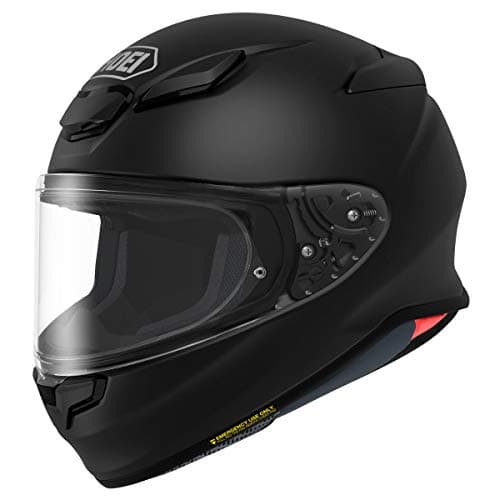
The best Shoei helmet is the RF-1400: DOT plus Snell M2025 in a multi-ply AIM+ composite shell at a published ~1,385 g, and its European twin the NXR2 holds a perfect 5-out-of-5 SHARP rating. It is also the cheapest Shoei we rate, which makes it the budget pick as well as the winner - an unusual and genuinely useful outcome. Who this page is for: a rider who has decided on the brand and now needs to pick the model, with the US-versus-Europe certification difference spelled out rather than glossed over.
Shoei sells five helmets we can document on Amazon.com, and they do not compete with each other so much as divide the job: one sport-touring full-face, one touring full-face with a sun visor, two generations of flagship modular, and one adventure lid. Pick by what you ride and the ranking below largely resolves itself.
On prices: we do not print dollar figures in prose, because they go stale and a stale number is worse than none. Each pick's buy module carries the live price pulled from the Amazon product API, stamped with the date it was checked - that card is the authoritative figure. Qualitatively, Shoei has no cheap helmets: the entry point below is roughly what a well-certified mid-range rival costs at its ceiling. We have not worn or crash-tested any of these. What we have done is read Shoei's published homologation and the independent test data where it exists.
The Shoei thing you need to know first: US builds are not European builds
This is the most important fact on the page and almost nobody states it plainly. Every Shoei in our catalog is a DOT or a DOT-plus-Snell build in the US market, and none of them is ECE 22.06. The European versions frequently are 22.06 - and three of them are sold under different model names, so the reviews you have read may not be about the helmet you can buy here. The RF-1400 is the NXR2 in Europe; the Hornet X2 is the Hornet ADV.
That matters in both directions. It means a SHARP star rating published against the NXR2 belongs to the European helmet, and we never transfer a star rating across differently homologated builds - we say which build earned it. It also means that if what you actually wanted was the current independently lab-tested European approval with the oblique rotational test, a US Shoei flagship does not give you that, and several cheaper helmets do. The argument is in best ECE 22.06 helmets; the other side of it is in best Snell-certified helmets, where two of the five picks are Shoeis.
How we ranked five Shoeis
Documented certification and its revision first. Then independent test data where any exists. Then published weight in a stated size, because Shoei's own range spans nearly 500 grams. Then sealing and noise, which is the thing Shoei is genuinely best at and the reason people pay. Price enters last, as price for the certification rather than price alone.
1. Shoei RF-1400 - the best Shoei, and the cheapest one
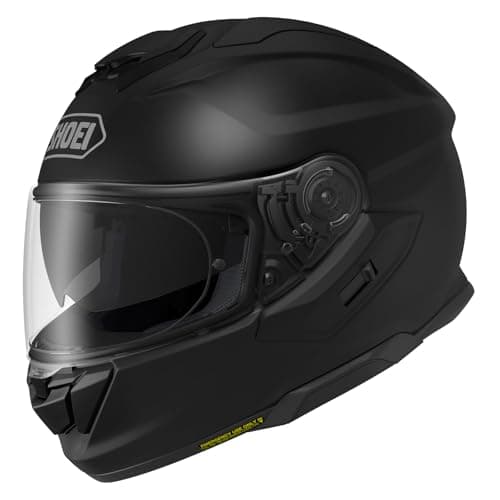
The RF-1400 wins on every axis we can measure. DOT plus Snell M2025, the lightest Shoei at a published ~1,385 g, a multi-ply AIM+ composite shell, and a European twin with a 5-out-of-5 SHARP rating - the top result SHARP awards. What you notice riding it is the CWR shield seal: it shuts properly and stays shut, which drives both rain ingress and wind noise, and it is why the RF-1400 places near the top of our quietest helmets list despite having no sun visor to complicate the shell. Who it is for:a road rider who wants Shoei's best engineering without paying for a flip-front or a peak - commuting, sport-touring, track days.
The honest cons. The 5/5 SHARP score belongs to the European NXR2, not the US unit. The US RF-1400 is not ECE 22.06. There is no drop-down sun visor, so you commit to a shield tint or carry a spare. And Shoei's interior is intermediate-oval, so it is the wrong helmet for a round-oval head.
Who should skip it: commuters who want a sun visor - that is the GT-Air 3 below - and round-oval heads, who should read Shoei vs Arai before spending anything.
2. Shoei GT-Air 3 - the one to commute and tour in
The GT-Air 3 is the RF-1400's job plus the two things a daily rider actually asks for: a drop-down internal sun visorand a comms-ready shell with a channel for Shoei's own unit. AIM composite shell, published ~1,774 g, and the same obsessive attention to the shield seal that makes every Shoei quiet. Who it is for: a rider who faces low sun on the commute home, or who tours and does not want to swap shields at a gas station.
Full write-up in the Shoei GT-Air 3 review, and the pair question in GT-Air 3 vs RF-1400.
The honest cons. It is nearly 400 g heavier than the RF-1400, which is most of what the sun visor and the extra shell volume cost you. The US build is DOT only - no Snell, no ECE 22.06 - so on paperwork it is the weakest pick on this page despite costing more than the winner. And the sun visor eats internal space, so glasses wearers should check the fit.
Who should skip it: anyone buying on certification. The RF-1400 costs less and has Snell; the sun visor roundup has ECE 22.06 options for less again.
3. Shoei Neotec 3 - the quiet flagship modular
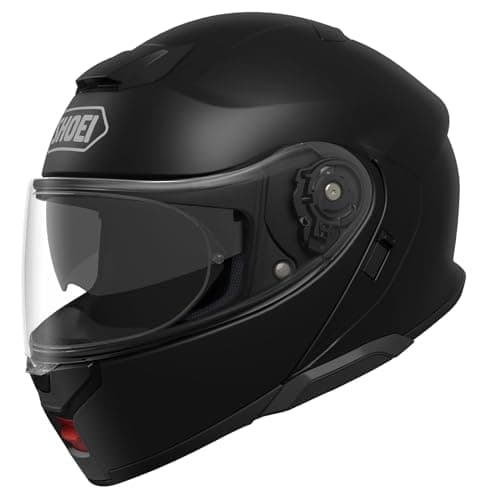
The Neotec 3 is the helmet Shoei built for people who ride all day and talk while doing it: an AIM composite flip-front at a published ~1,880 gwith a drop-down sun visor, a redesigned chin-bar seal and native support for Shoei's SRL comms. It is the quietest modular we rate, and on a long touring day that is not a luxury - noise is fatigue. Who it is for: a tourer who wants to lift the chin bar at a toll booth and hear their own intercom at 75 mph.
Detail in the Shoei Neotec 3 review, the certification picture in the Neotec 3 safety rating, and the head-to-head that most buyers actually need in Neotec 3 vs HJC RPHA 91.
The honest cons. It is the most expensive helmet on this page by a wide margin and the heaviest. The US build is DOT only, with no ECE 22.06 and no P/J dual homologation recorded on our card - which means the cheaper HJC RPHA 91 beats it on paperwork and holds an independent SHARP 4/5 the Shoei does not have. You are buying refinement, not certification.
Who should skip it: anyone whose priority is documented safety per dollar. That is the RPHA 91, and we say so on its page.
4. Shoei Hornet X2 - the Snell adventure helmet that tours
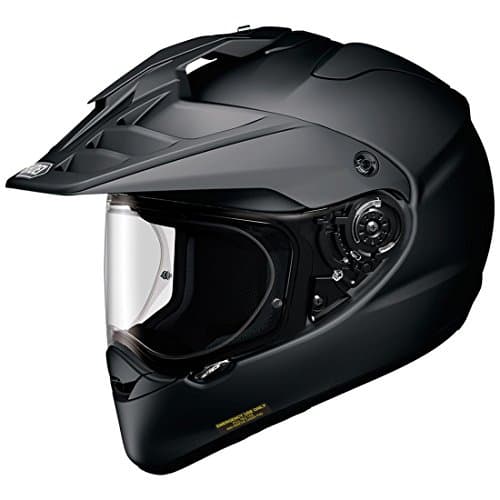
If your riding is adventure-shaped but mostly on sealed roads, this is Shoei's answer and a genuinely unusual helmet: a DOT plus Snell ADV lid in AIM+ composite at a published ~1,778 g whose peak is shaped to work with the shell rather than fight it. Most peaked helmets roar and tug at highway speed. This one behaves much more like a touring helmet. Who it is for: an ADV rider whose mileage is 80 percent pavement and who wants Snell on a peak.
Write-up in the Shoei Hornet X2 review.
The honest cons. It has never been SHARP-tested in any market, so there is no independent star rating to point at. The US build is not ECE 22.06. It generates more peak lift off-road than the newer Arai XD-5, and at ~1,778 g that weight sits further from your head's center of gravity than it would on a road helmet.
Who should skip it: riders genuinely splitting their miles 50/50 with dirt - dual-sport vs adventure helmets lays out why a lighter dirt-biased lid serves you better.
5. Shoei Neotec II - the value route into the flagship modular
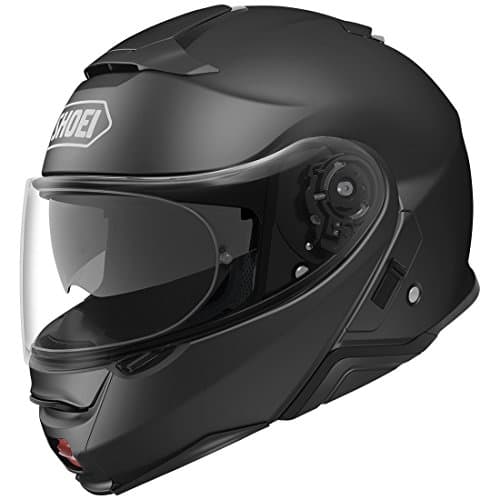
The Neotec II is the previous generation of the helmet at position three, and it is on this page for one honest reason: it is substantially cheaper than the Neotec 3 while doing most of the same job - AIM composite flip-front, published ~1,750 g(lighter than its replacement), sun visor, and SRL2 comms support. If the Neotec 3's price is the only thing stopping you, this is the pick. Who it is for: a tourer who wants a Shoei modular and is happy to be one generation behind on the chin-bar seal.
The generational differences are worked through in Neotec II vs Neotec 3.
The honest cons. It is a superseded model, so stock, sizes and colors thin out and the price is whatever the channel has left - it can drift upward as supply dries up, not just down. The US build is DOT only. The Neotec 3 genuinely improved the chin-bar sealing and the comms integration, and on a page about the best Shoeis that is why this one ranks last.
Who should skip it: anyone who will keep a helmet five years. Buy the current generation, or buy the cheaper HJC with better paperwork.
Are Shoei helmets worth the money?
Honest answer: yes for sealing and finish, no as a shortcut to certification. What Shoei is demonstrably best at is the boring, hard engineering - shield seals that close properly, shells that are quiet, liners that survive a decade of sweat, and five shell sizes where rivals use three, which means your size is shelled rather than padded. That is real and it is what the money buys.
What the money does not buy in the US is the current European approval. Two of the five helmets here carry Snell on top of DOT; the other three are DOT only, and none is ECE 22.06. A $250 Bell MX-9 Adventure carries DOT, ECE 22.06, MIPS and an independent SHARP 4/5. Both facts are true at once, and which one matters is your call - that is the whole argument of are expensive helmets worth it.
The verdict
Buy the RF-1400. It is the lightest Shoei, the cheapest Shoei, the only one with a 5/5 SHARP result in its family, and the quietest full-face in the range. For most riders choosing a Shoei, the decision ends there.
Buy the GT-Air 3 if you need a sun visor. Buy the Neotec 3 if you want the quietest flip-front money can buy and have accepted that you are paying for refinement rather than paperwork. Buy the Hornet X2 for Snell on a peak. Buy the Neotec II if the Neotec 3 is simply out of reach.
And if, having read all of that, the certification is what you came for - look outside the brand. The matched alternatives are in alternatives to Shoei, and the full list of documented 22.06 helmets is in best ECE 22.06 helmets.