The lightest motorcycle helmet we can document with a face shield is the AGV K6 S at a published ~1,255 g - and it is also the only helmet in our catalog holding both ECE 22.06 and a perfect 5-out-of-5 SHARP rating, so nothing was traded away to get there. The budget pick is the HJC RPHA 12 at a published ~1,474 g: the lightest helmet in our catalog under $200, and lighter than several helmets costing three times as much. Who this page is for: a rider whose neck or shoulders complain after two hours, or anyone who has realised that grams are the one helmet spec you feel every single ride.
Why weight matters more than it sounds. A helmet does not just sit on your head, it levers against your neck every time you check a mirror, and the force grows with airflow. Between the lightest and heaviest full-face in our catalog there is over 600 grams - about the weight of a full water bottle, carried at the end of a lever, for every hour you ride. It shows up as neck ache, as shoulder tension, and as the reason riders stop scanning properly late in a day.
What we rank on, and what we refuse to do.Every number below is the weight the manufacturer or a major retailer publishes, in the size they state. We do not put helmets on a scale - we have no lab - and we do not average a "typical" figure across sizes, because shell-size steps move weight by 50-100 g and an unstated size makes a number meaningless. Where a maker publishes pounds rather than grams, we say so. Where a maker publishes no weight at all, the helmet is not on this page, however light it feels in a shop.
On prices: we do not print dollar figures in prose, because they go stale. Each pick's buy module carries the live price pulled from the Amazon product API with the date it was checked, and that card is the authoritative figure. Light is not the same as expensive here - the spread below is wide in both directions.
Why carbon is not the whole answer
The shortcut everyone reaches for is "buy carbon". It is a decent heuristic and a bad rule. Shell material sets the floor, but the EPS liner, the number of shell sizes, the shield mechanism, the vent hardware and whether there is a drop-down sun visor all move the final number, sometimes by more than the shell does.
Two concrete illustrations from the list below. The HJC RPHA 12 is not carbon - it is a PIM EVO composite - and at ~1,474 g it undercuts carbon helmets costing three times more. And an internal sun visor is reliably worth 150-250 g: the lightest helmets here have none, and the heaviest pick is the one flip-front that does. If you want the material argument in full, that is helmet shell materials explained; if you want to shop carbon specifically, best carbon fiber helmets ranks on material rather than on grams, and the two lists deliberately disagree.
How we ranked six lightweight helmets
Published grams in a stated size first - that is the subject of the page. Then documented certification, which breaks ties and disqualifies anything that got light by giving up the standard. Then format, so the list answers more than one buyer: the helmets below are the lightest we can document in road, off-road, Snell, adventure, budget and modular respectively, rather than six variations on one shelf.
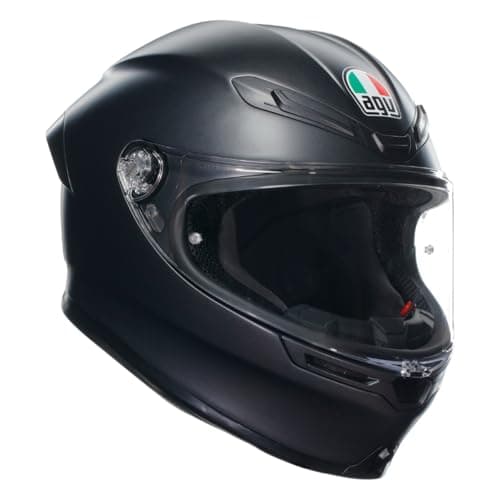
1. AGV K6 S - 1,255 g, and nothing given up to get there
A published ~1,255 g in a carbon-aramid shell makes the K6 S the lightest helmet in our catalog with a face shield, and the remarkable part is the paperwork that comes with it: ECE 22.06 plus a 5-out-of-5 SHARP rating, the top score SHARP awards. Light helmets usually cost you something - a certification, a shell size, a price bracket. This one does not. Who it is for: a road rider who wants the lightest credible helmet on the market and will accept a close, race-derived fit.
More in the AGV K6 S review and the K6 S safety rating.
The honest cons. Intermediate-oval interior cut close at the cheeks, so wrong for a round-oval head. No sun visor - part of why it is this light. And the race-derived ventilation is not the quietest arrangement at commuting speeds.
Who should skip it: round-oval heads, and commuters who need a sun visor - accept the grams and read the sun visor roundup instead.
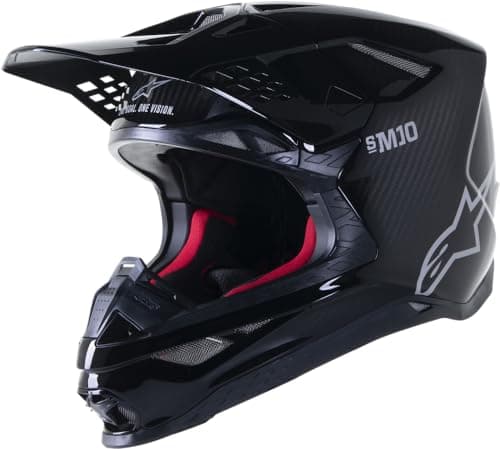
2. Alpinestars Supertech M10 - the lightest shell in the catalog, with a condition
On raw grams this is the lightest thing we rate: a published ~1,260 g for the ECE build (around ~1,360 g for the DOT build in size M) in a 3K carbon and aramid shell, with ECE 22.06 and a MIPS layer and 28 vents. The condition is that it is an off-road helmet - there is no face shield, so you supply goggles, and the long chin bar and peak are shaped for roost and dirt speeds. Who it is for: a dual-sport or off-road rider who wants the lightest certified lid available and already owns goggles.
Our MIPS explainer uses it as one of its four worked examples, and the brand picture is in are Alpinestars helmets good.
The honest cons. The two published weights are 100 g apart depending on homologation, and we do not know which build a given listing ships - so treat ~1,260 g as the floor, not a promise. DOT is marked unverified on our card because Alpinestars sells this helmet in both ECE-only and ECE/DOT versions and we will not assert a US homologation we cannot source. Never SHARP-tested. And goggles plus a peak is a noisy, draughty arrangement above about 60 mph.
Who should skip it: road riders. You want a shield, and a peak at highway speed is a lever on your neck that undoes the weight saving.
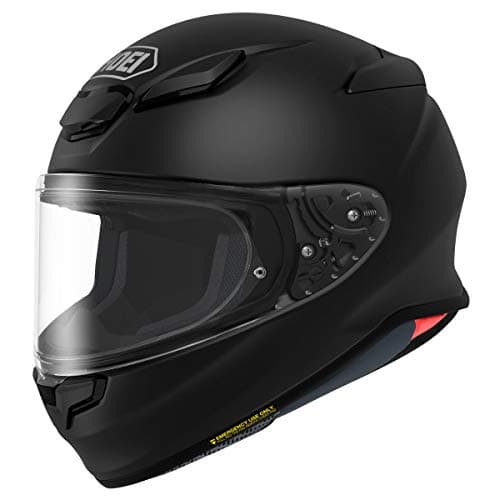
3. Shoei RF-1400 - 1,385 g, and the lightest Snell build
A published ~1,385 g in a multi-ply AIM+ composite shell, with DOT plus Snell M2025 and a European twin holding a 5-out-of-5 SHARP rating. That makes it the lightest helmet we can document carrying Snell, and Snell builds are usually the heavy end of the market because the standard rewards stiffer shells. It is also exceptionally quiet for a helmet with no sun visor, which is the CWR shield seal doing its work. Who it is for: a rider who wants Snell without the usual weight penalty, and quiet with it.
Context in best Snell-certified helmets and the best Shoei helmets.
The honest cons. The 5/5 SHARP score belongs to the European NXR2, not the US unit, and the US RF-1400 is not ECE 22.06. No sun visor. Shoei's intermediate-oval interior will pinch a round-oval head. And it costs roughly two and a half times the budget pick below for 90 g less.
Who should skip it: anyone shopping on grams per dollar - that is the HJC below - and anyone who specifically wants ECE 22.06.
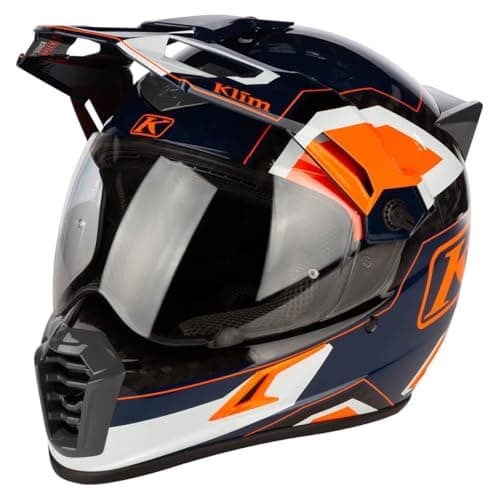
4. Klim Krios Pro - 1,450 g, the lightest adventure helmet
Adventure helmets carry a peak, a goggle channel and usually a convertible shell, and they are heavy for it - most of the ADV lids we rate are between 1,680 and 1,900 g. The Krios Pro is a published ~1,450 g in size L in a full carbon shell with a Koroyd energy-absorbing layer, holding DOT plus ECE 22.06. It is over 200 g lighter than the next ADV helmet in our catalog and that gap is the single biggest weight advantage on this page. Who it is for: an adventure rider doing long days who refuses to pay for them with their neck.
Full detail in the Klim Krios Pro review, and the weight comparison in Krios Pro vs Arai XD-5.
The honest cons. It is the most expensive pick here and it has never been SHARP-tested. Carbon does not make a helmet quiet, and a peak at highway speed is noisy whatever it weighs. The convertible hardware takes practice.
Who should skip it: riders who never leave pavement - a road full-face gives you more helmet per dollar and fewer grams again.
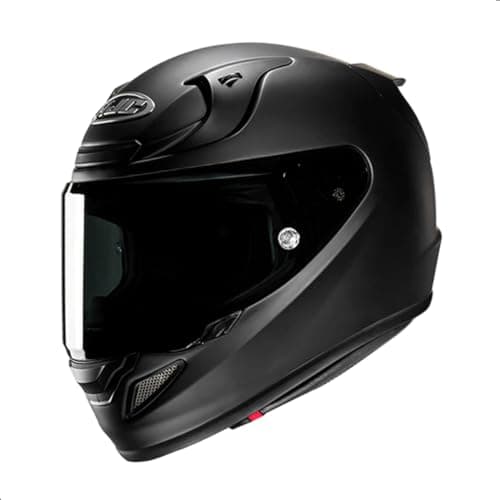
5. HJC RPHA 12 - the budget pick, 1,474 g, and not carbon
This is the budget pick: the lightest helmet in our catalog under $200. A published ~1,474 g in a PIM EVO composite shell - not carbon - with DOT plus ECE 22.06 and a Pinlock-ready HJ-42 shield. It is heavier than the AGV by about 220 g and lighter than plenty of helmets at three times the price, which makes it the best grams-per-dollar helmet we can document. Who it is for: a rider who wants a light, properly certified helmet and is not spending flagship money to get it.
More in the HJC RPHA 12 review. It also leads our under-$200 roundup.
The honest cons. Never SHARP-tested. No sun visor. The shield mechanism and liner are the cheapest-feeling parts of the helmet, and the price sits close enough to $200 that a modest move puts it over - treat the card as authoritative.
Who should skip it: nobody on a budget. If you can spend four times as much for 220 g, buy the AGV; if you cannot, this is not a consolation prize.
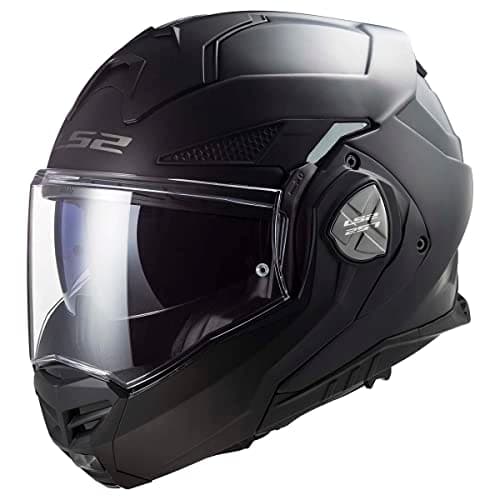
6. LS2 Advant X - 1,550 g, the lightest modular by a mile
Flip-fronts are the heavy format: a chin bar that lifts needs a hinge, a lock, a second seal and usually a sun visor, and most modulars we rate land between 1,720 and 1,890 g. The Advant X is a published ~1,550 g in a forged carbon shell with DOT plus ECE 22.06 and a P/J dual homologation - tested and legal both closed and open - plus a drop-down sun visor and a Cardo-ready channel. It is roughly 190 g lighter than the next modular in our catalog while holding the better certification. Who it is for: a tourer or commuter who wants a flip-front without the usual flip-front weight.
Detail in the LS2 Advant X review and the pair question in Advant X vs Shoei Neotec 3.
The honest cons. It is the heaviest helmet on this page - that is the format tax, not a flaw in the helmet. It has never been SHARP-tested, so the HJC RPHA 91 is the only modular we rate with independent stars, and that one is 190 g heavier. LS2 does not have the parts-availability record of Shoei or HJC.
Who should skip it: riders who want independent test data on a modular - are modular helmets safe works through what P/J does and does not prove.
The verdict
Buy the AGV K6 S. 1,255 g with ECE 22.06 and a SHARP 5/5 is the best weight-to-certification result available, and it is not a premium-flagship price.
Buy the HJC RPHA 12 if budget is the constraint - it is the lightest properly certified helmet under $200 and it is not carbon, which is the useful lesson of this page. Buy the Klim Krios Pro for adventure riding, the LS2 Advant X for a light flip-front, the Shoei RF-1400 if you want Snell, and the Alpinestars Supertech M10 if you ride dirt and already own goggles.
One last thing worth saying out loud: a light helmet that does not fit is worse than a heavy one that does, because every certification above was earned on a correctly fitted helmet. Start with how to measure your helmet size and head shapes explained before you shop on grams.