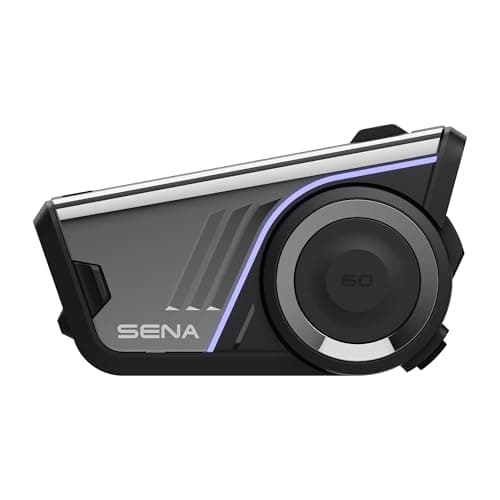
The best alternative to the Cardo Packtalk is the Sena 60S: Mesh 3.0 instead of Cardo DMC, Bluetooth 5.3, IPX7 sealing, second-generation Harman Kardon audio, and Sena Wave for conversation beyond radio range - which is the one thing no Cardo can do. The budget pick is the LEXIN B4FM, which claims multi-rider intercom for under a hundred dollars and is the cheapest honest answer on this page. Who this page is for: a rider who has priced a Packtalk, flinched, and wants to know what they would actually be giving up - or whose riding group runs Sena and needs the matching protocol.
First, what the Packtalk is genuinely best at, because a page that pretends otherwise is not worth reading. Cardo's DMC mesh is the most hands-off group intercom we have found: the network reorganises itself when riders drop out or rejoin and you never touch it. The magnetic Air Mount makes moving the unit between helmets a ten-second job. Voice control works well enough that you stop reaching for buttons. The JBL speakers and IP67 sealing are genuinely good hardware. And Cardo offers a two-year warranty on its range. That is a real package, and it is why the Packtalk Edge is our standing pick for best bolt-on comms overall.
So the honest framing of this page is not "better than a Packtalk". It is matched to the reason you are looking. There are four real reasons, and each has a different answer below: your group runs Sena, the price is too high, you want longer battery life, or you want to stay with Cardo but spend less.
On prices: we do not print dollar figures in prose, because they go stale and a stale number is worse than none. Each pick's buy module carries the live price pulled from the Amazon product API with the date it was checked, and that card is the authoritative figure. The spread below is wide - the cheapest pick is well under a fifth of a flagship Packtalk - and what you give up changes at each step.
The one thing you cannot compromise on: protocol
Before anything else. Cardo DMC and Sena Mesh 3.0 are incompatible. A Sena unit cannot join a Cardo DMC network and vice versa; both brands fall back to standard Bluetooth to bridge, which works and discards the mesh behaviour you paid for.
That makes the decision easy in one specific case: if the people you ride with own Packtalks, buy a Packtalk. No alternative on this page will mesh with them, and a chain-mode workaround is worse than either unit alone. If you ride alone, in a pair, or with a group that runs Sena or nothing at all, every pick below is live. The full protocol argument is in best mesh intercoms, and the brand comparison is Sena vs Cardo.
How we ranked five Packtalk alternatives
Closeness of match first - how much of what the Packtalk does the alternative actually replaces. Then audio hardware and published battery, because those are the specs that decide whether the saving feels like a saving in month three. Then weather sealing, then price for what you get. Every figure below is what the manufacturer publishes; we do not range-test intercoms.
1. Sena 60S - the closest like-for-like swap
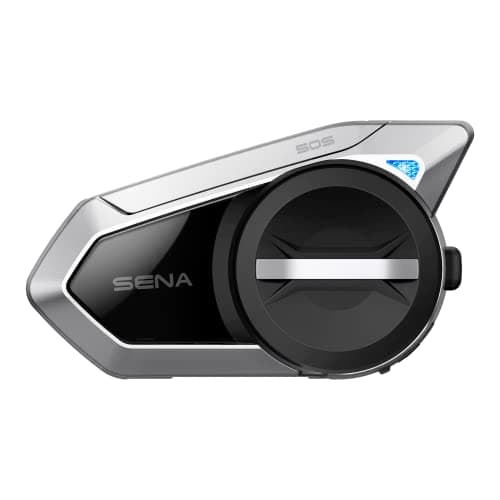
This is the alternative that replaces a Packtalk rather than approximating one. Mesh 3.0 for self-healing group behaviour, Bluetooth 5.3 (a newer radio than the Packtalk Edge carries), IPX7 sealing, and second-generation Harman Kardon speakers and microphone. The feature that makes it more than a substitute is Sena Wave: a cellular-backed service that keeps a conversation going when riders are far beyond radio range of each other, which no Cardo offers at any price. Who it is for: a rider leaving Cardo for the Sena ecosystem, or anyone who wants beyond-range conversation.
Full write-up in the Sena 60S review.
The honest cons. It is not cheaper than a Packtalk Edge - if price was your reason for looking, this is the wrong pick and you want something lower on this page. Wave is a service, so check Sena's current terms and any subscription, and it needs cellular coverage that remote routes do not have. Sena's firmware and app workflow is more involved than Cardo's, and in our assessment the day-to-day experience is slightly less polished. The mount is not magnetic.
Who should skip it: anyone whose reason for leaving Cardo was the price.
2. Sena 50S - the cheapest way to keep mesh
If what you want is mesh behaviour at a lower price, this is the pick. The 50S carries Bluetooth 5.0 plus Mesh 3.0 with Harman Kardonspeakers, and it has the best physical control on any intercom we have used: Sena's jog dial, which you can find and operate in thick winter gloves without looking down. It is the cheapest unit we rate carrying genuine mesh rather than Bluetooth alone. Who it is for: a rider who needs real group-mesh behaviour but not flagship money, or who is slotting into an existing Sena network.
Detail in the Sena 50S review, the in-house step-up in 50S vs 60S, and the direct cross-brand pair in Packtalk Edge vs Sena 50S.
The honest cons. It is the oldest radio in this hub- Bluetooth 5.0 and first-generation Mesh 3.0 - and Sena has shipped two flagships since. No Wave support, no crash detection, and we have no published IP rating to quote against the Cardo's IP67. Sena's firmware update process is fiddlier than Cardo's.
Who should skip it: riders in a pair, who do not need mesh at all and are overpaying for it here.
3. Cardo Spirit HD - stay with Cardo, spend a fraction
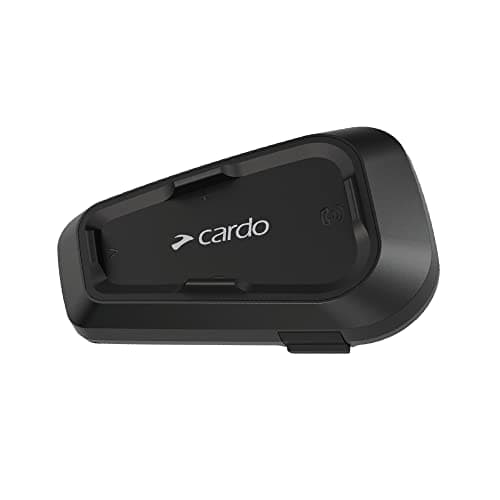
The honest answer for a lot of riders: you do not want to leave Cardo, you want to leave the Packtalk's price. The Spirit HD is Cardo's budget unit and our standing pick for best budget intercom overall - a published 2-rider intercom at up to 600 m, 40 mm HD speakers, FM radio, and the same two-year warranty as the flagship range. It is made by the company whose software you already trust, at roughly a third of the money. Who it is for: a rider who rides alone or in a pair and bought a Packtalk because it was the famous one.
Detail in the Cardo Spirit HD review, and the sibling comparison in Spirit vs Spirit HD.
The honest cons. No mesh at all - this is a Bluetooth unit, so it chains and the chain breaks when a middle rider stops. Two riders, not fifteen. No JBL speakers, no magnetic Air Mount, no voice control worth the name, and no published IP67 to match the flagship. If group riding was why you wanted a Packtalk, this does not replace it and we will not pretend it does.
Who should skip it: anybody who rides in a group of three or more.
4. Sena 5R - the battery answer
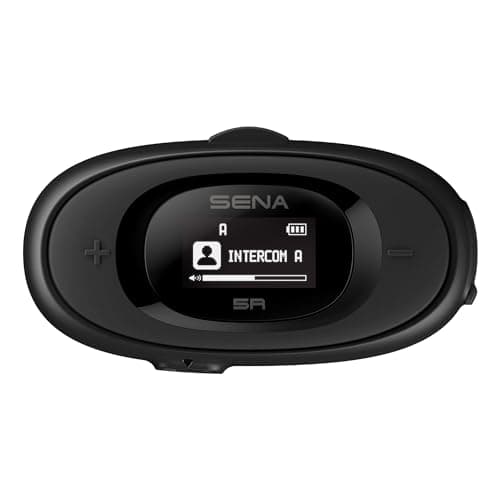
A specific reason people look away from flagship units: talk time. The 5R publishes 36 hours of talk time - the longest figure in our catalog, and well over double what a flagship Packtalk publishes - alongside a 2-rider, 700 m intercom, 40 mm HD speakers and an LCD screen that tells you what the unit is doing instead of making you count beeps. Who it is for:a long-distance rider who charges rarely and rides in a pair, or anyone who wants to see the unit's state at a glance.
More in our budget-shelf comparison and best budget intercoms, where it appears as the battery pick.
The honest cons. No mesh, and only two riders. It is the thickest unit on this page because of the screen and the battery, so it sits more prominently on a helmet. No published IP rating we can quote. And 36 hours is a manufacturer figure at a stated volume and usage mix, not a guarantee - treat it as a relative ranking against the other published numbers rather than a promise.
Who should skip it: group riders, and anyone who charges their gear every night anyway - the battery advantage is wasted.
5. LEXIN B4FM - the budget pick, with the caveats stated
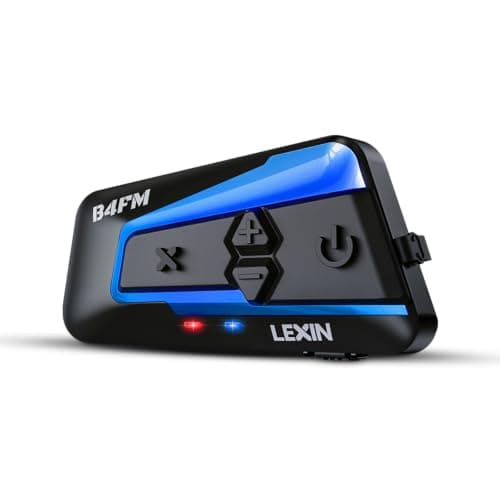
This is the budget pick: the cheapest unit on this page by a wide margin, and the only one under a hundred dollars that claims multi-rider intercom at all. LEXIN publishes up to 10 riders, a claimed IP67 rating, FM radio and music sharing, on a bolt-on mount. Who it is for: a rider who wants to find out whether they will actually use an intercom before spending four hundred dollars finding out.
Full write-up in the LEXIN B4FM review, which is written as a claims-versus-record review precisely because LEXIN publishes no per-model spec sheet.
The honest cons. The specifications are claims rather than documentation- LEXIN does not publish a per-model spec sheet we can cite the way we can cite Sena's or Cardo's, which is why our card says "claims 10 riders" and "claimed IP67" rather than stating them flat. The 10-rider mode is Bluetooth chaining, not mesh, so it degrades the way every Bluetooth chain does. Audio quality and microphone noise rejection are clearly below the Harman Kardon and JBL units above. Warranty and support are not comparable to Cardo's two-year cover.
Who should skip it: anyone who already knows they want an intercom. Buy once - the Spirit HD is a better helmet-mounted purchase at roughly twice the price.
Matching the alternative to your reason
Condensed, so you can stop reading:
- Your group runs Sena: the 60S if you want the flagship, the 50S if you want mesh for less. Protocol decides this one, not features.
- The price is the problem and you ride in a pair: the Cardo Spirit HD. Same company, same warranty, a third of the money, and the mesh you were paying for was never going to help two riders.
- You need the battery to last a touring week: the Sena 5R, with a published 36 hours.
- You are not sure you will use an intercom: the LEXIN B4FM, with the caveats above stated plainly.
- You ride in a Cardo group: buy a Packtalk. Nothing here meshes with them, and that is the end of the analysis.
The verdict
Buy the Sena 60S if you want a genuine like-for-like replacement with a newer radio and beyond-range conversation Cardo cannot match. That is the closest thing to a Packtalk that is not a Packtalk.
Buy the Cardo Spirit HD if price was the reason you came - it is the single most sensible purchase on this page for the majority of riders, who ride alone or in a pair and never needed mesh. Buy the Sena 50S for cheap mesh, the Sena 5R for battery, and the LEXIN B4FM if you are testing whether you want an intercom at all.