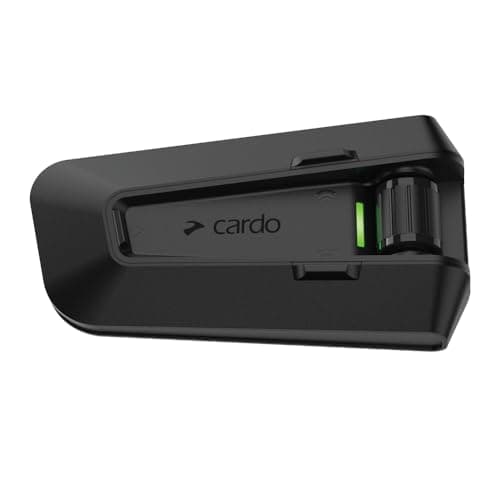
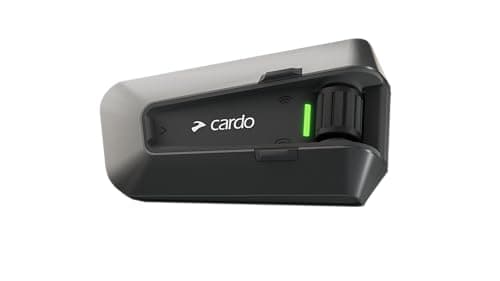
The best alternative to Sena is the Cardo Packtalk Edge: DMC mesh instead of Sena Mesh 3.0, Bluetooth 5.2, JBL 40 mm speakers, IP67 sealing and a magnetic Air Mount that makes moving the unit between helmets a ten-second job. The budget pick is the LEXIN B4FM, the only unit on this page under a hundred dollars. Who this page is for: a rider who bought or nearly bought a Sena because it was the name they knew, and wants an honest account of what else is on the shelf.
First, what Sena is genuinely best at, because this page is useless if it pretends otherwise. The jog dial on the 5-series and 50-series is the best physical control on any intercom we have used - you can find and operate it in thick winter gloves without looking down, which no touch surface or small button manages. Harman Kardon audio on the flagship units is excellent. Sena Wave is genuinely unique: a cellular-backed service that keeps a conversation alive when riders are far beyond radio range of each other, and nothing from any rival does that at any price. Sena also publishes the longest battery figure in our catalog - 36 hours on the 5R - and makes integrated helmets where the electronics were designed into the shell rather than retrofitted.
So the honest framing is not "better than Sena". It is matched to the reason you are looking. There are three real reasons: your group runs Cardo, you want a simpler day-to-day experience, or the price is too high for what you will actually use.
On prices: we do not print dollar figures in prose, because they go stale and a stale number is worse than none. Each pick's buy module carries the live price pulled from the Amazon product API with the date it was checked, and that card is the authoritative figure. The spread below is wide - the cheapest pick is under a fifth of the most expensive - and what you give up changes at each step.
The one thing you cannot compromise on: protocol
Before features, before audio, before price. Sena Mesh 3.0 and Cardo DMC are incompatible. A Cardo cannot join a Sena Mesh network and vice versa; both brands fall back to standard Bluetooth to bridge across, which works and throws away the mesh behaviour you paid for.
That settles one case completely: if the people you ride with own Senas and use Mesh, buy a Sena. Nothing on this page will mesh with them. If you ride alone, in a pair, or with a Cardo group or no fixed group, every pick below is live. The protocol argument in full is best mesh intercoms, and the direct brand comparison is Sena vs Cardo.
How we ranked five Sena alternatives
Closeness of match first - how much of what a Sena does the alternative actually replaces. Then audio hardware and published weather sealing. Then the quality of the physical interface, because Sena's jog dial is the bar and it is a high one. Then price for what you get. Every figure below is what the manufacturer publishes; we do not range-test intercoms.
1. Cardo Packtalk Edge - the best swap, and the easier unit to live with
This is our standing pick for best bolt-on comms overall, and it replaces a flagship Sena outright: DMC mesh plus Bluetooth 5.2, JBL 40 mm speakers, IP67 sealing and a published 31-rider DMC capability well beyond what any real group needs. Two things make it nicer to own than a Sena rather than merely equivalent: the magnetic Air Mount, which snaps the unit on and off a helmet in seconds instead of requiring a clamp and a cable route, and voice control that works well enough that you genuinely stop reaching for the unit at all. Who it is for: a group rider leaving Sena, or anyone who owns two helmets and is tired of moving hardware between them.
Full detail in the Cardo Packtalk Edge review, and the head-to-head in Packtalk Edge vs Sena 50S.
The honest cons. It is not cheap - if price was your reason for looking, scroll down. It has no equivalent of Sena Wave, so there is no beyond-range conversation at any price in the Cardo range. There is no jog dial: Cardo's buttons and voice control are good, but they are not as findable in heavy gloves as Sena's wheel. And it is DMC only for mesh.
Who should skip it: riders in a Sena Mesh group, and anyone who specifically wants Wave.
2. Cardo Packtalk Pro - the flagship swap, with crash detection
If you were shopping at the top of Sena's range, this is the matching tier: second-generation DMC mesh, Bluetooth 5.2, JBL 45 mm speakers (the largest in our catalog), IP67 sealing and a published 13 hours of talk time. The feature with no Sena equivalent is crash detection: the unit senses an impact and, if you do not respond, notifies your emergency contact through the paired phone. Who it is for: a rider who leads groups, tours in weather, or rides alone often enough that an automatic alert is worth paying for.
Detail in the Cardo Packtalk Pro review, and the in-house upgrade question in Packtalk Pro vs Edge.
The honest cons. It is the most expensive unit on this page, and the gap over the Edge above buys crash detection, bigger speakers and a newer radio rather than a different experience - for most riders the Edge is the better buy and we say so on its own page. Crash detection depends on a paired phone with signal, so it is not a substitute for a satellite beacon in remote country. No jog dial, no Wave equivalent, DMC only.
Who should skip it: anyone who does not specifically want crash detection. Buy the Edge and spend the difference on earplugs and a visor insert.
3. Cardo Spirit HD - the cheapest premium-brand unit worth owning
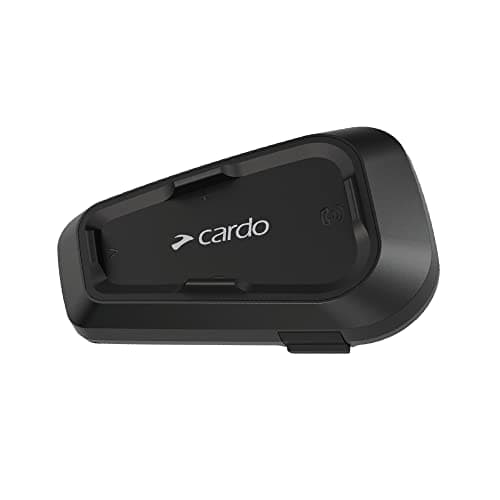
This is the pick for the largest group of readers: riders who ride alone or with one other person and were about to buy four times more intercom than they need. The Spirit HD is our standing best budget intercom - a published 2-rider intercom at up to 600 m, 40 mm HD speakers, FM radio, and the same two-year warranty Cardo puts on its flagships. Who it is for: a solo rider or a pair who want proper audio and real support without paying for group-mesh capability they will never use.
Detail in the Cardo Spirit HD review, and it leads our budget intercom roundup.
The honest cons. No mesh - it is Bluetooth, so it chains and the chain breaks when a middle rider stops. Two riders, not fifteen. No JBL speakers, no magnetic Air Mount, no meaningful voice control, and no published IP67. If group riding was the point, this does not replace a flagship Sena and we will not pretend it does.
Who should skip it: anybody who rides in a group of three or more.
4. Cardo Spirit - the cheapest premium-brand unit, full stop
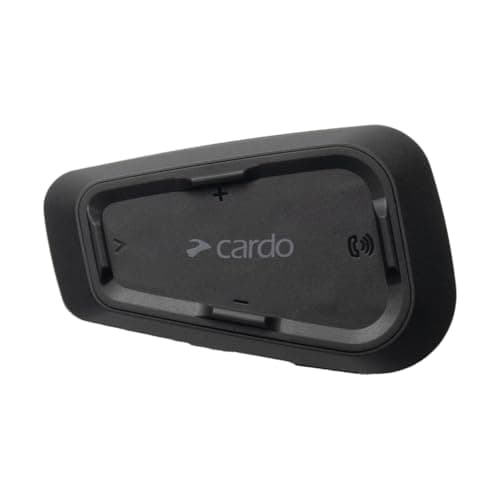
The Spirit is the Spirit HD with the audio stepped down, and it exists for one reason: it is the cheapest unit from a premium brand we can document. A published 2-rider intercom to 400 m, 32 mm thin speakers that fit helmets with shallow speaker pockets, and the same two-year warranty as every other Cardo. Who it is for: a rider who wants real support and firmware updates at the lowest price a known brand offers, or whose helmet has pockets too shallow for 40 mm speakers.
The sibling comparison is Cardo Spirit vs Spirit HD.
The honest cons. The 32 mm speakers are a real step down from the HD's 40 mm units - they are thinner so they fit more helmets, and they are quieter and thinner-sounding at highway speed, which is exactly when you need them. Published 400 m rather than 600 m. No mesh, two riders, no published IP rating. The saving over the Spirit HD is small enough that for most riders the HD is the better buy.
Who should skip it: anyone whose helmet has normal-depth speaker pockets - spend the small difference on the HD.
5. LEXIN B4FM - the budget pick, with the caveats stated
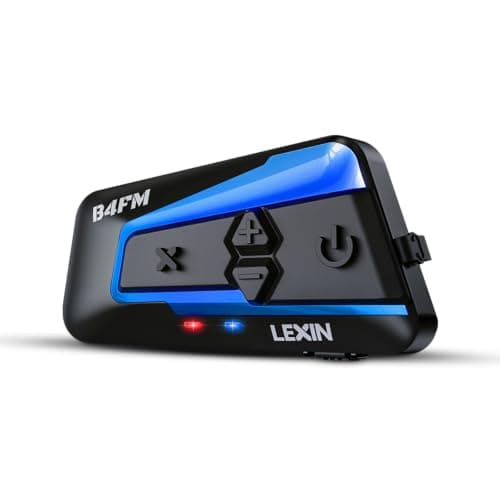
This is the budget pick: the only unit on this page under a hundred dollars, and the cheapest thing we will recommend at all. LEXIN publishes up to 10 riders, a claimed IP67 rating, FM radio and music sharing, on a standard bolt-on mount. Who it is for: a rider who wants to find out whether they will actually use an intercom before spending four hundred dollars finding out.
Full write-up in the LEXIN B4FM review, written as a claims-versus-record review precisely because LEXIN publishes no per-model spec sheet.
The honest cons. The specifications are claims rather than documentation- there is no per-model spec sheet we can cite the way we can cite Sena's or Cardo's, which is why our card reads "claims 10 riders" and "claimed IP67". The 10-rider mode is Bluetooth chaining, not mesh, so it degrades the way every chain does. Audio and microphone noise rejection are clearly below the Harman Kardon and JBL units. Warranty and support are not comparable to Cardo's two-year cover or Sena's service network.
Who should skip it: anyone who already knows they want an intercom. Buy once - the Cardo Spirit HD is the better purchase at roughly twice the price.
Matching the alternative to your reason
Condensed, so you can stop reading:
- Your group runs Cardo: the Packtalk Edge, or the Pro if you want crash detection. Protocol decides this, not features.
- You want a simpler unit to live with: the Packtalk Edge. The magnetic mount and the voice control are the two things that make a Cardo less work than a Sena day to day.
- The price is the problem and you ride in a pair: the Cardo Spirit HD, or the Spirit if your helmet has shallow speaker pockets. The mesh you were paying for was never going to help two riders.
- You are not sure you will use an intercom: the LEXIN B4FM, with the caveats above stated plainly.
- You ride in a Sena Mesh group, or you want Wave: buy a Sena. Nothing here meshes with them and nothing here does beyond-range conversation.
The verdict
Buy the Cardo Packtalk Edge. It replaces a flagship Sena feature for feature on the things most riders use, and the magnetic mount and voice control make it genuinely less work to own. For a group rider leaving Sena, this is the answer.
Buy the Cardo Spirit HD if price was your reason - it is the most sensible purchase on this page for the majority of riders, who ride alone or in a pair. Buy the Packtalk Pro for crash detection, the Cardo Spirit if your helmet has shallow speaker pockets, and the LEXIN B4FM if you are testing whether you want an intercom at all.
One closing note that applies whatever you buy: no intercom out-shouts turbulence above about 65 mph. Earplugs and a correctly positioned speaker do more for intelligibility than any upgrade on this page, and cost almost nothing - how to make your helmet quieter goes through it.