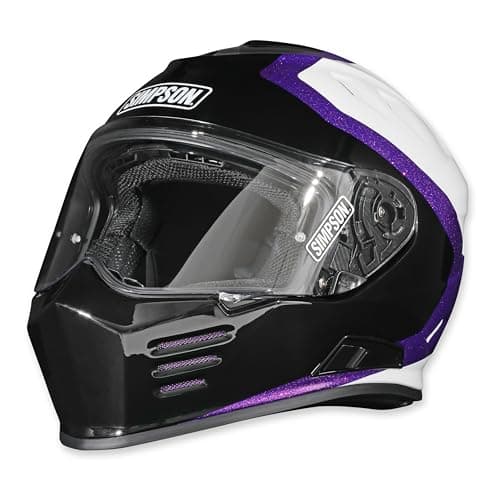
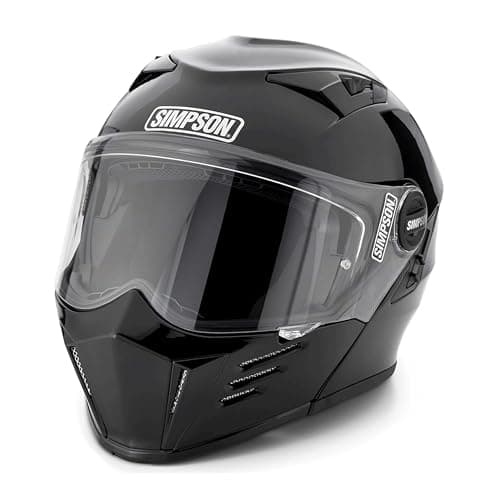
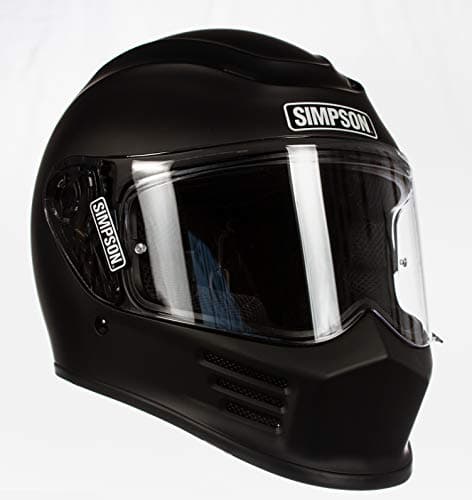
Yes - with a caveat that is specific rather than vague. Simpson makes genuinely certified helmets, and the two Simpson models the UK's independent SHARP program has crash-tested both scored 4 stars out of 5. But neither of those two is a Bandit, and the US Bandit line - the helmets Americans actually buy - mostly does not publish which ECE revision it holds. Of the three Bandits sold on Amazon today, exactly one states a code, and that code is the older ECE 22.05. That is the whole story of this brand on a certification-first site, and it is why our pick order below is not the order the marketing would suggest.
Who this page is for:the rider who wants the Simpson look and wants to know what they are and are not getting underneath it. We have no lab and we do not crash-test anything. Everything below comes from Simpson's published specifications as carried by its US retailers, the SHARP database, and the live Amazon listings - all sourced at the foot of the page. Where a figure is not published, we say so instead of filling the gap.
How we ranked them: documentation first, then the helmet
This site ranks by the mark on the shell before anything else, and that rule produces an uncomfortable result for Simpson. A published ECE code - even an older one - beats an unpublished one, because an unpublished revision means you cannot know whether the helmet on your head was tested for oblique rotational impact or not. So the plainest, entry-level helmet in the line ranks first here, and the two composite lids with sun visors and comms pockets rank behind it. The gap between them is comfort and features, not protection you can verify.
After certification we weighed shell construction and published weight, then features that change a ride (a drop-down sun visor, comms pockets, shield provision), then value against what else that money buys. We did not weigh looks, because looks are the one thing about a Simpson you do not need a website to assess.
What SHARP actually found when it tested Simpson
This is the strongest evidence in Simpson's favor, and it deserves to be stated precisely. SHARP - the UK Department for Transport's program, which buys helmets at retail and crash-tests them independently - has published results for two Simpson helmets: the Simpson Venom, a full-face approved to UN ECE Reg 22.05, which scored 4/5 when tested in December 2018; and the Simpson Darksome 2, a modular approved to UN ECE Reg 22.06, which also scored 4/5. Two models, two 4-star results, one of them on the current ECE revision. That is a real signal: when an independent lab has bought a Simpson off a shelf and hit it, the helmet performed well.
Here is the honest limit of that signal. Neither the Venom nor the Darksome 2 is a Bandit, and neither is the helmet you buy in the US. SHARP has never tested a Ghost Bandit, a Speed Bandit or a Mod Bandit, so there is no star rating for any helmet on this page. Transferring a 4-star result from one model to a different model with a different shell is exactly the kind of move this site exists to refuse - we will not do it for Simpson, and we do not do it for Shoei or Arai either, where the European twin often carries the score and the US build does not. What the SHARP data supports is a statement about the company's engineering, not about the specific helmet in your cart.
Simpson Speed Bandit - the only one with a published code
Our top pick, and it is the entry-level helmet in the line, which tells you how much the paper trail matters here. RevZilla's listing states the Speed Bandit is "FMVSS 218 DOT approved and ECE 2205 certified" - an explicit code, which no other Bandit gives you. Who it is for: the rider who wants the drag-strip Simpson look and refuses to buy a helmet whose certification they cannot name.
The helmet itself is a thermo-injected polycarbonate shell built in three shell sizes, so the outer profile scales with your head instead of one shell being padded out across the range - a detail usually reserved for pricier helmets. The ventilation is the owner-praised part: Simpson's "Speed Brow" venturi ridges sit over always-open forehead vents and pull air into channels molded in the EPS, which is why a helmet with an almost spartan vent layout flows as well as it does. It takes the same face shield as the Ghost Bandit, with a four-position lock, and a Pinlock insert is sold separately rather than included.
The honest cons: 22.05 is not 22.06. The older series predates the oblique rotational-impact test, the extra impact points and the visor and accessory testing that the current revision added - our ECE 22.06 explainer walks through exactly what that means. The shell is polycarbonate rather than composite, Simpson does not publish a weight for it, and the owner feedback RevZilla aggregates repeatedly cites wind noise at highway speed and inconsistent sizing and padding. You are buying a documented floor and a famous shape, not a quiet touring helmet.
Simpson Ghost Bandit - the one most people actually mean
When somebody says they want a Simpson, this is usually the helmet. The Ghost Bandit is the touring Bandit: a composite shell at a published 3.46 lb, a drop-down internal sun visor, molded speaker and microphone pockets for a comms unit, and the widest version of that unmistakable eyeport. Who it is for: the rider who wants the Simpson silhouette on real road rides, with the sun visor and intercom provision a daily helmet needs.
Feature for feature it is a straightforwardly better helmet than the Speed Bandit - lighter construction, a sunshade you will use on every evening ride, and proper comms integration instead of a workaround. It ranks second here anyway, because of the one line that matters most: RevZilla lists it as "DOT/ECE certified" and names no revision, and Simpson does not publish a 22.05-versus-22.06 code for the US unit. So it may well be a 22.06 helmet; we cannot tell you that it is. Read the white ECE label on the chin strap of the helmet you receive - an approval number beginning 06 is the current series.
The other honest cons: the same owner-reported highway wind noise as the rest of the line, and inconsistent sizing that makes trying one on - or buying from somewhere with a returns policy you trust - more important than usual. Sizes and colorways are separate Amazon listings at different prices, so the listing we link is one of several and the figure you see will move with it. Individual variants are discounted independently too, which is why a Ghost Bandit colorway can undercut a Speed Bandit on any given day - read the live prices above rather than assuming the line order.
Simpson Mod Bandit - the flip-front, with the biggest gap
The Mod Bandit takes the Ghost Bandit's composite shell, sun visor and comms pockets and adds a chin bar that lifts. Nothing else on the market looks like this with a flip-front mechanism, and for a rider who wants a modular and wants a Simpson there is exactly one choice. Who it is for: the touring or cruiser rider committed to the Bandit look who needs to flip the front up at fuel stops.
It ranks third because the documentation gap gets wider, not narrower, on a modular. RevZilla lists it as "DOT/ECE" with no revision - and, just as importantly, no P/J code is published for the US unit. On a modern flip-up that code is the thing that tells you whether the helmet was approved to be ridden with the chin bar open (P/J) or only closed (P). Without it we will not tell you the Mod Bandit is legal or tested to ride open, and you should not assume it. By contrast, the Shoei Neotec 3 and the HJC RPHA 91 both publish ECE 22.06 with P/J dual homologation, and the RPHA 91 adds an independent 4/5 SHARP score on top.
The rest of the cons are physical. At a published 3.73 lb it is the heaviest helmet in the line and you feel it after a few hours. It is also the most expensive Bandit by a wide margin, in a class where the HJC i91 and Scorpion EXO-GT930 undercut it substantially. You are paying a real premium for a silhouette, which is a legitimate thing to buy - just know that is the purchase you are making.
What you are actually paying for
Simpson sits in an unusual place in the market. The Bandit line is priced like mid-tier touring helmets from HJC, Scorpion and AGV, and against those helmets it gives up published certification detail, a published weight on one model, and highway quiet. What it gives you in return is a shape nobody else makes, an eyeport that genuinely is wider than most, and on the Ghost and Mod a feature set - composite shell, drop-down sun visor, comms pockets - that is competitive for the money. That is a styling purchase with real engineering behind it rather than a costume, which is more than can be said for a lot of what gets sold on looks.
The brand's history explains the design: Simpson came out of drag racing and auto racing, and the Bandit silhouette is a road-legal descendant of that lineage rather than a retro pastiche. That heritage is also why the Speed Bandit's vent scheme looks minimal and still flows well - the shapes are doing work. None of that is a substitute for an approval code, but it is the reason the helmets are not simply overpriced fashion items.
If certification is your first filter, buy these instead
We would rather send you to the right helmet than defend a pick. If what you want is the current ECE revision at Bandit money, the AGV K1 S publishes genuine DOT + ECE 22.06 for less than a Speed Bandit, and the HJC RPHA 12 adds a light ~1,474 g composite shell and a Pinlock-ready shield in the same bracket - both are in our best budget full-face roundup. If it is the look you are chasing rather than the badge, the Biltwell Gringo SV is the rare retro-styled full-face that states ECE 22.06 outright on its own product page.
And if your real question is which value brand documents itself best, the answer is not Simpson. Read are HJC helmets good? for the brand that publishes 22.06 across a whole line, or which Scorpion should you buy? for the other value option. For how the marks compare in the first place, start with DOT vs ECE vs Snell vs SHARP.
So, are Simpson helmets good?
Good, yes. Well documented, no. Both Simpsons an independent lab has tested scored 4/5, the shells are real composite on two of the three Bandits, and the feature sets are competitive - this is not a novelty brand. But on the US market the line publishes less about itself than any other brand we cover, and on a site that ranks by the mark on the shell that has to count against it. Buy a Speed Bandit if you want the look with a code you can name. Buy a Ghost Bandit if you want the look with the touring features and you accept an unstated revision. Buy a Mod Bandit only if a flip-front Simpson is specifically the thing you want. And whichever you choose, check the label when it arrives - then get the size right first with our head-measuring guide.
If the Bandit silhouette is what drew you here, it is worth seeing what else in the styling-led class can name a certification: we rank that field in the coolest-looking helmets that are still certified.