If you want one brand to start with, start with HJC - it publishes genuine DOT + ECE 22.06 across a wider price range than anyone else, from the ~1,474 g RPHA 12 at budget money up to the FIM-homologated RPHA 1N. Who that is for: the rider who wants the current, independently lab-verified standard and does not want to pay flagship money for it. If instead you want the plushest finish and the quietest shell and you are relaxed about which standard it carries, that is Shoei and Arai - both of which go the Snell route on their US helmets rather than the ECE one. This page explains why those are different answers rather than better and worse ones.
A brand comparison is usually a vibe check: Arai is for purists, HJC is for people on a budget, AGV is for racers. That is not useless, but it is not buyable information either. The axis we can actually document is what each maker publishes about the helmet it sells you in the United States- and on that axis the brands separate sharply, in ways that cut across their price positions. We have not crash-tested anything; every certification claim below comes from the manufacturer's own homologation statement, a retail listing, or the standards body, and is cited in Sources.
The nine brands, on the record
Read the certification column first. "Publishes ECE revision" means the maker names 22.05 or 22.06 for the US unit; "ECE unstated" means it claims ECE approval without naming the revision, which is not the same thing and is why those brands rank lower here.
| Brand | Certification on US builds | What it is genuinely good at | The helmet we would buy from them |
|---|
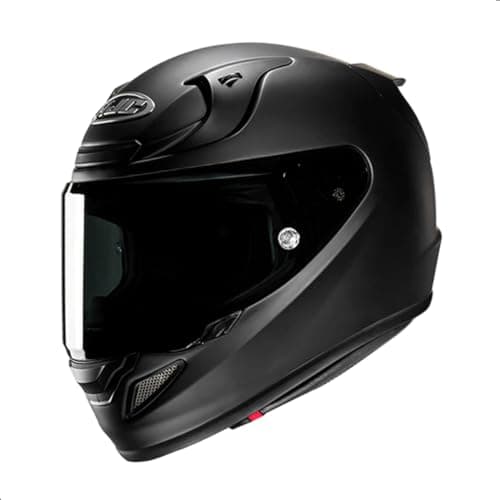
| HJC | Publishes DOT + ECE 22.06 on the RPHA line; the i91 is marketed DOT only | The current ECE revision at the widest range of prices | HJC RPHA 12 (~1,474 g composite) |
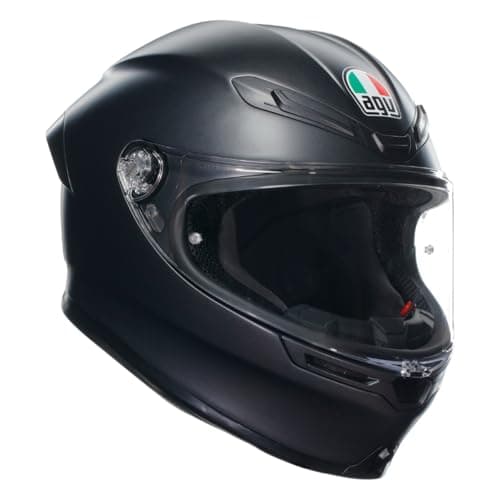
| AGV | Publishes DOT + ECE 22.06; K6 S is SHARP 5/5 | Light racing-derived shells and field of view | AGV K6 S (~1,255 g carbon-aramid) |
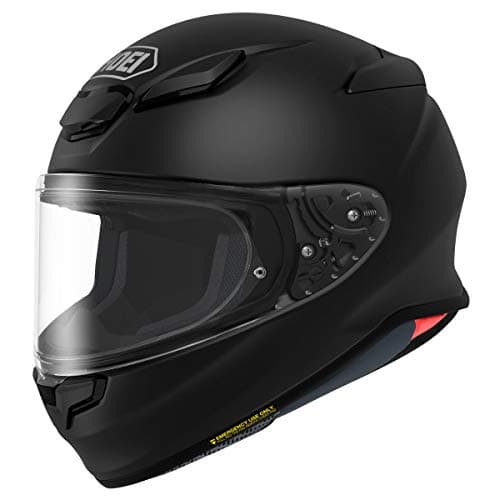
| Shoei | DOT + Snell on US builds; EU twins are ECE 22.06 | Noise, shield sealing, finish | Shoei RF-1400 (~1,385 g, EU NXR2 is SHARP 5/5) |
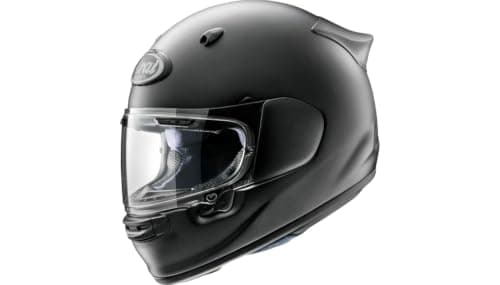
| Arai | DOT + Snell on US builds; EU twins are ECE 22.06 | Rounder internal shapes, hand-laid shells | Arai Contour-X (EU Quantic is SHARP 4/5) |
| Klim | Publishes DOT + ECE 22.06 | Carbon adventure helmets at low weight | Klim Krios Pro (~1,450 g full carbon) |
| Bell | Mixed: MX-9 Adventure is DOT + ECE 22.06 + MIPS and SHARP 4/5; Qualifier DLX leaves the ECE revision unstated | MIPS and value features | Bell MX-9 Adventure MIPS |
| Scorpion | Publishes the revision - and they differ: EXO-AT960 is 22.06, EXO-GT930 is 22.05 | Convertible shells and built-in sun visors | Scorpion EXO-AT960 |
| LS2 | Publishes DOT + ECE 22.06 P/J | Carbon weight at non-carbon prices | LS2 Advant X (~1,550 g forged carbon) |
| Biltwell | States DOT + ECE R22.06 on its own product page | Retro styling that keeps the chin bar | Biltwell Gringo SV |
| Simpson | ECE unstated on the Ghost Bandit and Mod Bandit; Speed Bandit is listed as 22.05 | A silhouette nothing else has | Only if the look is the point |
The three brand strategies, and what each costs you
1. The ECE 22.06 publishers: HJC, AGV, Klim, LS2, Biltwell.These makers print the current revision on US boxes, which means an independent lab verified that shell against the oblique rotational-impact test 22.06 added. If your decision rule is "name the standard or I walk", you shop here, and you can do it at almost any budget - the LS2 Advant X and HJC RPHA 12 both carry 22.06 for a fraction of a flagship.
2. The Snell houses: Shoei and Arai. Their US helmets usually carry DOT plus Snell M2025rather than ECE, while the European twin of the same helmet is homologated 22.06. That is a deliberate market choice, not an oversight, and Snell is a real voluntary standard with re-testing behind it - the Shoei RF-1400's European twin, the NXR2, is a 5/5 SHARP helmet. What it costs you is the ability to point at the 22.06 code on the helmet you actually own. We unpack the pairing in Shoei vs Arai and the mechanism in why US and European helmets carry different certifications.
3. The brands that leave it unstated: Simpson, and parts of Bell's and HJC's ranges."DOT/ECE certified" without a revision is the phrase to watch. It may well be 22.06; it may be a 22.05 carry-over. Because we will not assert what a maker has not published, those helmets score lower on certification here even when they are well-made - which is the honest treatment, not a punishment. The detail is in are Simpson helmets good? and are Bell helmets good?
HJC RPHA 12 - the brand pick for most riders
HJC gets the top slot because of range, not prestige. The RPHA 12 is genuine DOT + ECE 22.06 in a PIM EVO composite shell of fiberglass, carbon and aramid, at a published ~1,474 g, with a Pinlock-ready HJ-42 shield included. No other brand puts that combination at this price. Who it is for: the rider who wants the current standard and a light composite shell and refuses to pay flagship money.
The honest cons: no SHARP result exists for it, there is no drop-down sun visor, and HJC is not consistent across its own range - the budget i91 modular is marketed DOT only, so "buy HJC" is not a blanket answer. Our brand page is are HJC helmets good?
AGV K6 S - the brand pick if you want test data, not just approval
AGV is the only brand on this page with a 5/5 SHARP result on a helmet it sells in the US as a genuine DOT + ECE 22.06 build, and it does it at about 1,255 g in carbon-aramid. Who it is for: the rider who wants the strongest independent evidence available and a racing field of view. The honest cons: no sun visor and a sport-snug fit that pinches round heads. See are AGV helmets good?
Shoei RF-1400 - the brand pick for noise and finish
Shoei is the answer when the complaint is wind noise. The RF-1400 is DOT + Snell M2025 at about 1,385 g in multi-ply AIM+, with a shield seal that is the quiet reference in sport-touring, and its European NXR2 twin took a perfect 5/5 at SHARP. Who it is for: the sport-touring rider who values quiet and finish and accepts Snell in place of 22.06 on the US unit. The honest cons: no internal sun visor, and the US build does not print the ECE revision.
Arai Contour-X - the brand pick for a rounder head
Arai's reason to exist is shape. Its shells run rounder than most rivals, which is why riders who get forehead pressure from AGV and HJC often land here, and the US Contour-X is DOT + Snell M2025 while the European Quantic is ECE 22.06 and SHARP 4/5. Who it is for: the round-oval head that nothing else fits, and the rider who wants a hand-laid shell. The honest cons: it is expensive, and again the US build is a Snell build - read helmet head shapes explained before you decide this is your brand.
Where brand genuinely does not matter
Two places. Fit is the first: brand reputation tells you nothing about whether a shell suits your head, and the most expensive helmet in the wrong shape will give you a headache at 40 minutes. Comms is the second: almost every modern helmet has molded speaker pockets, and a bolt-on intercom fits across brands, so you do not need to pick a helmet brand to get the audio you want. Where brand does matter is in documentation and support - published homologations, shield and liner availability years later, and whether the maker names the standard it holds.
So which brand?
Want the current ECE revision at the best price? HJC. Want the strongest independent test data? AGV. Want the quietest, best-finished helmet and you are content with Snell? Shoei. Have a round head that nothing fits? Arai. Riding dirt and highway in one day? Klim or Scorpion. Want carbon weight cheap? LS2. Want the retro look without losing the chin bar? Biltwell. Then stop thinking about brands and go to the model: best motorcycle helmets of 2026 ranks the individual helmets across all of them.