Skip to content
VISOR & VENT

HUB 06 · Buying Guides & How-To

Alternatives to AGV, by What You Were Buying It For

AGV is the brand we recommend most often, so the honest version of this question is narrow: which helmets match it on certification, on weight, or on the one thing it cannot fix for you - an interior that pinches round heads.

By Stephen V.Updated How we rate
#ad

We earn a commission when you buy through our Amazon links, at no extra cost to you. It never changes a ranking, and we tell you when the cheaper helmet is the better buy. How this works.

The best all-round alternative to AGV is the HJC RPHA 1N: a PIM+ carbon shell at a published ~1,510 g carrying DOT, ECE 22.06 and FIM racing homologation - a track-grade approval no AGV in our catalog holds - for a fraction of an AGV K6 S. Who this page is for: a rider who has shortlisted an AGV, found that it pinched, or priced the one they wanted and wondered what else carries the same certification.

This page is unusual for us, because AGV is the brand this site recommends most. So we are going to start by stating what it does better than almost anybody, and only then name the helmets that match it.

First: what AGV is genuinely best at

Three of these are facts we use to beat other brands with, and it would be dishonest to leave them out of a page about replacing AGV:

  • Genuine ECE 22.06 on the US-market helmets. This is the big one. Across our catalog the K6 S, the K1 S and the AX9 are all documented as DOT and ECE 22.06 on the units sold here - the independently lab-tested standard with the oblique rotational-impact test. Several premium rivals sell US builds that are DOT or DOT-plus-Snell instead, so AGV is one of the few places you can buy the current European approval off a US shelf without checking twice.
  • The only SHARP 5-out-of-5 in our entire catalog. The K6 S holds it. SHARP buys helmets anonymously and runs 32 impacts across seven samples, so that is an independent verdict rather than a marketing line, and nothing else we rate has matched it.
  • The lightest full-face we rate. The K6 S is a carbon-aramid shell at a published ~1,255 g. Every alternative below is heavier - in two cases by more than 250 grams.
  • Race-derived aero and field of view. AGV develops shells through its MotoGP program, and the peripheral view when you are tucked is genuinely wider than most road helmets give you.

Now the honest counterweight, which is why this page gets traffic. AGV interiors run snug and suit intermediate-oval heads- that is our standing caveat on every AGV card, and no amount of cheek-pad swapping fixes a shell shape that is wrong for your skull. None of AGV's road helmets in our catalog has a drop-down sun visor. None carries Snell. And AGV does make a flip-up, the Tourmodular, but it is not sold on Amazon US, so if a modular is what you want, the alternatives are elsewhere entirely - see best commuter modular helmets.

How these six were matched to AGV

Each pick answers "instead of which AGV, and on what axis". The criteria are the site's usual order - certification and revision first, then published weight, then format and features - and the price bracket is described qualitatively because the live figure belongs on the card, not in a sentence that goes stale.

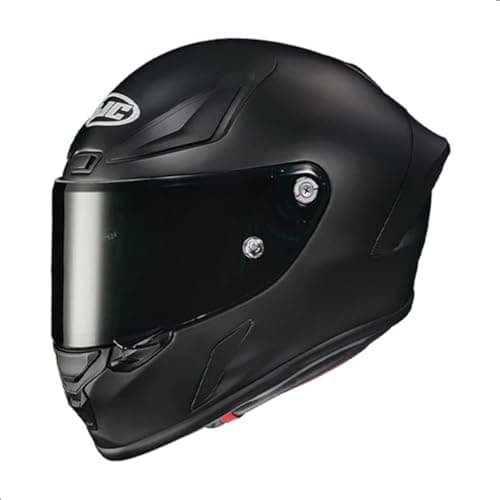
1. HJC RPHA 1N - instead of the K6 S, and it adds a certification AGV does not

This is the pick that does not merely undercut an AGV, it out-certifies one. The RPHA 1N is HJC's MotoGP-derived flagship in a PIM+ carbon shell at ~1,510 g, and it carries DOT, ECE 22.06 and FIM racing homologation. FIM is the gate a helmet has to pass to be worn in international road racing, and it is a stricter filter than DOT or ECE alone - the K6 S does not hold it. Its ACS ventilation runs five intakes and four exhausts, which is why it is one of the few race lids that does not fog in traffic. Detail in the HJC RPHA 1N review, and the direct comparison in RPHA 1N vs AGV K6 S.

It also costs substantially less than the K6 S, which makes it the value answer and the certification answer at the same time - a rare combination.

What you give up, honestly. Weight: at ~1,510 g it is about 255 grams heavier than the K6 S, and you feel that on hour four. You also give up the SHARP data - HJC has never submitted the RPHA 1N, so you are trading a published star rating for a published racing homologation. And it is a hard, track-focused shell with a firm liner and no sun visor; it is not a touring helmet and HJC does not pretend otherwise.

2. Arai Contour-X - instead of any AGV, if the AGV pinched your head

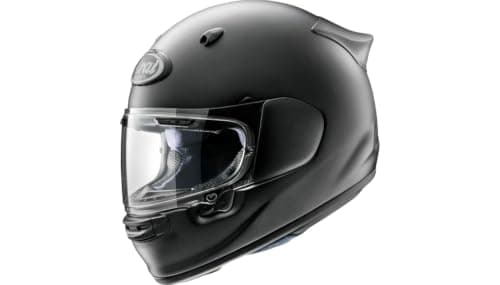
If you tried an AGV and it squeezed your temples, no spec on this page matters more than this one. Arai builds the roundest interiors of any brand we rate, and the Contour-X (the US name for the Quantic) is its all-day sport-touring helmet: a PB e-cLc laminate at ~1,530 g with a smooth, continuous shell designed to glance off rather than catch, carrying DOT and Snell M2025 in the US. Write-up in the Arai Contour-X review, and the shape question itself in head shapes explained.

It also brings Snell, which no AGV in our catalog has - a voluntary standard Arai pays to enter and re-test against, with a stiffer-shell, high-energy repeat-impact philosophy that is a genuinely different test regime from ECE.

What you give up, honestly. This is not a saving - it is the most expensive alternative here and it costs more than the K6 S. The US Contour-X is not ECE 22.06 (the European Quantic is), so if the rotational-test homologation was your reason for looking at AGV, swapping to Arai loses it. It is also 275 grams heavier than the K6 S, there is no sun visor, and the round interior that rescues round-oval heads is a mismatch for long-oval ones.

3. Shoei RF-1400 - instead of the K6 S, if you want quiet and sealed

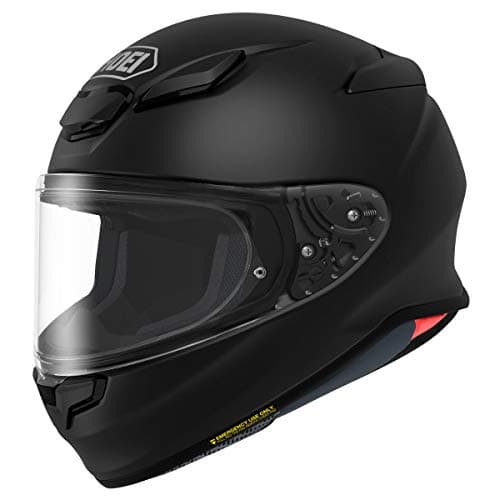
The thing AGV does not do especially well is hush. A light, stiff shell transmits noise, and the K6 S has no sun visor and a race-first seal. The RF-1400 is the opposite philosophy: a multi-ply AIM+ composite at ~1,385 g - only 130 grams off the K6 S, which is close for a non-carbon shell - with a shield seal that is the reason it ranks near the top of our quietest helmets page. In the US it is a DOT plus Snell M2025 build, and its European twin, the NXR2, scored a perfect 5/5 at SHARP. More in the Shoei RF-1400 review and K6 S vs RF-1400.

Check the cards before you assume this is the expensive option. The RF-1400 and the K6 S trade places on price, and when the Shoei is the cheaper of the two it is a genuinely easy call for a sport-touring rider.

What you give up, honestly. ECE 22.06.The US RF-1400 is a Snell build, so if you were buying AGV for the current European approval, this is a sideways move into a different standard rather than an upgrade. The 5/5 SHARP score belongs to the European NXR2, not to the US unit - same helmet family, different homologation, and we do not transfer star ratings across. No sun visor either, and Shoei's fit is closer to intermediate oval, so it does not solve the problem Arai solves.

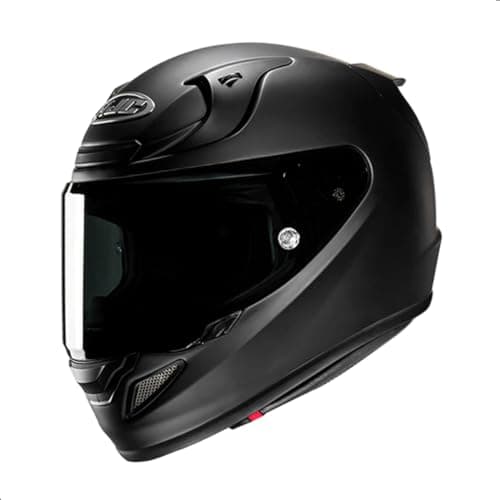
4. HJC RPHA 12 - the budget pick, and the direct answer to the K1 S

The K1 S is the cheapest way into a certified AGV. The RPHA 12 beats it on the two things this site ranks by, for less money: DOT and ECE 22.06 in a PIM EVO composite shell at ~1,474 g, against the K1 S's thermoplastic shell at ~1,600 g. Same approval, 125 grams lighter, composite rather than thermoplastic, and Pinlock-ready for the HJ-42 insert. It wins our helmets under $200 page and anchors helmets under $300. The head-to-head is at RPHA 12 vs AGV K1 S.

What you give up, honestly.AGV's field of view and aero development - the K1 S inherits real racing geometry and the RPHA 12 is a sport-touring shell. No sun visor, no SHARP rating, and the Pinlock insert is a separate purchase. At this price the finish is plain: functional vents, a basic liner, and none of the shell-scaling you get further up the range.

5. Alpinestars Supertech R10 - instead of an AGV Pista, if the track is the point

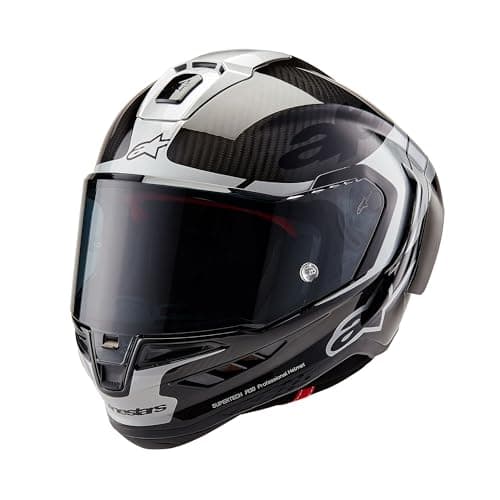
AGV's race flagship is the Pista GP RR, and we do not stock it because it is not something we can price honestly on Amazon. If a FIM-homologated race helmet is what you were shopping for, the R10 is the alternative that answers it properly: a multi-layer carbon shell at ~1,540 g (M) carrying ECE 22.06 and FIM homologation, with an eight-piece multi-density EPS liner developed through Alpinestars' MotoGP program. Alpinestars also publishes how far past the standard it tested - it states the R10 exceeds the ECE 22.06 linear limit by 37% and the rotational limit by 65% - which almost no helmet maker quantifies. Context in are Alpinestars helmets good?

What you give up, honestly. Money: this is the most expensive helmet on this site by a wide margin, and it is the only pick here that is not a saving against an AGV in its class. DOT is something to confirm rather than assume - Alpinestars ships ECE06/DOT and ECE06/FIM versions of the same helmet and the marketplace listing does not always name which, so check the label if you need DOT for US road use. There is no sun visor, no touring comfort agenda, and it has never been SHARP-tested.

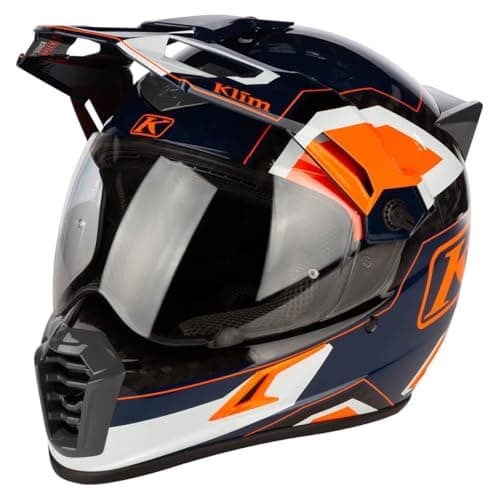
6. Klim Krios Pro - instead of the AX9, for adventure riding

The AX9 is AGV's convertible adventure helmet and it is a good one. The Krios Pro is the alternative that wins on the scale: full carbon fiber at ~1,450 g (L)against the AX9's ~1,510 g, with genuine US DOT and ECE 22.06 that Klim publishes directly, plus a Koroyd energy-absorbing structure and the same peak-visor-goggle convertibility. It is the lightest way we know of to hold DOT and ECE 22.06 in an ADV helmet. Detail in the Klim Krios Pro review, and the pair head-to-head at Krios Pro vs AGV AX9.

What you give up, honestly.Not much money - this is flagship-priced and sits close to the AX9 rather than below it. It is quieter with the visor fitted than in full peak-and-goggles mode, so the configurability has an acoustic cost. And it is no longer Klim's newest ADV platform: the pricier X1 Alpha sits above it, so you are buying the outgoing flagship. Never SHARP-tested.

So should you just buy the AGV?

Often, yes. The clean decision:

  • Buy the AGV if it fits your head, you want the current European certification on a US-bought helmet without reading the fine print, and you want the lightest full-face with the best independent star rating we can document. On weight and on SHARP data the K6 S is still the leader of this entire page.
  • Buy the HJC RPHA 1N if you want a carbon shell with FIM homologation on top of DOT and ECE 22.06, and you will accept 255 extra grams to save real money.
  • Buy the Arai Contour-X if the AGV pinched. Fit beats every spec on this page, and a helmet that hurts at hour two is a helmet you will stop wearing.
  • Buy the Shoei RF-1400 if quiet, sealed sport-touring matters more to you than holding the 22.06 revision specifically.
  • Buy the HJC RPHA 12 if you were looking at a K1 S - it is lighter, better shelled and cheaper with the same approval.
  • Buy the Supertech R10 or the Krios Pro for the track and for adventure riding respectively, where each has a documented edge over the AGV in its class.

The one thing we would not do is swap an ECE 22.06 AGV for a DOT-only helmet to save money and call it an alternative. That is the trade this site exists to flag, and it is laid out properly in DOT vs ECE vs Snell vs SHARP. If you want the brand-level view rather than an AGV-shaped one, helmet brands compared sets nine of them side by side, and are AGV helmets good? is the case for staying put.
The short answer

Quick picks, by the mark on the shell

#HelmetCertificationScorePrice
01
HJC HJC RPHA 1N
HJC RPHA 1N

HJC's MotoGP-derived flagship: the same PIM+ carbon shell HJC races, carrying DOT + ECE 22.06 and FIM racing homologation, for a fraction of an Arai or Shoei race lid.

DOT certifiedECE 22.06 certified
8.9
$428.80Amazon
02
Arai Arai Contour-X (Quantic)
Arai Contour-X (Quantic)

Arai's smooth-shell philosophy in an all-day sport-touring lid — a Snell build in the US, with the roundest fit here.

DOT certifiedECE 22.06not heldSnell M2025 certified
8.6
$775.00Amazon
03
Shoei Shoei RF-1400
Shoei RF-1400

The sport-touring default for a reason: light, quiet, Snell-certified, and its European twin scored a perfect 5/5 SHARP.

DOT certifiedECE 22.06not heldSnell M2025 certified
8.7
$499.99Amazon
04
HJC HJC RPHA 12
HJC RPHA 12

HJC's value sport-touring flagship: a genuinely light PIM EVO composite shell with ECE 22.06, a Pinlock-ready HJ-42 shield and wind-tunnel aero, for well under premium money.

DOT certifiedECE 22.06 certified
8.6
$194.81Amazon
05
Alpinestars Alpinestars Supertech R10
Alpinestars Supertech R10

Alpinestars' only road helmet, and a serious one: a MotoGP-developed carbon shell that Alpinestars states exceeds ECE 22.06 by 37% on linear and 65% on rotational impact, FIM-homologated for racing.

DOT unverifiedECE 22.06 certified
8.4
$1,241.96Amazon
06
Klim Klim Krios Pro
Klim Krios Pro

The lightest way to hold genuine US DOT + ECE 22.06 — a full-carbon convertible that goes from ADV to street to dirt.

DOT certifiedECE 22.06 certified
8.6
$599.74Amazon

#ad · Live prices from the Amazon Product API, as of November 23, 2026. Certifications reflect the US-market build and are cited in Sources. Where a live price has rotted, we show none.

In detail

The picks, in full

01
HJC HJC RPHA 1N

Track-grade certification for the money

HJC RPHA 1N

DOT certifiedECE 22.06 certified
PIM+ carbon shell~1,510 gDOT + ECE 22.06 + FIMACS 5-in / 4-out vents
8.9/10

HJC's MotoGP-derived flagship: the same PIM+ carbon shell HJC races, carrying DOT + ECE 22.06 and FIM racing homologation, for a fraction of an Arai or Shoei race lid.

Certification
9.5
Ventilation
9
Weight
8.5
Value
9
Finish
8.5

Pros

  • Carries FIM racing homologation on top of DOT + ECE 22.06 — a track-grade cert most street lids can't show
  • PIM+ carbon shell keeps it light (~1,510 g) for a full race helmet
  • ACS ventilation (5 intakes, 4 exhausts) flushes heat and reduces visor fog

Cons

  • A hard, track-focused shell and fit — less plush than a touring lid
  • No sun visor, and premium-priced for an HJC (though far under Arai/Shoei race helmets)

Don't buy this if…

…you want a comfortable touring or commuting helmet — this is a race-derived lid; a sport-touring RPHA 12 or a touring full-face suits daily riding better.

$428.80View on Amazon

Price as of November 23, 2026. Prices change — Amazon's at checkout is the one that counts.

#ad · we may earn a commission from this link to HJC RPHA 1N

02
Arai Arai Contour-X (Quantic)

Round-oval heads, all-day comfort

Arai Contour-X (Quantic)

DOT certifiedECE 22.06not heldSnell M2025 certified
PB e-cLc laminate~1,530 gDOT + Snell M2025Glancing-off shell
8.6/10

Arai's smooth-shell philosophy in an all-day sport-touring lid — a Snell build in the US, with the roundest fit here.

Certification
8.5
Fit comfort
9.5
Weight
8.5
Finish
9
Value
7.5

Pros

  • Arai's smooth, continuous shell is designed to glance off rather than catch
  • The roundest interior shape here — a relief for round-oval heads
  • DOT + Snell M2025 in the US market

Cons

  • Premium price and no internal sun visor
  • US build is Snell, not the ECE 22.06 of the EU Quantic

Don't buy this if…

…you want a sun visor or you have a long-oval head — Arai's round shape won't suit you.

$775.00View on Amazon

Price as of November 23, 2026. Prices change — Amazon's at checkout is the one that counts.

#ad · we may earn a commission from this link to Arai Contour-X (Quantic)

03
Shoei Shoei RF-1400

All-round sport-touring

Shoei RF-1400

DOT certifiedECE 22.06not heldSnell M2025 certified
Multi-ply AIM+~1,385 g (M)DOT + Snell M20255/5 SHARP (EU NXR2)
8.7/10

The sport-touring default for a reason: light, quiet, Snell-certified, and its European twin scored a perfect 5/5 SHARP.

Certification
9
Weight
9
Quiet
8.5
Finish
9
Value
8

Pros

  • Light for a fiberglass-composite full-face at ~1,385 g
  • DOT + Snell M2025, and the EU NXR2 twin is a 5/5 SHARP helmet
  • Quiet, with a superb shield seal and easy shield swaps

Cons

  • No internal sun visor — you commit to a tint or carry a spare shield
  • US build is Snell, not ECE 22.06, if 22.06 is your priority

Don't buy this if…

…you want a drop-down sun visor for commuting — look at the GT-Air 3 instead.

$499.99View on Amazon

$549.999% off

Price as of November 23, 2026. Prices change — Amazon's at checkout is the one that counts.

#ad · we may earn a commission from this link to Shoei RF-1400

04
HJC HJC RPHA 12

Lightweight ECE 22.06 sport-touring value

HJC RPHA 12

DOT certifiedECE 22.06 certified
PIM EVO composite~1,474 gDOT + ECE 22.06HJ-42 Pinlock-ready
8.6/10

HJC's value sport-touring flagship: a genuinely light PIM EVO composite shell with ECE 22.06, a Pinlock-ready HJ-42 shield and wind-tunnel aero, for well under premium money.

Certification
9
Weight
9
Value
9
Aero / quiet
8
Finish
8

Pros

  • Genuinely light at ~1,474 g in a PIM EVO composite shell — lighter than most sport lids
  • Genuine ECE 22.06 with a Pinlock-ready HJ-42 shield for anti-fog
  • Wind-tunnel shell and rear spoiler cut lift, drag and noise at speed

Cons

  • Not SHARP-tested, so no independent star score like an AGV K6 S
  • No sun visor — a sport lid, so you run a tinted shield or sunglasses

Don't buy this if…

…you want independent SHARP data or a sun visor — the K6 S has the SHARP score, the GT-Air 3 has the sun visor.

$194.81View on Amazon

Price as of November 23, 2026. Prices change — Amazon's at checkout is the one that counts.

#ad · we may earn a commission from this link to HJC RPHA 12

05
Alpinestars Alpinestars Supertech R10

Track and race days

Alpinestars Supertech R10

DOT unverifiedECE 22.06 certified
Multi-layer carbon shell~1,540 g (size M)ECE 22.06 + FIM4 shell sizes
8.4/10

Alpinestars' only road helmet, and a serious one: a MotoGP-developed carbon shell that Alpinestars states exceeds ECE 22.06 by 37% on linear and 65% on rotational impact, FIM-homologated for racing.

Certification
9.5
Shell tech
9.5
Track focus
9.5
Weight
8
Value
5.5

Pros

  • FIM homologation on top of ECE 22.06 — the racing standard, which is a stricter gate than either DOT or ECE alone
  • Alpinestars publishes how far past the standard it tested: 37% better than the 22.06 linear limit and 65% better on rotational, which almost no helmet maker quantifies
  • An eight-piece multi-density EPS liner and a low-friction inner liner, both developed through Alpinestars' MotoGP program

Cons

  • The most expensive helmet on this site by a wide margin, and it is a race helmet — there is no drop-down sun visor and no touring comfort agenda
  • Alpinestars ships ECE06/DOT and ECE06/FIM versions of the same helmet, and the US marketplace listing does not always name which, so DOT is something to confirm rather than assume
  • Carbon construction keeps it near 1,540 g in size M, which is good for a race lid but not light next to a carbon ADV helmet

Don't buy this if…

…you want one helmet for commuting and touring — this is built for the track, and a Shoei RF-1400 or AGV K6 S gives you more real-world comfort for a fraction of the money.

$1,241.96View on Amazon

$1,379.9510% off

Price as of November 23, 2026. Prices change — Amazon's at checkout is the one that counts.

#ad · we may earn a commission from this link to Alpinestars Supertech R10

06
Klim Klim Krios Pro

Weight-obsessed ADV riders who want ECE 22.06

Klim Krios Pro

DOT certifiedECE 22.06 certified
Full carbon fiber~1,450 g (L)DOT + ECE 22.06Koroyd + convertible
8.6/10

The lightest way to hold genuine US DOT + ECE 22.06 — a full-carbon convertible that goes from ADV to street to dirt.

Certification
9.5
Weight
9.5
Versatility
9
Quiet
7.5
Value
7.5

Pros

  • Genuine US DOT + ECE 22.06 — the rotational-impact standard, on the US build
  • ~1,450 g in a full-carbon shell is class-leading light for a convertible ADV lid
  • Peak, visor and goggle configuration all in one helmet

Cons

  • Carbon and Koroyd cost money — this is a flagship price
  • Quieter with the visor than in full peak-and-goggles ADV mode
  • No longer Klim's newest ADV platform — the pricier X1 Alpha (Koroyd plus EPS, also DOT + ECE 22.06) sits above it, and Klim showed an X1 Gamma adventure helmet in its 2027 collection

Don't buy this if…

…you want the deepest sun-visor sunshade and plushest touring quiet — a road-first modular does that better.

$599.74View on Amazon

Price as of November 23, 2026. Prices change — Amazon's at checkout is the one that counts.

#ad · we may earn a commission from this link to Klim Krios Pro

How we picked

We do not crash-test helmets

We compiled published specifications, cited each helmet's certification (DOT, ECE 22.06, Snell, SHARP) from the standards body or manufacturer homologation, and aggregated owner reports, then scored against a published method. The scores are judgments from documented research — not measurements we took. We do not run a crash lab. Certifications reflect the US-market build; where it differs from the European version, we say so and cite it.

Questions

Frequently asked

What is a good alternative to an AGV helmet?
The HJC RPHA 1N, for most riders. It is a PIM+ carbon shell at a published ~1,510 g carrying DOT, ECE 22.06 and FIM racing homologation - a track-grade approval no AGV in our catalog holds - and it costs substantially less than an AGV K6 S. What you give up is about 255 grams of weight and the SHARP star rating the K6 S has.
Do AGV helmets run small?
Our standing caveat on every AGV card is that the interiors run snug and suit intermediate-oval heads, which is why round-oval heads often report pressure at the temples. Cheek pads can be swapped; a shell shape cannot. If an AGV pinched you, the direct fix is Arai, which builds the roundest interiors of any brand we rate - the Contour-X being its sport-touring helmet. Our head shapes guide walks through identifying yours first.
What is the alternative to an AGV Pista?
For a FIM-homologated race helmet we can price honestly, the Alpinestars Supertech R10 - a multi-layer carbon shell at about 1,540 g in size M, carrying ECE 22.06 and FIM homologation, with Alpinestars publishing that it exceeds the 22.06 linear limit by 37% and the rotational limit by 65%. The cheaper route to FIM is the HJC RPHA 1N, which holds DOT, ECE 22.06 and FIM for a fraction of either. We do not stock the Pista GP RR itself.
Is HJC as good as AGV?
On the measures we can document, the HJC RPHA 1N matches or beats the AGV K6 S on certification - DOT, ECE 22.06 and FIM against the K6 S's DOT and ECE 22.06 - for less money. What AGV keeps is weight (1,255 g against 1,510 g) and the only SHARP 5-out-of-5 rating in our catalog. So HJC wins the paperwork and AGV wins the scale and the independent star data.
Does AGV make a modular helmet?
AGV makes the Tourmodular, but it is not sold on Amazon US, so we do not carry it and cannot show you a live price for it. If a flip-up is what you need, our modular picks come from HJC, Shoei, LS2 and Scorpion instead - the HJC RPHA 91 and the LS2 Advant X both carry ECE 22.06 with the P/J mark, meaning they are homologated to ride with the chin bar up as well as down.
Which helmets have ECE 22.06 like AGV does?
In our catalog: the HJC RPHA 1N, RPHA 12 and RPHA 91, the Klim Krios Pro, the Bell MX-9 Adventure MIPS, the Biltwell Gringo SV and Lane Splitter, the LS2 Advant X, the Scorpion EXO-AT960 and the Alpinestars Supertech R10 and M10. Note which premium helmets are missing from that list - the US Shoei and Arai flagships are DOT or DOT-plus-Snell builds, which is exactly why AGV's across-the-range 22.06 is worth crediting.
Is AGV worth the money?
For the K6 S we think so: it is the lightest full-face we rate at about 1,255 g, it carries genuine DOT and ECE 22.06 on the US unit, and it holds the only SHARP 5/5 in our catalog. The honest limits are fit (snug, intermediate-oval), no sun visor, no Snell, and no modular you can buy on Amazon US. If any of those four is a dealbreaker, one of the six helmets on this page is a better buy for you.

Keep reading

Receipts

Sources

We do not run a crash lab, and we do not pretend to. Certifications are cited to the standards body or the manufacturer's stated homologation; where a US model's certification differs from its European namesake, we say so. Where we could not verify something, we say so on the page rather than quietly leaving it out. Read our full method.