The best motorcycle helmet under $300 is the Bell MX-9 Adventure MIPS, because it is the only helmet in this bracket that carries DOT, ECE 22.06, a MIPS layer and an independent SHARP rating of 4 out of 5 stars. Nothing else here has published crash-test data at all. Who this page is for: a rider who found the sub-$200 shelf thin on certification, does not want to spend $600, and wants to know exactly what the extra hundred dollars buys.
The short answer is that it buys the paperwork. Under $200 the current independent standard is a single-helmet exception - we worked through that bracket in best helmets under $200, where only one of four picks carried ECE 22.06. Push the ceiling to $300 and four of the six helmets below carry genuine ECE 22.06, in four different formats. That is the whole story of this bracket, and it means a DOT-only helmet at $280 is now a choice you are making rather than a limit you are living with.
How to read the prices here. We do not print dollar figures in prose, because they go stale and a stale number is worse than no number - the buy module on each pick carries the live price pulled from Amazon, and that card is the authoritative figure. All six were under $300 when this page was built, and two sit close enough to the line that a modest move puts them over, so treat the headline as the bracket we shopped in. We have not worn or crash-tested any of these helmets. What we have done is read what each maker will commit to in writing, and check whether anybody independent has tested it.
How we ranked six helmets under $300
The criteria, in this order:
- A named certification, and its revision. DOT (FMVSS 218) is self-certified - the manufacturer declares compliance and nobody independent tests the helmet before it is sold. ECE 22.06 is a UNECE type approval that is independently lab-tested with production sampling, and it added an oblique rotational-impact test plus far more impact points and speeds than 22.05 did. The revision matters: 22.05 and 22.06 are not the same test. Detail in ECE 22.06 explained and DOT vs ECE vs Snell vs SHARP.
- Independent test data, where any exists. SHARP buys helmets anonymously from retailers and runs 32 impacts across seven samples for a 1-to-5 star rating. Almost nothing in this bracket has been through it. Exactly one helmet below has, and that is why it wins.
- Coverage for the money. A chin bar covers the most frequently struck region of a helmet, so a full-face is the default answer unless you have deliberately chosen otherwise. Where a pick gives up coverage or convertibility, we say so in its cons.
- Published weight, in a stated size. The spread below is more than 400 grams, which is the difference between hour three being fine and hour three being work. Polycarbonate is cheap and heavy; composite is neither.
- Shell and EPS scaling. How many shells the maker actually tools, not how many sizes it lists. One shell padded out across six sizes fits the middle of the range well and the ends badly, and that is a fit-quality question rather than a comfort preference - certification tests are run on a correctly fitted helmet.
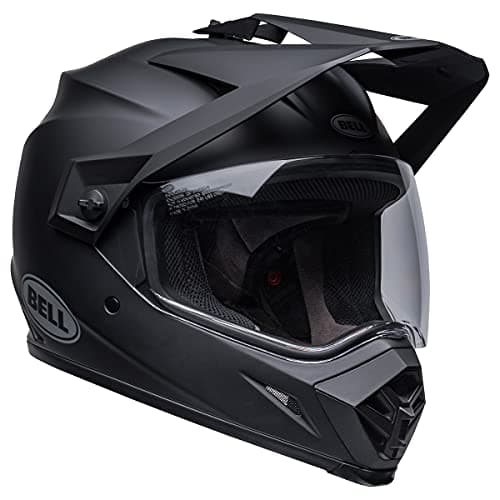
1. Bell MX-9 Adventure MIPS - the only pick here with independent crash data
This is the helmet that makes the bracket worth writing about. The MX-9 Adventure MIPS carries genuine US DOT and ECE 22.06, adds a MIPS rotational-management layer on top, and - the part nothing else here can claim - it has been SHARP-tested at 4 out of 5 stars. SHARP bought a sample set and hit it 32 times. That is a published, independent verdict on the finished helmet rather than a mark on a box.
Stack those three together and this is, on documented evidence, the best-protected helmet you can buy under $300 in any format. The shell is polycarbonate at a published ~1,696 g, and it is a peaked adventure lid, so it runs a visor, a peak and goggles depending on how you set it up. Full write-up in the Bell MX-9 Adventure review.
The honest cons. It is a polycarbonate shell, so it feels and sounds cheaper than a composite - the finish is functional, not plush. It is heavier than the road helmets below by over 200 grams. And the peak that makes it useful off-road is an aerodynamic liability at highway speed: it catches air, it tugs at your neck when you turn your head, and it is noisy. That trade-off is the format rather than the helmet, and we work through it in dual-sport vs adventure helmets.
Who should skip it: anyone whose miles are all pavement. You would be carrying the peak penalty for nothing, and the RPHA 12 below is lighter, quieter and cheaper with the same ECE 22.06 approval.
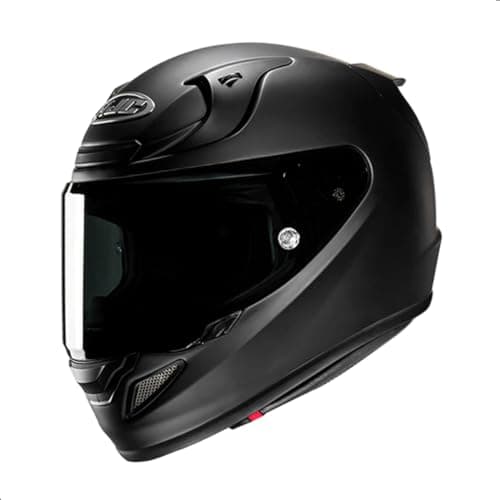
2. HJC RPHA 12 - the lightest shell here, and the best value in the bracket
If you ride on the road, this is the pick. The RPHA 12 carries DOT and ECE 22.06 in HJC's PIM EVO composite shell at a published ~1,474 g - which makes it over 200 grams lighter than every other helmet on this page and lighter than flagship touring helmets costing four times as much. It ships Pinlock-ready for the HJ-42 insert.
It is also the cheapest helmet here with the current independent certification, which is why it won our under-$200 page outright. Buying it inside a $300 budget rather than a $200 one means the money you did not spend goes on earplugs, a Pinlock insert and a decent set of gloves instead. Detail in the HJC RPHA 12 review.
The honest cons. There is no drop-down internal sun visor - you manage sun with the shield, which is the feature buyers in this bracket most often assume is included. HJC has never submitted it to SHARP, so you have the certification without the star rating. The Pinlock insert is a separate purchase; the shield is merely prepared for one. And it is a mid-tier HJC, so the vent detents and liner feel are a step below a flagship.
Who should skip it: anyone who wants an internal sun visor, or who rides off pavement. The Scorpion below has the sun visor and the Bell above has the peak.
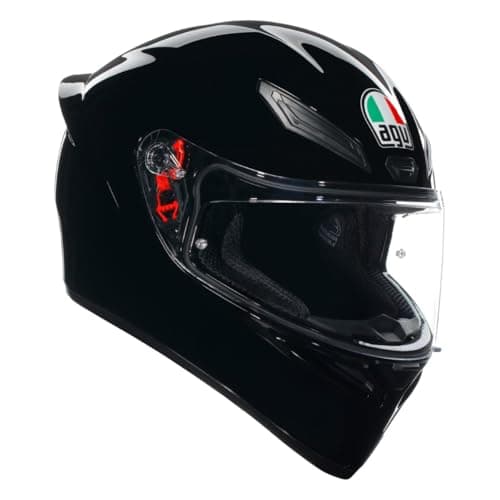
3. AGV K1 S - the sporty 22.06 full-face, and the widest field of view
The K1 S is the cheapest way into a genuine DOT and ECE 22.06AGV, and what you get for the money is the brand's racing geometry: a shell shape and field of view derived from AGV's race helmets, which is noticeably wide when you are tucked and looking through a corner. Published weight is ~1,600 g in a high-resistance thermoplastic shell. More in the AGV K1 S review.
For a rider on a sportbike who wants the current certification and the aggressive shape rather than touring features, this is the honest answer in the bracket - and it is the cheapest route into the brand whose alternatives we work through separately.
The honest cons. The thermoplastic shell is heavierthan the RPHA 12 by over 120 grams and does not feel premium next to a composite. There is no sun visor. And AGV's standing caveat applies: the interior runs snug and suits intermediate-oval heads, so round heads get pinched at the temples. Check head shapes explained before you order one blind. It has no SHARP rating.
Who should skip it: round-oval heads, and anyone who wants the lightest shell for the money - that is the RPHA 12.
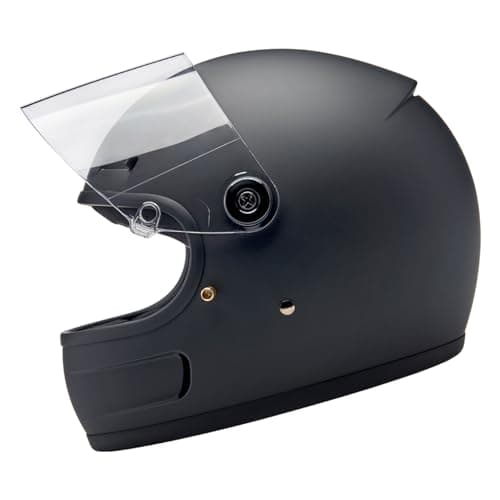
4. Biltwell Gringo SV - retro styling that keeps the chin bar and the certification
Classic-looking helmets usually ask you to give up either the chin bar or the certification. The Gringo SV gives up neither: Biltwell states DOT FMVSS 218 compliance and ECE R22.06 certification on its own product page, and it is a full-face. It is also the best-scaled shell on this page - three shell sizes across five EPS options, which is better fit engineering than most helmets at any price - in injection-molded ABS at a published ~1,674 g (3.69 lb), with molded EPS ear pockets that take a comms unit and a removable washable liner. The Biltwell Gringo SV review has the detail, and it leads our retro helmet roundup.
The honest cons. No drop-down sun visor and no published Pinlock provision, so sun and fog are managed with whatever shield you have on the helmet. It is heavy for a full-face and it is ABS rather than a composite. Ventilation is basic by touring standards - this is a classic shell with vent ports added, not an aero project - so it is warm in traffic. No SHARP rating.
Who should skip it: long sunny highway days. A sun visor and a sealed touring shell will do more for you than the styling will.
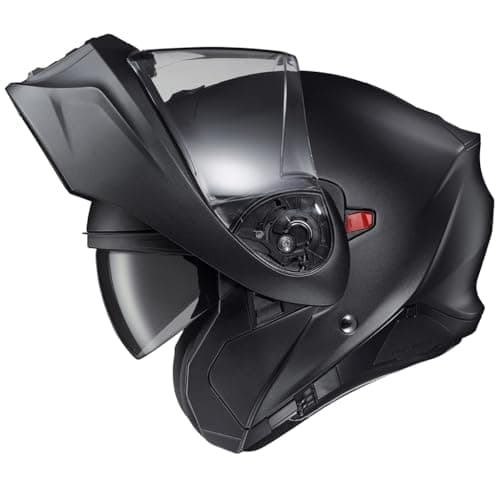
5. Scorpion EXO-GT930 Transformer - the only modular under $300, with a real caveat
If you want a flip-up in this bracket, this is essentially the choice, and it is a genuinely clever helmet: it converts from a full-face to a true open-face (the chin bar and shield come off, not just up), it carries P/J homologation - meaning it is approved to be ridden with the chin bar up as well as down - and it has the drop-down sun visor that nothing else on this page offers. Write-up in the Scorpion EXO-GT930 review.
The honest cons, and the first one is the reason it is fifth. Its ECE approval is 22.05, not 22.06. We verified that, and we flag it because a few marketplace listings claim 22.06 for this model - treat those as unverified. 22.05 predates the oblique rotational-impact test, so on this site's first criterion it ranks below four cheaper helmets. It is also the heaviest helmet here at a published ~1,890 g (XL) in a polycarbonate shell, and the conversion hardware is part of why. If you want the current revision in a flip-up, the step up is the ECE 22.06 Scorpion EXO-AT960 or the HJC RPHA 91 - both are covered in best budget modular helmets.
Who should skip it: anyone buying on the certification code, which on this site is most people. It is here because a convertible modular with P/J approval and a sun visor under $300 is a real and useful thing, and because nothing else in the bracket does that job at all.
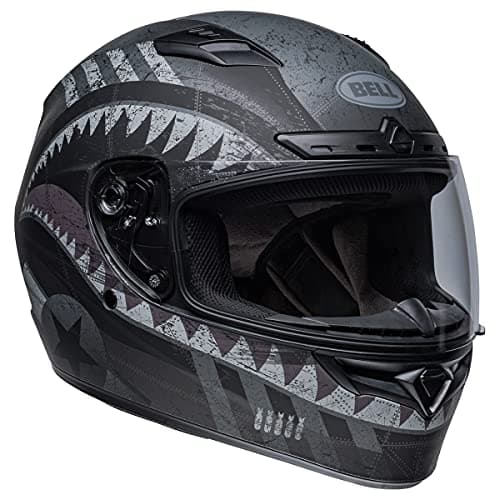
6. Bell Qualifier DLX MIPS - the cheapest pick, and the best-equipped for the money
This is the budget pick of the six and the one with the most in the box. It carries DOT plus a MIPS layer, and it ships with a photochromic (self-tinting) shield- a shield that darkens in sunlight and clears at night, and which costs a serious fraction of this helmet's price if you buy one separately. Polycarbonate shell at a published ~1,626 g, Velocity Flow ventilation, removable washable liner. See the Bell Qualifier DLX review.
MIPS is worth having and worth understanding: it is a low-friction layer that lets the shell rotate slightly on your head, and it is a component, not a certification. It does not make this helmet ECE 22.06. We lay the distinction out in MIPS explained.
The honest cons. Bell lists ECE for this model but does not publish the 22.05-or-22.06 revision for the US unit, so we do not assert it - buy it as a DOT-plus-MIPS helmet and read the label on the one you receive. The polycarbonate shell is heavy, the finish is plain, and DOT on its own is self-certified, so the MIPS layer is doing more work for you here than the paperwork is.
Who should skip it: anyone with the full $300 to spend. At this budget the certification is available, and on this site a confirmed independent approval beats an included shield every time.
What the extra hundred dollars actually buys over the $200 shelf
Three concrete things, and one non-thing:
- ECE 22.06 in more than one format. Under $200 it was one helmet in one format. Here it is a road full-face, a sport full-face, a retro full-face and a peaked adventure lid. You no longer have to pick between the certification and the shape of helmet you wanted.
- Published independent test data.The MX-9 Adventure's SHARP 4/5 is the first star rating that appears as you walk up the price ladder. If that kind of data is what you rank on, the full list of what we can document is in the safest helmets we can document.
- A drop-down sun visor, if you need one. Not on the 22.06 picks, but the GT930 has one at this price, where nothing under $200 did. The wider set is in the sun visor roundup.
- Not a lighter helmet, mostly. The RPHA 12 is the light one here and it was also the light one a bracket down. Premium composites and carbon do not really start until well above $400 - that ladder is in best carbon fiber helmets.
What $300 still does not buy you
Snell certification, for one. Snell is a voluntary standard a maker pays to enter and re-test against, and no helmet in this bracket carries it - the cheapest Snell builds we rate are several hundred dollars north of here, which we lay out in best Snell-certified helmets. You also do not get a hand-laid composite shell, flagship shield sealing, or the quietness that comes with both: every helmet on this page is louder at 70 mph than a touring lid, and five of the six are polycarbonate, thermoplastic or ABS.
What you do get is the thing that matters most, which is an independently tested approval on the finished helmet. That is worth more than any feature on this page, and it is why four of these six rank above the two that do not have it.
The verdict
Buy the Bell MX-9 Adventure MIPS if you ride any dirt or gravel at all, or if published independent test data is what you want to rank on. DOT, ECE 22.06, MIPS and a SHARP 4/5 in one helmet under $300 is unmatched in this bracket.
Buy the HJC RPHA 12 if your riding is on the road - it is the lightest shell here by a wide margin, it carries the same ECE 22.06 approval, and it is the cheapest way to hold it. Buy the AGV K1 S if you ride sportily and want the wide race-derived view, and your head is not round-oval. Buy the Biltwell Gringo SV if you want classic looks without surrendering the chin bar or the certification. Buy the Scorpion EXO-GT930 only if a flip-up with a sun visor is non-negotiable and you have read the 22.05 caveat and accepted it. And buy the Bell Qualifier DLX MIPS if your real ceiling is nearer $170 than $300.
Whichever you choose, spend a little of the difference on filtered earplugs. Sustained wind noise at highway speed is a hearing-damage issue rather than a comfort complaint, every helmet in this bracket is louder than a flagship, and a set costs a rounding error against the helmet.
And if the ceiling can move, the next bracket is where the extra certifications live: the best helmets under $500is the first shelf in our catalog carrying FIM racing homologation, Snell M2025 and genuine carbon — none of which exists at any lower price.