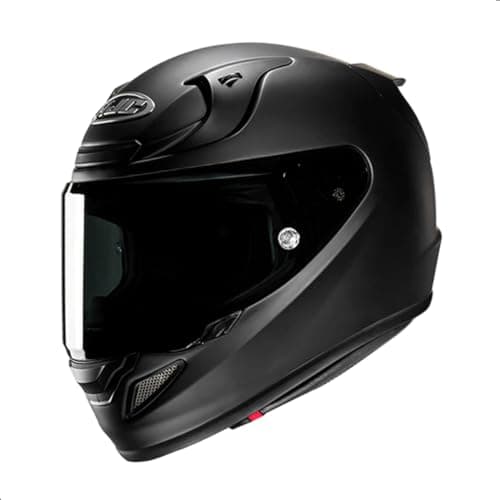
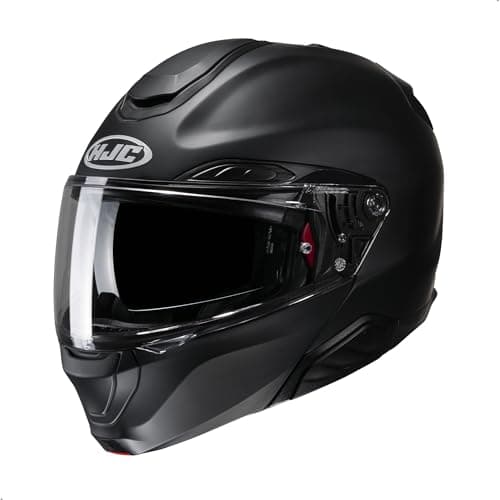
The best motorcycle helmet under $600 is the HJC RPHA 91, because it is the only helmet in this band that holds a current European approval and an independent crash rating: DOT, ECE 22.06 with P/J dual homologation, and a SHARP score of 4 out of 5 - on a flip-front. The budget pick is the HJC RPHA 12, which costs roughly a third as much, carries genuine ECE 22.06 and is almost 270 g lighter. Who this page is for: a rider who has already read the under-$500 shelf, found it good, and wants to know whether the next hundred dollars changes the answer. It does, in exactly three ways.
We worked the cheaper bands through in best helmets under $300, where ECE 22.06 becomes the normal answer rather than the lucky one, and best helmets under $500, where FIM homologation, Snell M2025 and carbon all appear for the first time. Push the ceiling one more notch to $600 and three genuinely new things arrive: an independently crash-rated flip-front, a full-carbon convertible adventure helmet, and an outgoing premium touring flagship at a discount. None of those exists at $500 in our catalog.
How to read the prices here. We do not print dollar figures in prose, because they go stale and a stale number is worse than no number - the buy module on each pick carries the live price pulled from the Amazon product API, stamped with the date it was checked, and that card is the authoritative figure. All six were under $600 when this page was built, and two of them sit within about a dollar of the line, so treat the headline as the band we shopped in rather than a promise about any one number. We have not worn or crash-tested any of these helmets. What we have done is read what each maker will commit to in writing, and check whether anybody independent has tested it.
How we ranked six helmets under $600
The criteria, in this order:
- Named certifications, and their revisions. DOT (FMVSS 218) is self-certified by the manufacturer. ECE 22.06 is an independently lab-tested type approval with production sampling, an oblique rotational-impact test and far more impact points than 22.05. Snell is a separate voluntary standard that, on the US market, usually arrives instead of ECE rather than alongside it. P/J is the extra claim that only matters on a flip-front: it means the helmet was tested and approved both closed and open. The full breakdown is in DOT vs ECE vs Snell vs SHARP.
- Independent test data where any exists. SHARP buys helmets anonymously and runs 32 impacts across seven samples for a 1-to-5 star rating. Exactly one helmet in this band has a SHARP score of its own, and it is the winner - which is the whole reason it wins.
- Shell material and published weight in a stated size. The spread on this page is roughly 350 g between the lightest and heaviest pick, and that gap is felt in the neck on hour four, not in the first ten minutes of a test ride.
- Format coverage. The six picks are a flip-front, a convertible adventure helmet, a sport-touring full-face, a premium touring modular, a retro-styled modular and a lightweight sport lid - so the page answers more than one rider rather than ranking six versions of the same helmet.
- What the extra money is actually buying. Above about $250, money buys shell material, weight, sealing, quietness and finish. Those are real and worth paying for. They are not the same thing as safety, and we say so on every band page.
1. HJC RPHA 91 - the only crash-rated flip-front in the band
Nothing else under $600 can show this combination. The RPHA 91 holds DOT, ECE 22.06 with P/J dual homologation - so it is approved to ride with the chin bar up, not merely able to - and it has been independently tested by SHARP at 4 out of 5 stars. A PIM EVO composite shell keeps it to a published ~1,740 g in size M, which is ordinary for a modular and remarkable for a modular that costs this little. Who it is for: a commuter or tourer who wants a lifting chin bar and refuses to take the certification on trust.
Full detail in the HJC RPHA 91 review, the certification breakdown in its safety rating, and the flagship comparison in RPHA 91 vs Shoei Neotec 3.
The honest cons. It is not as quiet as a premium touring modular - the Neotec family is meaningfully more sealed, and that is the single thing you give up. The interior plushness is a notch below the Japanese premium brands: the materials are good, not luxurious. And every flip-front carries mechanism weight, so this is nearly 300 g heavier than the lightest helmet on this page.
Who should skip it: riders whose first priority is silence on a long highway day. Start with the quietest helmets we can document instead.
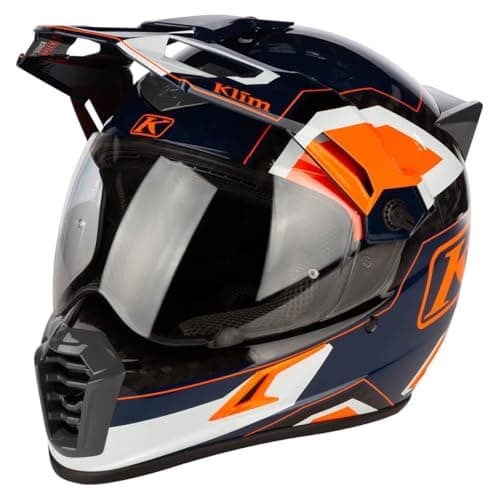
2. Klim Krios Pro - a full-carbon adventure helmet, inside the band
This is the pick that makes $600 interesting rather than merely higher. The Krios Pro is a full carbon fiber convertible adventure helmet at a published ~1,450 g in size L, holding genuine US DOT plus ECE 22.06 with a Koroyd energy-absorbing structure, and it reconfigures three ways: peak and goggles for dirt, peak and visor for adventure, visor alone for the road. Who it is for: a rider who owns one helmet, rides mixed surfaces, and counts grams because the peak is on their head for eight hours.
Detail in the Klim Krios Pro review, the certification in its safety rating, and the shelf it sits on in best adventure touring helmets.
The honest cons. It has never been SHARP-tested, so there is no independent star rating - only approvals. Carbon and Koroyd cost money, and this is the most expensive helmet on the page: it sits within about a dollar of the $600 line, so a modest price move puts it over. It is quieter with the visor fitted than in full peak-and-goggles mode, which is the physics of a peak and not a flaw. And it is no longer Klim's newest adventure platform - the pricier X1 Alpha sits above it.
Who should skip it: road-only riders. You are paying for convertibility you will never use, and the deepest sunshade and plushest quiet come from a road-first modular.
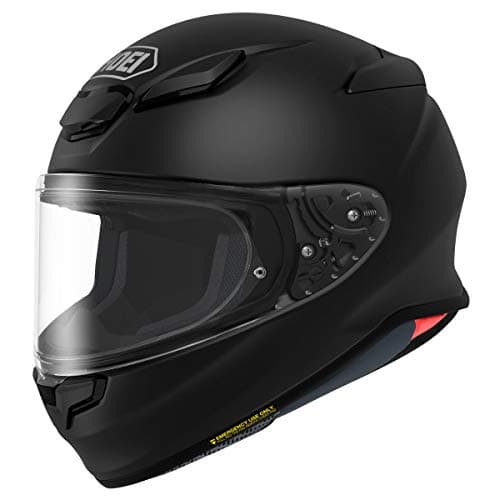
3. Shoei RF-1400 - the Snell option, and the lightest helmet here
The RF-1400 is the cheapest route into Snell M2025 on the US market and the lightest pick on this page by a clear margin: a multi-ply AIM+ composite shell at a published ~1,385 g in size M, with a European twin - the NXR2 - that scored a full 5 out of 5 with SHARP. What you notice day to day is the CWR shield seal, which shuts properly and stays shut; that drives rain ingress and wind noise together and makes this the quietest helmet in the band. Who it is for: a sport-touring rider who wants Snell and quiet, and will give up the European approval to get them.
Context in best Snell-certified helmets and the best Shoei helmets.
The honest cons. The 5/5 SHARP score belongs to the European NXR2, not the US unit, and we do not transfer star ratings across differently homologated builds - so treat it as context, not as this helmet's rating. The US RF-1400 is not ECE 22.06. There is no drop-down sun visor, so you commit to a tint or carry a spare shield. And Shoei's interior is intermediate-oval, which will pinch a round-oval head.
Who should skip it: anyone who specifically wants the current European approval. The RPHA 91 above has it and adds a lifting chin bar, and the ECE 22.06 roundup lists the cheaper routes in.
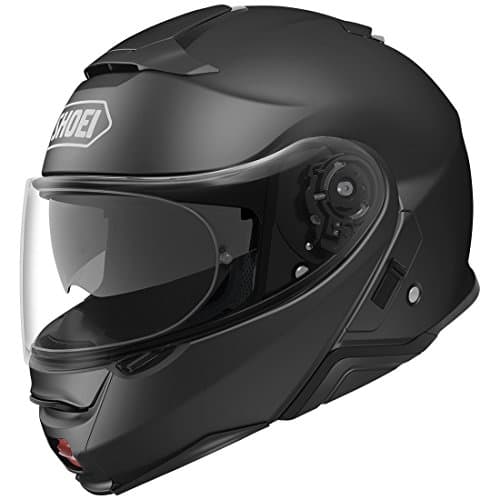
4. Shoei Neotec II - the outgoing flagship, at outgoing-flagship money
This is the band's discount story, and it is a real one. The Neotec II is a previous-generation premium touring modular - AIM composite shell, published ~1,750 g, drop-down sun visor, and a purpose-built channel for Shoei's SRL2 comms so the install is integrated rather than bolted on. It is still one of the quietest and best-finished flip-fronts ever made, and because the Neotec 3 replaced it, it now lands inside a band it never belonged to when new. Who it is for: a tourer who wants Shoei sealing and finish and is happy to buy the generation that is going out rather than the one coming in.
The generational differences are laid out in Neotec II vs Neotec 3, and the shelf it competes on is best touring modular helmets.
The honest cons. This is the certification trade-off on the page: the US Neotec II carries DOT only - no ECE 22.06, no rotational-impact homologation, and no P/J code, which is the claim that matters most on a helmet with a lifting chin bar. It has never been SHARP-tested. The Neotec 3 genuinely improved the chin-bar seal and moved to SRL3 comms, so you are buying the older seal and the older accessory generation. And it is the joint most expensive helmet here.
Who should skip it: anyone who buys on the certification code first. The RPHA 91 publishes ECE 22.06 P/J and a SHARP score for less money - that is the entire argument for ranking it first.
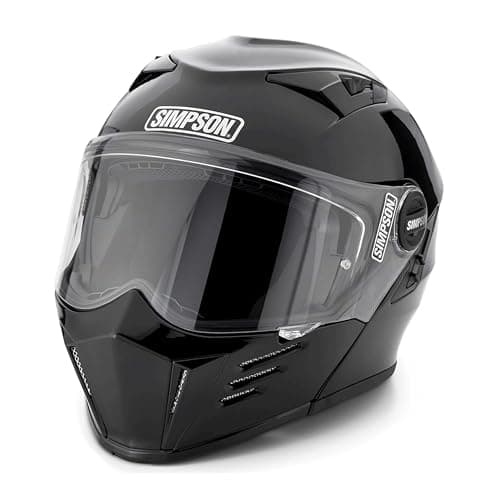
5. Simpson Mod Bandit - the one that is bought for the shape
Nothing else with a lifting chin bar looks like this. The Mod Bandit puts the Bandit silhouette on a flip-front: a composite shell at a published 3.73 lb, a drop-down sun visor, molded comms pockets, and two shell sizes (XS-MD and LG-2XL) rather than one shell padded out across the whole range. Who it is for: a rider who has already decided they want a Bandit and needs the chin bar to lift.
The brand picture, including how the three Bandits differ, is in are Simpson helmets good?
The honest cons. It is sold as "DOT/ECE" but no ECE revision is published for the US unit and no P/J code is published either, so we neither assert 22.06 nor claim it is approved to ride open - on a modular, that is a real gap, and it is the reason this ranks fifth rather than second. It is the heaviest helmet on the page at a published 3.73 lb. SHARP has never tested a Bandit; the Simpson modular SHARP result you may find belongs to the European Darksome 2, a different helmet. And in pure value terms the HJC i91 and Scorpion EXO-GT930 undercut it substantially.
Who should skip it: anyone buying on paperwork. Read best DOT-approved helmets, which explains what a DOT label with an unpublished ECE revision does and does not tell you.
6. HJC RPHA 12 - the budget pick, and the most certification per dollar
This is the budget pick: roughly a third of the winner's price, and the proof that this band is optional. The RPHA 12 carries genuine DOT plus ECE 22.06 in a PIM EVO composite shell at a published ~1,474 g - lighter than every other pick here except the Shoei - with a Pinlock-ready HJ-42 shield and a wind-tunnel-developed shell and spoiler. Who it is for: a rider who wants the current European standard and low weight, and would rather spend the difference on a comms unit, a jacket or fuel.
Detail in the HJC RPHA 12 review, the certification in its safety rating, and the value case in best helmets under $200.
The honest cons. It has never been SHARP-tested, so there is no independent star rating to set against the winner's 4/5. There is no sun visor - it is a sport lid, so you run a tinted shield or sunglasses. There is no lifting chin bar and no peak, so it does one job. And the finish is good rather than premium.
Who should skip it: riders who want a flip-front or a sun visor. Those are the two things that genuinely cost money in this band, and they are what the four picks above are charging for.
What $600 buys that $500 does not
Three things, concretely. An independently crash-rated flip-front: no modular under $500 in our catalog has a SHARP score at all, and the winner here has 4 out of 5. A full-carbon convertible adventure helmet holding DOT and ECE 22.06 at around 1,450 g - the lightest adventure lid we document, and there is no cheaper route to it. And an outgoing premium touring modular, which is a pricing accident rather than a product category, but a genuinely useful one while it lasts.
What $600 does not buy is a better certification than $200 can reach. The budget pick on this page holds the same ECE 22.06 as the winner, and the under-$300 bracket contains a helmet with ECE 22.06, MIPS and an independent SHARP 4/5. That is the honest shape of the market: approvals scale with price far more slowly than finish does, and independent testing barely scales with price at all. If independent data is your single criterion, read the safest helmets we can document before you spend anything.
The verdict
Buy the HJC RPHA 91. ECE 22.06 with P/J homologation plus an independent SHARP 4 out of 5, on a flip-front, at the bottom of this band is the most documented helmet available anywhere near the money.
Buy the HJC RPHA 12 if value is the point - it is roughly a third of the price and holds the same European approval. Buy the Klim Krios Pro for a carbon convertible you can ride on dirt. Buy the Shoei RF-1400 for Snell, low weight and quiet. Buy the Shoei Neotec II if sealing and finish matter more to you than the certification code, and the Simpson Mod Bandit if you want the Bandit shape with a chin bar that lifts and you have read the certification caveat above.